Blackjack Strategy Book: The Canon a Counter Actually Uses

A blackjack strategy book is not a casino card with arrows on it. The canon that wins money is small. Five books carry the math, the spread, the deviations, and the cover that turns a winning chart into a winning session: Beat the Dealer, Theory of Blackjack, Blackjack Attack, Professional Blackjack, and Blackbelt in Blackjack. Read them in that order if you have time. Pick one if you do not. Then go drill, because no blackjack strategy book ever counted down a shoe at 2am with $300 on two hands.

Why a blackjack strategy book still beats every blog summary
The internet is full of "complete guide" posts that paraphrase Schlesinger and Griffin without naming them. The original math is sharper than any blog summary, including this one. A blackjack book carries the proofs, the standard deviations, the covariance tables, and the index derivations. A blog post carries the conclusions. If a conclusion is wrong, the blog will not tell you why.
A clean Hi-Lo player at a 6D H17 DAS LS table running a 1-8 spread captures roughly +1.0 to +1.5% edge over the -0.47% base house edge. That number does not exist anywhere in nature. Griffin computed it. Schlesinger refined it. Every YouTube video and "card counting course" that quotes it is reading a derivative work. Read the source if you want to know whether the derivative is right.
This is not romanticism about books. It is a math hygiene point. A book has been edited, peer-reviewed in the AP community, and corrected over multiple editions. A YouTube video has not. The five titles below are the canon a professional blackjack player keeps on their shelf, and the order you should read them in.

Beat the Dealer by Edward Thorp
This is the book that started the whole thing. Edward Thorp published it in 1962. He used an IBM 704 to compute the first systematic edge for a card counter, then took the result to Las Vegas and won money with it. The casinos changed the rules. The book got revised. The rules changed back. Read more on the history at Edward O. Thorp's Wikipedia entry.
What it earns its shelf space for: proof. Until Beat the Dealer, every "system" sold to gamblers was a betting progression dressed up as math. Thorp showed that blackjack is the one casino game where a player can hold a positive expectation. Every counter in this canon is downstream of that idea.
What it does not give you: a working count to use today. Thorp's original Ten Count system has been replaced by Hi-Lo and stronger systems for almost every modern game. Read Beat the Dealer for the history and the proof. Drill Hi-Lo from a card counting practice routine, not from Thorp's tables. The book is short. Read it on a flight.
Theory of Blackjack by Peter Griffin
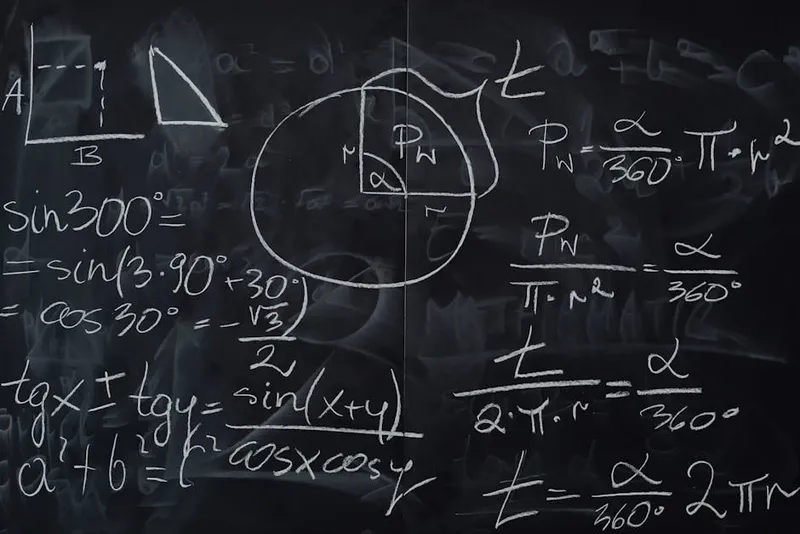
If Beat the Dealer is the proof, Theory of Blackjack is the math. Peter Griffin was a mathematician who happened to play blackjack. He published the book in 1979 and updated it through six editions. The numbers in Theory of Blackjack are the numbers every other source uses without crediting him.
What it earns its shelf space for: the actual derivations. Griffin's edge per true count of +0.5%, the standard deviation of 1.14 per hand, the variance of 1.33 per hand, the covariance of 0.50 between hands, the betting correlation tables for every counting system. These are the constants that drive every modern AP Analyzer, including the one in CountEdge. He also published the first complete index calculation methodology, which Schlesinger later adapted into the Illustrious 18.
What it costs you to read: time. The book is dense. The derivations assume working knowledge of expected value, variance, and standard deviation. If you bounce off the math, set it aside, drill Hi-Lo for three months, then come back. The math reads differently when the cards are real.

Blackjack Attack by Don Schlesinger
This is the working AP's reference. Schlesinger wrote Blackjack Attack in 1997 and updated it through three editions, with the third (2005) considered the standard. Anyone who is a serious counter has it on their shelf, often dog-eared at the Risk of Ruin chapter.
What it earns its shelf space for: the practical math. Schlesinger formalized the Risk of Ruin formula every counter quotes (RoR = e^((-2 × evHourly × bankroll) / varHourly)), the N0 metric for measuring how long a game takes to overcome variance, the Illustrious 18 deviation set, and the Fab 4 surrender plays. The CountEdge AP Analyzer is built on these formulas. The free app delivers the I18 plus Fab 4 (22 indices total) because Schlesinger demonstrated that those 22 plays capture roughly 80% of the available index EV.
What it gives you that no other book gives you: working bankroll math. Most blackjack books tell you to "have an adequate bankroll." Schlesinger tells you exactly how big it has to be at your specific spread, game, and risk tolerance. Then he tells you what your hourly variance is, which is the number nobody else publishes. Read advanced blackjack strategy for the working version of those formulas in plain English before you tackle Schlesinger's full treatment.
Professional Blackjack by Stanford Wong
Stanford Wong's Professional Blackjack (1975, multiple editions through 1994) is the spread book. Wong invented Wonging, the practice of standing behind a table and only sitting down when the count goes positive. The book covers spread shapes, cover plays, and the table selection logic that turns a counted edge into a sustainable session.
What it earns its shelf space for: the spread treatment. Wong was the first author to publish concrete bet ramp shapes for different spread sizes (1-4, 1-8, 1-12, 1-16) and the first to systematically address what a spread looks like to a pit boss. The cover material in Professional Blackjack is older than most modern game protections, but the principles still hold: gradual ramps beat unit jumps, rounded bet sizes beat chart-perfect ones, and table selection matters more than play accuracy at the margin.
What it does not give you: modern game conditions. Most casinos now use 6-deck or 8-deck shoes with 75% penetration at best. Wong wrote when 1-deck and 2-deck games with 90% pen were normal. The spread mechanics still apply. The specific game recommendations are dated. Read Professional Blackjack for the spread theory. Read the Wizard of Odds blackjack appendices for the current game math.

Blackbelt in Blackjack by Arnold Snyder
Arnold Snyder wrote Blackbelt in Blackjack in 1980 and updated it through 2005. Snyder ran the Blackjack Forum magazine for two decades and is the most readable serious author in the canon. Blackbelt covers running count, true count, deviations, bankroll, cover, and team play, all in a voice that does not assume you have a math degree.
What it earns its shelf space for: completeness. Snyder is the one author who treats the entire game as one system rather than splitting math from operations. Blackbelt covers shuffle tracking, ace location, hole card play, and team strategies that Griffin and Schlesinger leave out. The book is also the friendliest entry point in the canon. If Theory of Blackjack is too dense, start with Blackbelt and circle back.
What it gives a learning counter that nothing else does: a path from total beginner to advanced player in one volume. Snyder respects the reader's intelligence without burying them in proofs. The Hi-Lo treatment is clean. The cover material is honest. The bankroll math is correct. If you are going to own one blackjack book, this is the one to start with. If you are going to own four, Blackbelt sits between Beat the Dealer and Blackjack Attack in your reading order.
What a blackjack basic strategy chart cannot teach you
A blackjack basic strategy chart is essential. It is also not a strategy book. The chart tells you what to do with 16 vs 10 at neutral count. It does not tell you why, and it cannot tell you what to do with 16 vs 10 at TC+5. The strategy book teaches you the difference.
A perfect basic strategy player at a 6D H17 DAS LS game is already only 0.47% behind the house. Most casino players give up another 1 to 2% by misplaying soft hands, deviating from the chart by feel, and mishandling pairs. There is no advanced layer worth a single dollar until that part is automatic. Drill the chart that matches the table you sit at. Then read the book that explains why the chart is what it is.
The chart is the conclusion. The book is the proof. A counter who memorizes the chart without reading the book will play correctly at neutral count and incorrectly at every other count, which is most of the count's value. The 6 deck blackjack strategy chart and the double deck blackjack strategy chart are different in ways the books explain and the chart alone cannot.

Card counting basics every blackjack book covers
Every book in the canon covers the same card counting basics, and the overlap is the syllabus a new counter should learn:
- Card values. Hi-Lo runs +1 for cards 2 through 6, zero for 7-8-9, and -1 for tens, face cards, and aces. Over a full shoe the count returns to zero.
- Running count. Every card you see, you adjust. The count is cumulative across the shoe.
- True count. Running count divided by decks remaining, always floored, never rounded. RC of +6 with 2 decks left is TC+3. RC of +5 with 3 decks left is TC+1.
- Deviation plays. Insurance at TC+3, 16 vs 10 stand at TC 0, 12 vs 3 stand at TC+2, 10,10 vs 5 split at TC+5. The Illustrious 18 covers the most valuable shoe-game indices.
- Bet ramps. The edge is in betting more when the count is positive. A 1-1 spread at any count gives you a flat house edge regardless of how accurately you are counting.
A book that does not cover all five is not a card counting book. It is a chapter on card counting in a wider gambling book, which is fine, but is not what we are talking about here. The five canonical books above each cover all five at depth. The Pro trainer on CountEdge runs full 6-deck shoes at casino pace and tests true count conversion at random points, which is the part you cannot drill from a book alone.
If you want to learn to count cards from scratch, pair Blackbelt in Blackjack with the free CountEdge app. The book teaches the Hi-Lo system. The trainer drills it.

Card counting resources to skip and the ones worth your time
Most card counting courses are content marketing. If a course costs $499 and the salesperson cannot explain what their N0 is, what their hourly variance is, or what their actual results have been over 1,000 hours, they are selling a video library, not an edge. A working AP making $50 to $100 per hour on a moderate spread does not have time to film a 12-week curriculum. The economics do not work. The honest version of card counting education is a small canon and a free trainer that lets you grind shoes until you can count one in your sleep.
Resources to skip:
- "Card counting masterclasses" with no published math.
- Apps that teach you to bet $10 to $300 the moment the count goes positive. That is the bet pattern a pit boss has been trained to spot since 1963. A counter who jumps the bet that hard is more visible than a $300 flat-bettor.
- Books that paraphrase Schlesinger and Griffin without naming them. If a "modern" book does not cite the original math, it has nothing to add.
- Anything that promises an edge without a spread. The count is the trigger. The spread is the engine.
Resources worth your time:
- The five books above. That is the complete canon for shoe games.
- The Wizard of Odds blackjack appendices for current game math.
- Eliot Jacobson's archive at APHeat for advanced topics including side bet math and Kings Bounty modeling.
- A working trainer app that drills the count under shoe conditions. Read the book. Then drill until the count runs on autopilot.
You will not feel the edge session to session. You will see it in your graph. It dips and turns like the stock market but it goes in one direction. Up. That is when you know it works. Three losing sessions and most beginners decide the system does not work. The system works. Griffin proved it. Schlesinger proved it. Snyder published it. The graph proves it. The book on your shelf is the reason you can sit through the dip.
Read the canon. Then drill it. The free CountEdge card counting trainer turns the math from Griffin and Schlesinger into something you can use at the table — running count, true count, I18, Fab 4, full AP build. No credit card. If you want a coach who has read the same books reviewing your numbers each week, the blackjack coaching program is the next level. The next shoe is at the casino tonight.