Double Deck Blackjack Strategy: A Counter's Real Read
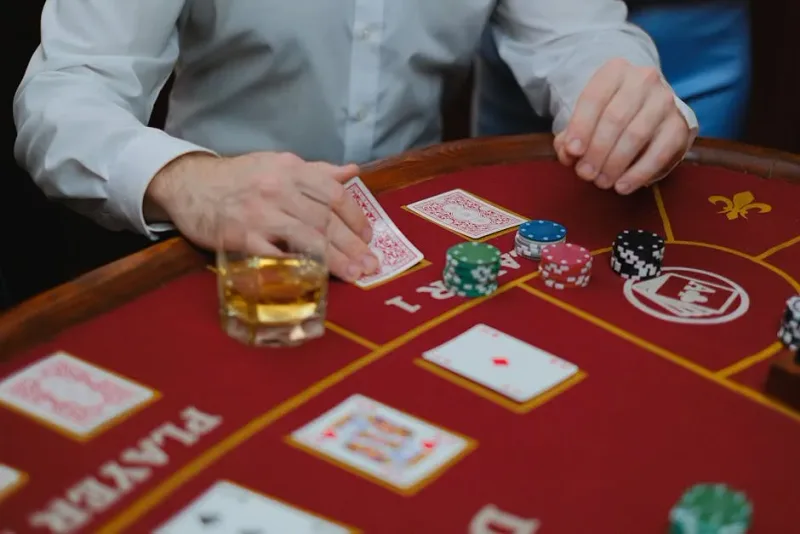
Double deck blackjack strategy is mostly basic strategy with a sharper edge. The deck composition is friendlier, the house edge runs lower, and the count math is faster than at a 6-deck shoe. The trade-off is heat. A 2-deck table is where casinos watch hardest because they know advantage players prefer the game. This post lays out the rules to demand, the strategy chart deltas vs 6-deck, the bet ramp that fits a 2-deck spread, and the cover behaviour that keeps you sitting at the table long enough to actually collect the EV. The math is simple. The discipline is the part nobody puts in the YouTube videos.
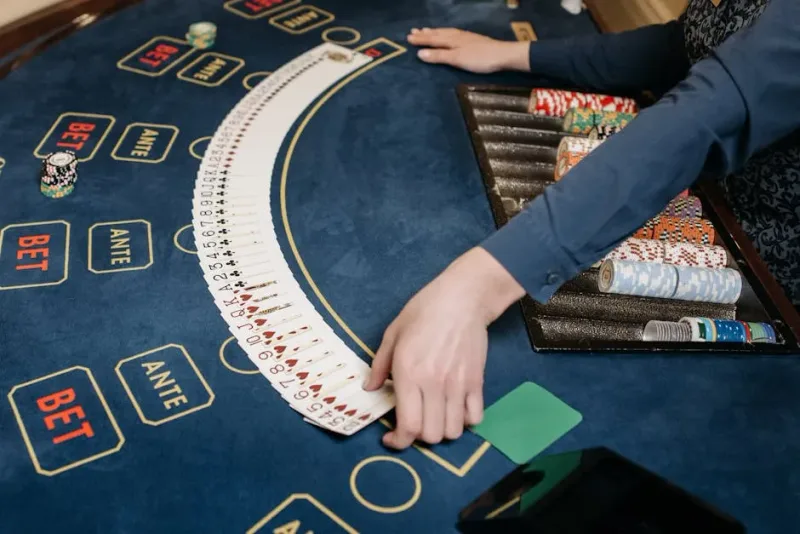
Double deck blackjack strategy starts with the rules at the table
The double deck blackjack rules at any given table can swing the house edge from -0.12% to -0.40% depending on six small variants. Read the placard before you sit down. If a rule is missing, ask the dealer. If the dealer does not know, the floor will.
The rules that matter, in order of EV impact:
- 3:2 blackjack payout. Non-negotiable. A 6:5 payout adds roughly 1.39% to the house edge. The deck advantage of a 2D game is gone the moment you sit down at a 6:5 table.
- S17. Dealer stands on soft 17. Worth about 0.20% to the player vs H17.
- DAS. Double after split allowed. Worth about 0.14% to the player.
- Late surrender. Worth about 0.08% to the player. Less common in 2D than in 6D shoe games.
- Re-splitting aces. Worth about 0.08% to the player.
Stack the good ones. A 2D S17 DAS LS table runs at -0.12% off the top. A 2D H17 DAS no-LS table runs at -0.40%. Same building, different tables, three times the house edge on the worse one. The rules find you, not the other way around. Pick the right table.
The casino is not your friend on this. They will let someone sit for 72 hours draining their savings without a word. Beat them at math and they care a lot, fast. Knowing which table is the better game is part of the work.
How double deck blackjack basic strategy differs from 6-deck
Most plays match. The double deck basic strategy chart is small-EV different from the 6-deck chart, but the differences are easy to miss if you only ever drilled a 6-deck chart.
The shifts that actually matter at a 2D S17 DAS LS table:
- Double 11 vs A. Correct in 2D. Hit in 6D H17.
- Double 9 vs 2. Correct in 2D S17. Hit in 6D.
- Double A,8 vs 6 (H17 only). Correct in 2D H17. Stand otherwise.
- Double A,7 vs 2. Correct in 2D. Stand in 6D.
- Pair of 7s vs 8 (S17). Split in 2D. Stand or hit in some 6D variants.
That is the whole list of plays that flip between a clean 2D chart and a clean 6D chart. The rest is identical to the 6-deck table you already know. Drill the 2D chart before you sit, not after.
This is the rung most beginners skip and it is the cheapest leak to plug. A new counter who is sloppy on basic strategy is donating a bigger edge to the house than they will ever recover by counting. Drill basic strategy until it is automatic. Then add the count.
The 2-deck blackjack house edge is the lowest you can find without a private game
The double deck blackjack house edge, with the right ruleset, is the smallest published edge you can play for real money in a public casino. Better than 6D, better than 8D, better than every shoe game on the floor.
Verified base house edges:
- 2D S17 DAS LS: -0.12%
- 2D S17 DAS no-LS: -0.19%
- 2D H17 DAS LS: -0.33%
- 2D H17 DAS no-LS: -0.40%
Compare that to a 6D H17 DAS LS table at -0.47% and the same 6D game with no surrender at -0.55%. The 2-deck edge is a third of the 6-deck edge at the worst 2D variant and a quarter of it at the best.
Then comes the trap. A 2D 6:5 table runs at roughly -1.5% before any other rule. The headline says "two decks." The math says the casino is laughing. Walk past it. The 6-deck 3:2 game is a better play than the 2D 6:5 game by about 1% of every dollar you bet. There is no contest.
If a casino offers both, the right move is sometimes the 6D table. That is the part of double deck blackjack strategy nobody writes about, because nobody who writes about blackjack actually does the math.
Double deck card counting is friendlier to your math
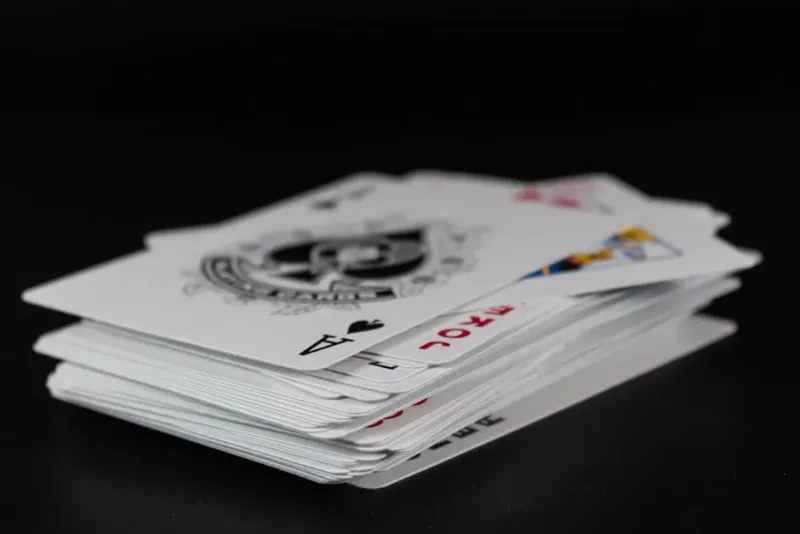
Hi-Lo at a 2-deck game is the easiest count environment in the casino. Two decks behind the cut card. Penetration is usually 70 to 75%. The deck-estimation problem in true count conversion shrinks because the divisor is small. A running count of +6 with one deck left is true count +6. A running count of +3 with half a deck left is true count +6. The math is the same as 6D. The numbers are easier.
Three things change when you move from a 6-deck shoe to 2-deck:
- Variance comes faster. Fewer hands per shoe means fewer hands at the high count. Bigger swings session to session. The Hi-Lo standard deviation per hand is 1.14 either way. The shoe length changes the rhythm.
- High counts are rarer but heavier. A TC+5 in a 2D game is harder to reach because the running count has fewer cards to work with. When it does hit, more of the remaining shoe sees it.
- Indices apply more often per shoe. Insurance at TC+3 fires more often as a percentage of hands dealt because there are fewer total hands and the count moves more violently per card.
You will not feel any of this session to session. You will see it in your graph. It dips and turns like the stock market but it goes in one direction. Up. That is when you know the count is working.
Bet ramp for a double deck blackjack game
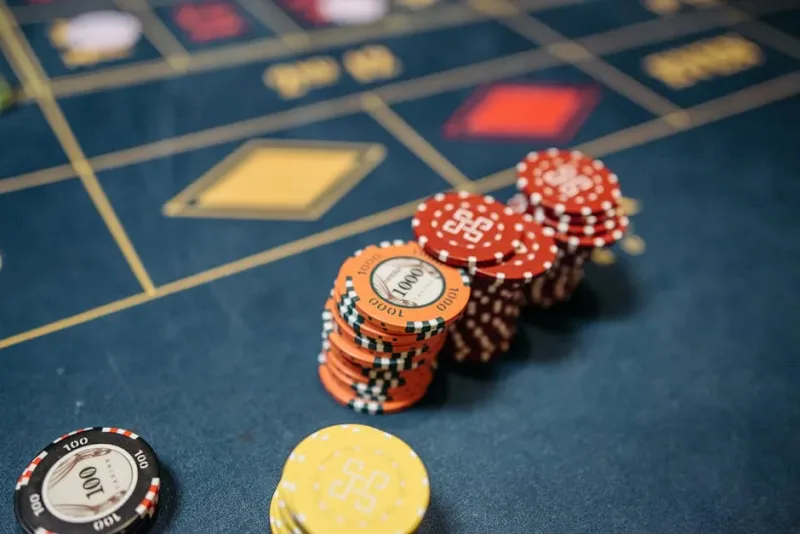
The same Hi-Lo edge formula applies. Edge per true count is +0.5%. The ramp shape changes because 2D heat shows up at smaller spreads than 6D heat does.
A working 2D ramp at a $10 minimum table:
- TC 0: $10
- TC+1: $25
- TC+2: $50
- TC+3: $100
- TC+4: $150
- TC+5 and above: $200
Spreads of 1-20 at 2D are a heat magnet. Spreads of 1-12 to 1-15 at 2D play. The ramp above is 1-20 only at the top, and it never jumps in one step from a unit to a max bet. Every increase looks like a player riding a hot streak, not a counter responding to a count.
A common mistake at this stage: jumping from $10 to $300 the moment the count goes positive. A counter who consistently makes that jump is more visible than a $300 flat-bettor. Pit bosses watch bet patterns first, count second. CountEdge built the Cover Coach because the training apps that ignore cover get their users caught and tag the games as burned. Backoff is the cost of bad cover, not the cost of counting itself.
Set up a fake table. Run the ramp on a drilled shoe before you ever push real chips. The Pro trainer will walk the count under you and show your ramp at every count point.
Cover at a 2-deck table is harder than at a 6-deck shoe
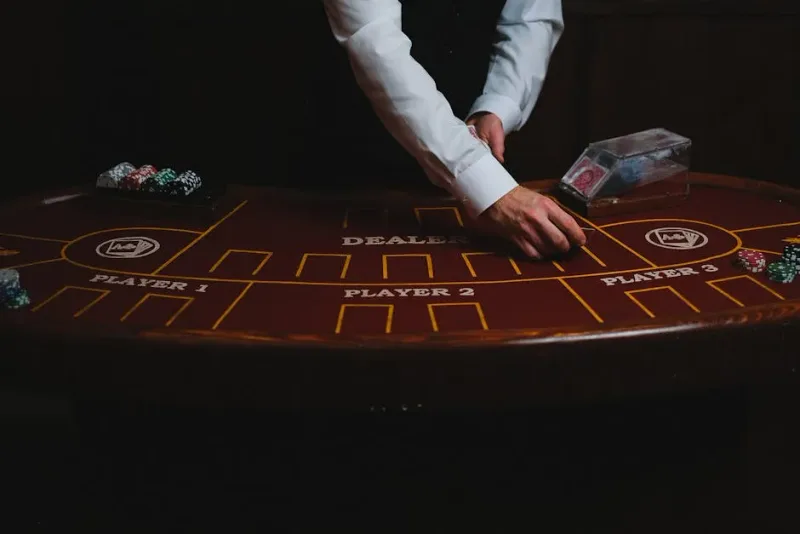
A 2-deck game has more eyes per dollar bet than any other table on the floor. The floor person assigned to that pit knows the math is closer. The dealer is usually faster. The eye in the sky has a shorter shoe to scan. Heat that takes 30 minutes to build at a 6D shoe shows up in 10 minutes at a 2D game.
The cover that works:
- Bet ramp shape that matches a recreational hot-streak player, not a math chart.
- Eye discipline. Do not stare at the discard tray. Glance and move on.
- Conversation that does not require the count. The drunk guy next to you keeps asking if you should split tens. Be the player who shrugs and orders another soda water with lime.
- Rounded bet sizes. Push out $50, not $52. The chips should look casual.
- Walk away when the shoe goes cold. Sitting through three flat shoes at a 2D table is a longer commitment than at 6D, and the floor notices stillness as much as it notices spread.
Somewhere right now a pit boss is watching someone's eyes at a 2-deck table and that someone is just trying to remember if they ordered the ribeye or the salmon. Be the second person.
The cover that does not work: making a deliberately wrong play to look bad. Hitting when you should stand, flat-betting through a hot count, splitting wrong. Those are the moments the count is making you money. Giving that up to look less suspicious is a bad trade. Never sacrifice EV for cover. The best cover is a convincing character at the right bet size, not a wrong play.
Insurance, surrender, and other deviations on a double deck game
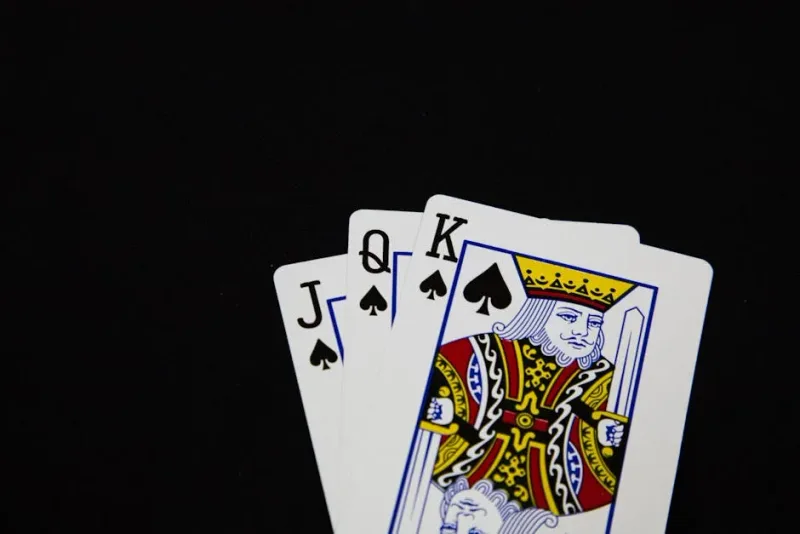
The Illustrious 18 and Fab 4 indices apply at 2D the same way they apply at 6D. The TC trigger is the count, not the deck count. A few of them swing harder in 2D because the count moves faster.
The high-EV 2D plays:
- Insurance at TC+3. Take it. The math is settled. Insurance is the highest-EV index play in the I18 at any deck count.
- 16 vs 10 stand at TC 0. Already a stand. Drill it as a stand at every positive count too.
- 15 vs 10 stand at TC+4. Hit at low counts, stand at +4 and up.
- 12 vs 3 stand at TC+2. Switches from hit to stand at +2.
- 10,10 vs 5 split at TC+5. Almost never the right play. When it is, the bet is already big.
- Late surrender 15 vs 10 at TC 0. If the table offers LS, take it on 15 vs 10 from neutral count up.
A common mistake: drilling the deviations and then never using them at the table because the play "feels wrong." 16 vs 10 at TC+5 with $200 on the felt is the moment the entire post-count practice ladder gets tested. Stand. Variance does not care that you stood. The math does, and over a long enough sample the math wins.
The Pro tier on CountEdge covers the I18 and Fab 4. The Elite tier adds the Deviation Drill screen with shoe mode that runs the count under you and surfaces an index play at the count where it applies. Drill the play. Drill the count it triggers at. Drill the situation around it.

Where double deck blackjack strategy breaks down
Some things do not save a 2-deck game. Knowing the limits is part of the strategy.
The post-count tells:
- Bankroll under 250 average bet units. At a $25 average bet that is $6,250. Below that, the math says your Risk of Ruin is too high to play any real spread. The Schlesinger formula does not care what you wish your bankroll were. RoR = e^((-2 × evHourly × bankroll) / varHourly).
- Pen below 60%. A 2D game cut at half is a worse game than a 6D game cut at three quarters. Watch the cut card. Walk if the cut takes too much out of play.
- One counter per table maximum. Two counters at the same 2D table is a backoff for both, fast.
- 6:5 payout, ever. Even if it is the only 2D game in the city. Especially then.
The honest version: flat-betting through a positive count is worse than not counting at all. A player who counts perfectly but flat-bets every hand has the exact same expected loss as a non-counter, plus a tax on attention. The entire edge in card counting comes from betting more when the count is positive. A 1-1 spread (no spread at all) at any count gives you a flat house edge regardless of how accurately you are counting. If you are scared to spread at a 2D table, the right play is a 6-deck shoe with looser cover, or no play at all that night. Train, build a bankroll, and come back when you can.
One thing I will never do is make a deliberately wrong play for cover. Order a soda water with lime instead. Ask the waitress to keep them coming, tip her like she is bringing me something stronger. To everyone at the table I am a guy who is drinking, having a good time, not particularly concerned about the math. In reality I am completely sober, running the count, and very concerned about the math. It costs nothing. Some nights it buys hours.
The best cover is not a wrong play. It is a convincing character. Let the casino see what it expects to see. The count stays yours.
A 2-deck S17 DAS LS table at 3:2 is the best public blackjack game in the casino. The base house edge is -0.12%. A clean Hi-Lo player playing accurately at a moderate spread captures around +1.0 to +1.5% over that base, depending on penetration and ramp shape. The math is settled. Griffin proved it. Schlesinger proved it. The variable left is whether you can sit at a 2D table for two hours, run the count cold, ramp clean, hold cover, and walk away without giving the floor a reason to remember your face.
That is the part the chart cannot teach. Drill the chart on the free CountEdge tier for the basic strategy work. The 14-day Pro trial opens the running count, true count, I18, and Fab 4 drills. The Elite tier adds 2-deck game support, the Deviation Drill screen, and the Cover Coach, which is the exact reason CountEdge exists. Nothing else on the market was good enough for a working counter to use. The whole story is on the About page. The math is on every blog post. The next 2-deck shoe is at the casino tonight. Do the work first.