6 Deck Blackjack Strategy: Rules, Chart, and Real Math
6 deck blackjack strategy is the chart most casino players think they already know and then misplay anyway. The 6-deck shoe is the workhorse of the casino floor: reasonable base edge, workable count math, more forgiving cover than a 2-deck game. This post lays out the rules to demand, the chart deltas worth drilling, the bet ramp that fits a 6-deck shoe, and the deviations that earn most of the edge once you start counting. The math is settled. The discipline is the part nobody puts in the YouTube videos.
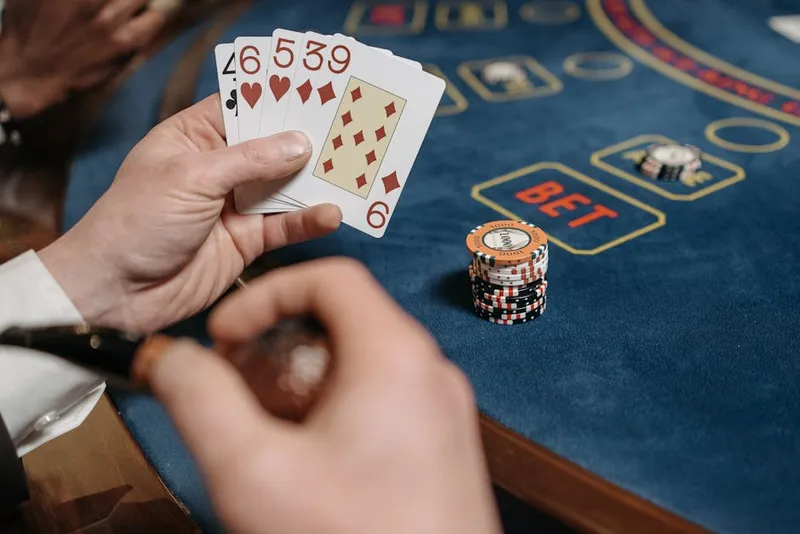
6 deck blackjack strategy starts with the rules at the table
The 6 deck blackjack rules at any given table can swing the house edge from -0.26% to -0.69% depending on five small variants. Read the placard before you sit down. If a rule is missing, ask the dealer. The question does not draw heat. Asking is what a recreational player does.
The rules that matter, in order of EV impact:
- 3:2 blackjack payout. Non-negotiable. A 6:5 payout adds roughly 1.39% to the house edge. Every other rule on this list is wiped out twice over by a 6:5 placard. Walk past it.
- S17. Dealer stands on soft 17. Worth about 0.20% to the player vs H17.
- DAS. Double after split allowed. Worth about 0.14% to the player.
- Late surrender. Worth about 0.08% to the player. More common at 6D shoe games than at 2D.
- Re-splitting aces. Worth about 0.08% to the player when offered.
Stack the good rules. A 6D S17 DAS LS table runs at -0.26%. A 6D H17 DAS no-LS table runs at -0.55%. Same casino, different tables, double the house edge on the worse one. Pick the right table before you pick the right play.
The casino is not your friend on this. They will let someone sit for 72 hours draining their savings without a word. Beat them at math and they care a lot, fast. Knowing which table is the better game is part of the work.

The 6-deck basic strategy chart that actually matters
The 6 deck blackjack chart most beginners memorize is the H17 chart from a Vegas Strip game. That is fine if your local casino runs H17. If it runs S17, you are leaking EV on a few doubles every shoe.
The plays that flip between a clean 6D S17 chart and a clean 6D H17 chart:
- Double 11 vs A. Stand or hit in 6D H17 (basic strategy says hit). Double in 6D S17.
- Double A,8 vs 6. Stand in 6D S17. Double in 6D H17.
- Double A,7 vs 2. Stand in S17. Hit in H17.
- Surrender 17 vs A. Surrender in H17 if the table offers LS. Stand in S17.
That is most of the chart difference between the two common 6-deck rule sets. The rest of the chart is identical. Drill the chart that matches the table you sit at. Mixing them costs more EV than most counters realize, especially in soft hands.
This is the rung most beginners skip and it is the cheapest leak to plug. A perfect basic strategy player at a 6D H17 DAS LS game is already only 0.47% behind the house. Most casino players give up another 1 to 2% by misplaying soft hands, deviating from basic strategy by feel, and mishandling pairs. A new counter who is sloppy on basic strategy is donating a bigger edge than they will ever recover by counting. Drill basic strategy until it is automatic. Then add the count. The order matters because the count cannot save bad basic strategy.
What the 6-deck house edge actually is
The 6-deck house edge gets quoted as a single number on most blackjack blogs. There is no single number. It depends on which of the five rule variants the table runs and whether the payout is 3:2 or 6:5.
Verified base house edges at 3:2 payout:
- 6D S17 DAS LS: -0.26%
- 6D S17 DAS no-LS: -0.34%
- 6D H17 DAS LS: -0.47%
- 6D H17 DAS no-LS: -0.55%
- 6D H17 no-DAS: -0.69%
The same five rules at 6:5 payout add 1.39% to every line above. A 6D H17 no-DAS 6:5 table runs at roughly -2.1%. Slot machines run a flatter expected loss than that.
At a $25 average bet and 80 hands per hour, the gap between a 6D S17 DAS LS table and a 6D H17 no-DAS table is roughly $9 per hour in expected loss. Across 100 four-hour sessions that is $3,600. Picking the better 6-deck table is worth a Pro tier subscription roughly 30 times over.
This is why the AP Analyzer takes the rule set as an input. Hourly EV, Risk of Ruin, and N0 change every time one of the five variants flips.

6-deck card counting with Hi-Lo
Hi-Lo at a 6-deck shoe is the original count environment. Most published count math, every value in the I18 chart, and most of the simulator data online assumes a 6-deck game. The system was built around it.
Three things matter at a 6D shoe that do not matter as much at smaller deck counts:
- True count conversion is harder. Deck-remaining estimates work in fractions of a deck across the discard rack. Most counters who lose accuracy at 6D lose it at the conversion step, not the running count. Drill true count practice specifically.
- The count moves more slowly per hand. A 6-deck shoe with 312 cards takes longer to climb to TC+3. Flat shoes are normal. Three flat shoes in a row is also normal.
- Penetration matters more. A 6-deck shoe cut at 4.5 decks (75% pen) plays a half-percent better than the same shoe cut at 4 decks. Watch the cut card before you sit down.
Variance does not care that you did everything right. This is the part nobody puts in the YouTube video. A clean Hi-Lo player at a 6D H17 DAS LS table running a 1-8 spread expects roughly $20 to $30 per hour at $25 average bet, with hourly standard deviation around $400. Losing sessions are not an anomaly. A skilled counter loses about four sessions out of ten. The Risk of Ruin formula (RoR = e^((-2 × evHourly × bankroll) / varHourly)) tells you exactly how big your bankroll needs to be to survive that volatility. Most beginners run a bankroll a tenth of what the math says they need, then blame the system when they bust. The system works. The graph proves it. Most people quit before the edge has time to show up.
Bet ramp for a 6 deck blackjack game
The Hi-Lo edge formula does not care about deck count. Edge per true count is +0.5% across 2D, 6D, and 8D. The ramp shape changes because cover at a 6-deck shoe is more forgiving than at 2D, and the count moves slower, so big bets stay out longer.
A working 6-deck ramp at a $10 minimum table with a 1-8 spread:
- TC 0: $10
- TC+1: $20
- TC+2: $30 (or transition to 2H if you play multi-hand)
- TC+3: $50
- TC+4: $80
- TC+5 and above: $100 to $150
Spreads of 1-15 to 1-20 at a 6-deck shoe are tolerable if the bet shape looks like a player riding a streak. Spreads of 1-30 in one step from minimum to max draw heat fast. Pit bosses watch bet patterns first, count second. A counter who consistently jumps from $10 to $300 the moment the count goes positive is more visible than a $300 flat-bettor.
CountEdge built the Cover Coach because training apps that ignore cover get their users caught. Backoff is the cost of bad cover, not the cost of counting itself.
A specific warning: do not flat-bet through a positive count to "save the count for next time." A player who counts perfectly but flat-bets every hand has the exact same expected loss as a non-counter, plus a tax on attention. The entire edge in card counting comes from betting more when the count is positive. If you are scared to spread, do not count. Train, build a bankroll, and come back when you can.
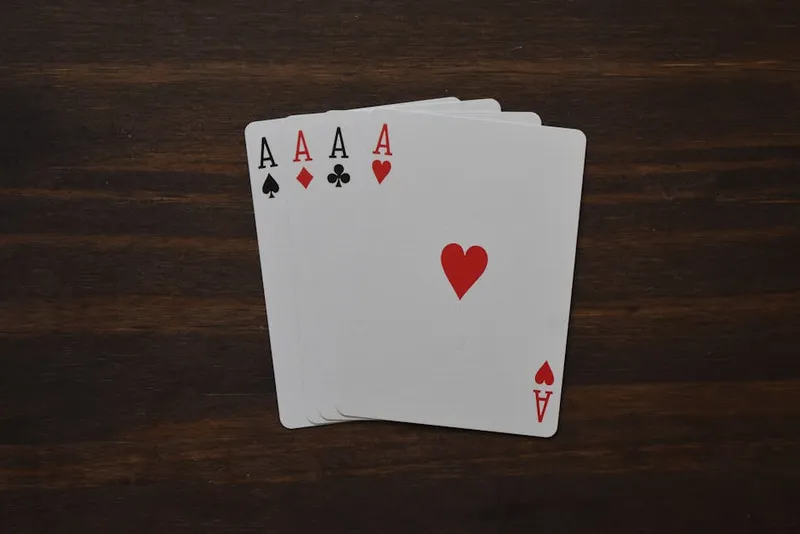
Insurance, surrender, and the Illustrious 18 on a 6-deck shoe
The Illustrious 18 was designed at the 6-deck shoe. The TC triggers in the I18 chart match a 6D game by default. Every published deviation tutorial, and most of the advanced blackjack strategy literature, assumes you are at a 6-deck shoe unless it says otherwise.
The high-EV 6D plays:
- Insurance at TC+3. Take it. The math is settled. Insurance is the highest-EV index play in the I18 at any deck count.
- 16 vs 10 stand at TC 0 and above. Hit at any negative count. Stand at neutral or positive.
- 15 vs 10 stand at TC+4. Hit at low counts, stand at +4 and up.
- 12 vs 3 stand at TC+2. Switches from hit to stand at +2.
- 10,10 vs 5 split at TC+5. Almost never the right play. When it is, the bet is already big.
- 10,10 vs 6 split at TC+4. Same shape, slightly easier trigger.
- Late surrender 15 vs 10 at TC 0. If the table offers LS, take it on 15 vs 10 from neutral count up.
The I18 plus Fab 4 captures roughly 80% of the available index EV with 22 plays. At TC+4 and above the index plays start to dominate the EV calculation. Skipping deviations means you are paying for the count without using it. Drill the play. Drill the count it triggers at. Drill the situation around it.
A common mistake: drilling the deviations at home and then never using them at the table because the play "feels wrong." 16 vs 10 at TC+5 with $200 on the felt is the moment the entire practice ladder gets tested. Stand. The Pro tier on CountEdge covers the I18 and Fab 4. The Elite tier adds the Deviation Drill screen with shoe mode that runs the count under you and surfaces an index play at the count where it applies.

Where 6 deck blackjack strategy stops working
Some things do not save a 6-deck game. Knowing the limits is part of the strategy.
The post-count tells:
- Continuous shuffle machines. A CSM resets the deck composition after every hand. There is no count. There is no edge beyond perfect basic strategy. If a casino runs CSMs at every blackjack table, the right move is to find a different casino.
- Pen below 60%. A 6-deck shoe cut at 3.6 decks is a worse game than an 8-deck shoe cut at 6.5 decks. Watch the cut card. Walk if the cut takes too much out of play. The Hi-Lo edge concentrates in the last decks before the cut. A bad cut throws away half of it.
- 6:5 payout, ever. Even if it is the only 6-deck game in the city. Especially then.
- Bankroll under 250 average bet units. At a $25 average bet that is $6,250. Below that, the math says your Risk of Ruin is too high to play any real spread. The Schlesinger formula does not care what you wish your bankroll were.
- Side bets. Lucky Ladies, 21+3, Perfect Pairs, and most of the Kings Bounty implementations carry house edges between -3% and -7% off the top. A counter who throws $5 on every side bet adds the cost of the entire base game to their hourly loss. The exception is a Kings Bounty side bet at TC+7 and above, which has its own tier on the Elite plan.
A $50 minimum table in Vancouver. Six-deck shoe, S17 DAS LS, 75% pen. The count climbed fast in the first two deals and stayed there. By the time the shoe was running hot I was at $500 on two hands. The pit noticed. Not dramatically. Just that particular quality of attention where two staff members find reasons to be near your table and the eye in the sky gets a workout. I logged $9,000 for the session and read the room before anyone said anything. Getting backed off does not just cost you that session. It costs you that casino. Walk before they ask you to.
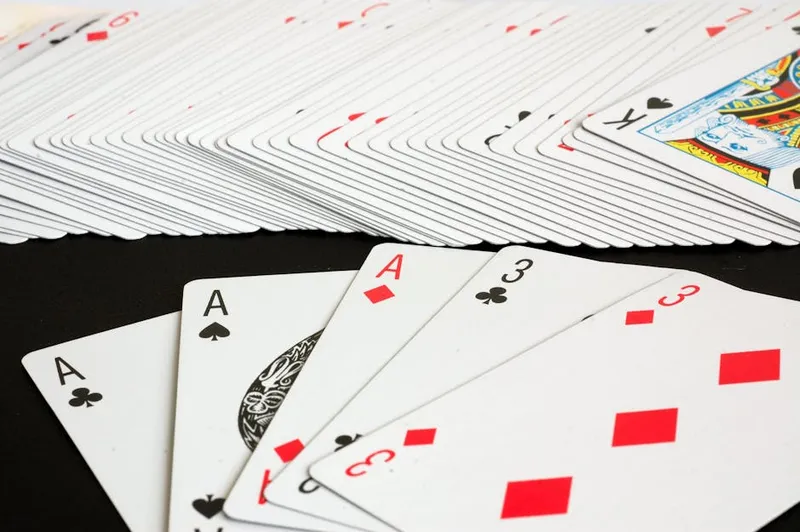
How 6 deck blackjack compares to 2-deck and 8-deck
Most casinos run a mix. The right game depends on conditions, not the deck count alone.
At a 6D S17 DAS LS table, the base edge is -0.26%. At a 2D S17 DAS LS table, the same rules give you -0.12%. At an 8D S17 DAS LS table, -0.28%. The double deck blackjack strategy game is the best math. The 8-deck game is the worst.
The trade-off is heat and pen. Heat goes up sharply at 2D because casinos know advantage players prefer the game. Pen at 8D varies wildly and can drop below 60% at some shops. 6-deck penetration is the most consistent across casinos, usually 70% to 75%, and the cover is more forgiving than at 2D.
A practical read for a counter starting out: drill 6D first. The math is the textbook math. The cover is reasonable. Once 6D is automatic, add 2D for the lower base edge. The Elite tier on CountEdge adds 2-deck game support specifically because most counters graduate to it. The 8D game is a fallback. If the only 8D table is cut at 75% with a clean ruleset, it is a better game than the 6D table next to it cut at 60%.
The honest version: most people who try 6 deck blackjack strategy and quit did not lose to the house edge. They lost to variance. Three losing sessions and they decided the system does not work. The system works. The graph proves it. But if your bankroll cannot survive the downswings or your ego cannot handle being wrong in the short term, you will quit before the edge has time to show up.
A 6D S17 DAS LS table at 3:2 is the most reliable public blackjack game in the casino. The base house edge is -0.26%. A clean Hi-Lo player at a 1-8 spread captures roughly +1.0% to +1.5% over that base, depending on penetration and ramp shape. The math is settled. Griffin proved it. Schlesinger proved it. The variable left is whether you can sit at a 6-deck shoe for two hours, run the count cold, ramp clean, hold cover, and walk away without giving the floor a reason to remember your face.
That is the part the chart cannot teach. Drill the chart on the free CountEdge tier for the basic strategy work. The 14-day Pro trial opens the running count, true count, I18, and Fab 4 drills. The Elite tier adds the Deviation Drill screen, the Cover Coach, and the Kings Bounty optimizer. The whole story is on the About page. The next 6-deck shoe is at the casino tonight. Do the work first.