Card Counting Practice: The Drills That Stick
Card counting practice means three things in this order: count down a single deck cleanly, count down a 6-deck shoe at casino pace, and convert running count to true count cold at any point in the shoe. Until those three are automatic, no other drill matters. The fancy stuff (deviations, cover, multi-hand, side bets) comes later. Most people who quit counting did not quit because the math was wrong. They quit because they tried to skip the boring card counting drills, took a real bankroll to a real table, and got punished by variance they were not ready to absorb. This post lays out the practice ladder that works, with the speed targets that mark each rung as done.
Card counting drills start with the 30-second deck count
Start with one deck. Shuffle it. Flip cards one at a time and run a Hi-Lo count. Aces and tens are -1. Sevens, eights, and nines are 0. Twos through sixes are +1. End the deck. If you do not land on zero, something went wrong on a card. Do it again.
The first goal is accuracy. The second goal is speed. Most published targets land around 25 to 30 seconds for a single deck. Until you can count down a deck in under 30 seconds, five times in a row, you are not done with single-deck practice.
That sounds like a small skill. It is not. The 30-second deck is where Hi-Lo stops being a math problem and starts being a language. A 4 of clubs is no longer a 4 of clubs. It is +1. A jack of hearts is no longer a face card. It is -1. Once cards stop translating in your head, the count gets fast. Until they translate, every card costs you cognitive load you do not have at a real table.
This is the rung most beginners skip. Card counting basics start here, not at the blackjack trainer app.
Drill it on the couch. Drill it standing in line. Drill it while a podcast plays in the background. The translation has to survive distraction. A casino is the noisiest place on earth and nobody pauses for you.
When the deck count hits sub-30 and stays there, move on. Not before.
Move to a full 6-deck shoe at casino pace
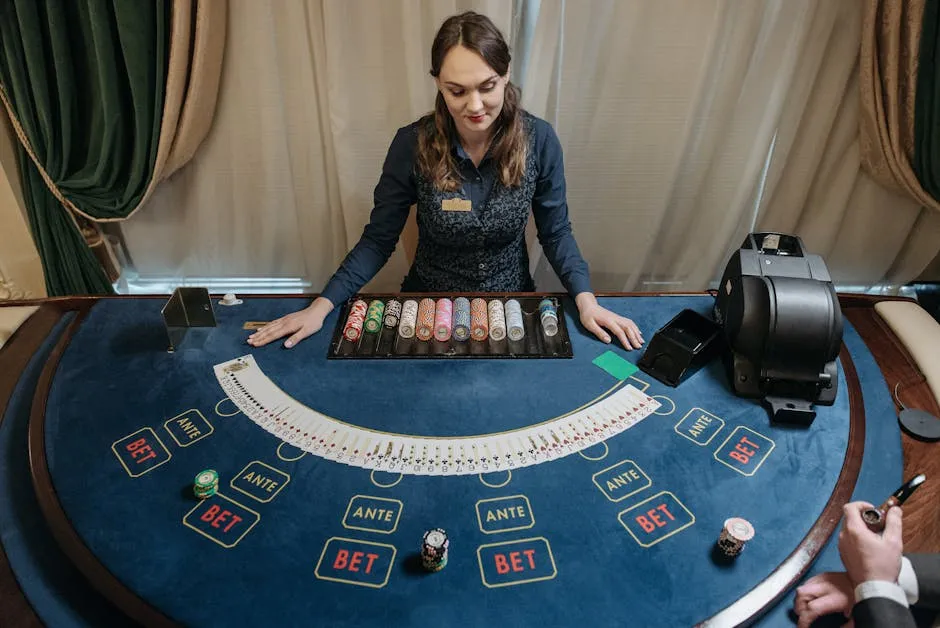
Six decks is six times harder than one deck, and not in the way you expect. The math does not change. The pacing does. A real dealer at a 6-deck H17 DAS LS table runs roughly 80 hands per hour. That is the standard 6 deck blackjack strategy game. Cards come fast and they keep coming.
The drill: count down a full 6-deck shoe at dealing pace. Stop the shoe at random points and call the running count out loud. Resume. Finish the shoe at zero.
If you bust the count once at minute 12 of a shoe, you bust the count for the rest of the shoe. Recovery is not a real option at the table. Either the count is right the whole way through or you are flat-betting a count you cannot trust.
Free counting cards blackjack practice game tools online will get you through this drill. So will the CountEdge trainer. The medium does not matter. What matters is that you can call the running count cold at any point in the shoe, and that you can do it at the speed a real casino deals.
The first time most people try this they lose the count somewhere around deck three. That is normal. Drill it daily. Twenty minutes of focused blackjack training beats two hours of distracted clicking.
True count practice is the drill that separates beginners from counters
Running count is the input. True count is the output. Bets get made on true count. Deviations get made on true count. If you can run a deck but cannot convert, you are not yet a card counter. You are someone who is good at adding negative ones and positive ones.
The conversion is simple in theory: TC = floor(RC / decks remaining). Always floor. Never round. A running count of +9 with three decks left is a true count of +3. A running count of +9 with 4.5 decks left is a true count of +2.
The drill: deal a shoe, stop at random, ask yourself two questions. What is the running count? How many decks are left? Then floor the division. Keep doing it until the conversion is automatic.
Casino conditions make this harder. The discard tray sits across the table. You estimate decks remaining by eyeballing the discard rack and subtracting from total. Estimate to the half-deck. A half-deck error in the denominator can swing your true count by a full unit, and a full unit on the bet ramp is the difference between $30 and $100 on the table at TC+1 vs TC+2.
True count practice is the drill nobody talks about and everybody fails first. Spend more time here than you want to. The whole edge in card counting comes from blackjack true count work: converting running count cleanly and getting your bets out at TC+2 or higher. At a +0.5% edge per true count, every count point you misread is a count point of EV you give back.
Drill the Hi-Lo system deviations after the count is automatic
Basic strategy first. Count second. Deviations third. Skipping that order will hurt you. A new counter who is sloppy on basic strategy is donating a bigger edge to the house than they will ever recover by counting.
Once running count and true count conversion are automatic, drill the I18 (Illustrious 18) and Fab 4 surrender deviations. These are the 22 most valuable index plays in shoe blackjack, the core of any advanced blackjack strategy, published by Don Schlesinger in Blackjack Attack. Pro covers all of them. Insurance at TC+3. 16 vs 10 stand at TC zero. 12 vs 3 stand at TC+2. 10,10 vs 5 split at TC+5. None of these match basic strategy. All of them are worth real EV when the count says yes.
A common mistake at this stage: drilling deviations on a flashcard app and then never using them at the table because the play "feels wrong." 16 vs 10 at TC+5 with $200 on the felt is the moment the entire post-count practice ladder gets tested. Stand. Variance does not care that you stood. The math does, and over a long enough sample the math wins.
The Elite tier on CountEdge has a Deviation Drill screen with a flashcard mode and a shoe mode. The shoe mode runs the count under you and surfaces an I18 or Fab 4 play at the count where it applies. Drill the play. Drill the count it triggers at. Then drill the situation around it.

A quick word on Hi-Lo, since the YouTube hole is deep
The Hi-Lo system is still the right starting system for 95% of counters. YouTube has spent a decade pitching Zen, Halves, Wong Halves, and other multi-level systems to people who cannot count down a single deck cleanly. The marginal gain from a level-2 or level-3 system is real but small. The error rate at the table from a more complex system is large.
A clean Hi-Lo player playing accurately captures around 97% of the theoretical edge available to a perfect Wong Halves player. The remaining 3% gets eaten three times over by the higher error rate at the table when you are tracking fractional values under casino conditions. Until you can run a Hi-Lo shoe at speed, in noise, with a drink in your hand, with a chatty dealer, and call the true count cold at any point, you have no business switching systems.
Drill Hi-Lo. Hi-Lo wins money. The fancy systems are a hobby for people who already mastered Hi-Lo and got bored. Card counting high low is the system the entire CountEdge trainer is built around for that exact reason.

Practice with distractions before you ever sit down
A clean shoe in a quiet room is not card counting practice. It is rehearsal for the skill, not the skill itself.
The skill is keeping the count alive while the dealer asks if you want even money on a blackjack against an ace, while the player to your right keeps splitting pairs of fives, while the cocktail waitress wants to know what you are drinking, while the pit boss who has been hovering for 20 minutes finally walks over to compliment your shirt.
Practice with the TV on. Practice while someone in the room asks you questions. Practice while you do basic mental math on a side. Blackjack card counter practice is not real practice if it only happens in silence. The trainer is the warmup. The casino is the test.
If you cannot run a shoe with a podcast playing at full volume, you cannot run a shoe in a casino on a Saturday night. Drill until the count survives.
The mistakes I made that better practice would have caught
The hardest part of learning to count was not the math. The math is learnable. The hard part was putting the big bet out when the count called for it and not pulling back at the last second.
Early on I convinced myself the entire casino was watching. That the moment I pushed $300 onto two hands the pit would know exactly what was happening. So I would shade the bet down. Put out $100 instead of $300. Tell myself I would spread harder next shoe.
The reality: 90% of the time the pit is watching the dealer, not you. Their job is making sure the house does not make a payout error. You are not the priority you think you are.
The cost of that fear is real. Doubling tens on a dealer ten at TC+4. Splitting tens on a dealer five at TC+5. These are the plays where the count is doing the most work and the bet is already big. Not making the play does not just cost you EV on that hand. It costs you the entire reason you sat down.
Bet ramp drills fix this. Set up a fake table. Decide your bets in advance: $10 at TC 0, $30 at TC+1, transition to two hands at TC+2 with $30 each, $50 each at TC+3, $100 each at TC+4, $150 each at TC+5, $300 each at TC+6 and above. Run a shoe. When the count hits TC+4 in your drill, push the imaginary $200. When it hits TC+6, push the imaginary $600. Get used to the feeling before the chips are real.
The count does not care about your ego. Neither does the variance. Put the money out.

Free vs paid card counting practice tools
Free blackjack practice options exist. A deck of cards costs nothing. The Wizard of Odds offers a free online blackjack trainer that lets you select Hi-Lo and will tell you when you misplay a deviation. Free phone apps cover basic running count drills. For the 30-second deck drill and basic running count work, free is fine. Use it.
The gap shows up at the next stage. Free tools rarely simulate true count conversion under deck-estimation pressure. Few of them surface deviations the way they happen at the table. Almost none track your weak spots and feed them back to you so you know which 16 vs 10 you keep missing.
That is what the free CountEdge app is for. Full trainer with running count and true count display, the I18 and Fab 4 deviation set, the AP Analyzer for EV and Risk of Ruin and N0 modeling, session tracking, weakness reports, and two saved game profiles for the rules you play. Elite ($97/mo or $970/yr) adds the Deviation Drill screen with shoe mode, the Kings Bounty side bet optimizer, the Cover Coach for backoff risk scoring, multi-hand drills, two-deck game support, and unlimited game profiles.
The honest version: free tools are fine for the first 50 hours of card counting practice. After that, the gap between flashcard work and table-ready card counting strategy gets expensive to bridge without a real trainer.
When card counting practice is not enough yet
Drilling does not solve every problem. Some things only the table teaches. Heat. Cover. The way variance feels at $200 a hand when the shoe goes cold for two hours. The way a pit boss decides to comp you a meal and watch your eyes for the next 40 minutes.
Practice does not replace the table. Practice prepares you for it. The two are not the same thing.
Two honest signals you are not ready yet:
- You cannot run a 6-deck shoe at casino pace without losing the count.
- Your bankroll is less than 250 average bet units. At a $25 average bet, that is $6,250. Below that, the math says your Risk of Ruin is too high to play a real spread.
If either is true, do not sit at a real table for real money yet. Drill more. Build the bankroll. The count will still be there next month. The casino will still be running the same game. Walking in early costs more than waiting.
Card counting practice is not glamorous. It is a single deck on a coffee table, a shoe on a screen, a flashcard app on the bus. Twenty minutes a day for 90 days. Then more. Every counter who has ever made money does this. Drill the count, drill the conversion, drill the deviations, drill the bet ramp. The casino has been running the same math game since 1963. They are still in business. Practice the math hard enough and you take a small piece of theirs back.
The best card counting practice tool is free. CountEdge gives you running count, true count, I18, Fab 4, weakness reports, and full shoe drills — no credit card. Drill twenty minutes a day. If you want a coach watching your real mistake data each week and telling you exactly what is costing you money, the blackjack coaching program is the next step. The team behind CountEdge coaches it, and the support and FAQ answers the common questions first. Profitable counter or money back.