Advanced Blackjack Strategy: What Actually Beats the House
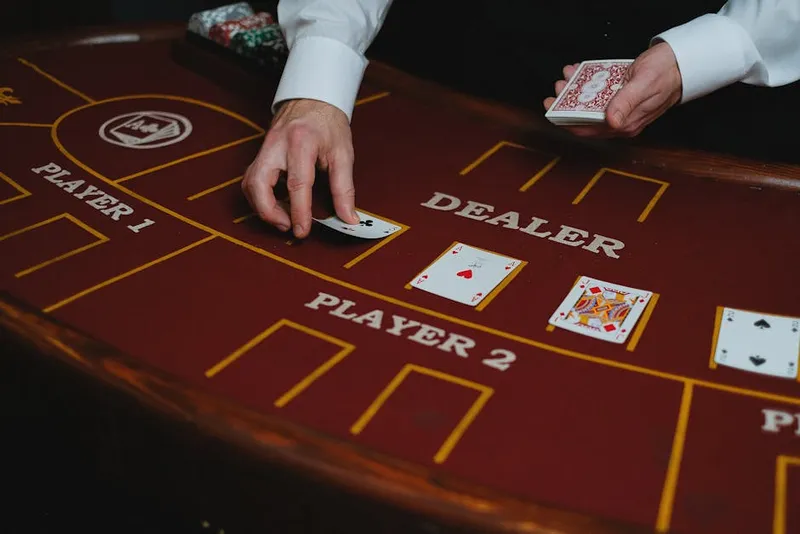
Advanced blackjack strategy is what you do once basic strategy is automatic. It is the running count, the true count, the I18 and Fab 4 deviations, the bet ramp that fits the count, and the cover play that keeps you sitting at the table long enough to actually collect the EV. The math is settled. Griffin proved it. Schlesinger proved it. The variable left is whether you can run it cold for two hours at a real table without telegraphing what you are doing. This post lays out exactly what fits under "advanced," what each piece earns, and where the strategy stops working if you skip a rung.

Advanced blackjack strategy starts where basic strategy ends
A perfect basic strategy player at a 6D H17 DAS LS game is already only 0.47% behind the house. Most casino players give up another 1 to 2% by misplaying soft hands, deviating from the chart by feel, and mishandling pairs. There is no advanced layer worth a single dollar until that part is automatic.
A new counter who is sloppy on basic strategy is donating a bigger edge to the house than they will ever recover by counting. Drill the chart until it is automatic at every common ruleset you play. Then add the running count. Then true count. Then deviations. The order matters because the count cannot save bad basic strategy. Card counting basics belong at the bottom of the stack, not the top.
The 6 deck blackjack strategy chart you drill should match the exact ruleset of the table you sit at. A chart that says "double 11 vs A" might be correct at 2D and wrong at 6D H17. Pick one ruleset, drill that chart cold, then cross-reference the variants like the double deck blackjack strategy and single deck blackjack strategy charts. Real blackjack strategy charts at this level are ruleset-specific. The generic charts on Reddit get you small leaks you cannot see at the table.

The Hi-Lo system is the foundation of every advanced count
Hi-Lo is still the right starting system for 95% of new counters. YouTube has spent a decade pitching Zen, Halves, Wong Halves, and other multi-level systems to people who cannot count down a single deck cleanly. The marginal gain from a level-2 or level-3 system is real but tiny. The error rate at the table from a more complex system is huge.
A clean Hi-Lo player playing accurately captures roughly 97% of the theoretical edge available to a perfect Wong Halves player. The remaining 3% gets eaten three times over by the higher error rate at the table. Until you can run a Hi-Lo shoe at speed, in noise, with a drink in your hand and a chatty dealer, and call the true count cold at any point, you have no business switching systems. The fancy systems are a hobby for people who already mastered Hi-Lo and got bored.
Quick refresher on the Hi-Lo card values: cards 2 through 6 count as +1. Cards 7, 8, and 9 are zero. Tens, face cards, and aces are -1. Over a full shoe the running count returns to zero. The whole card counting strategy lives in those three buckets.
Blackjack true count conversion is the part nobody drills enough
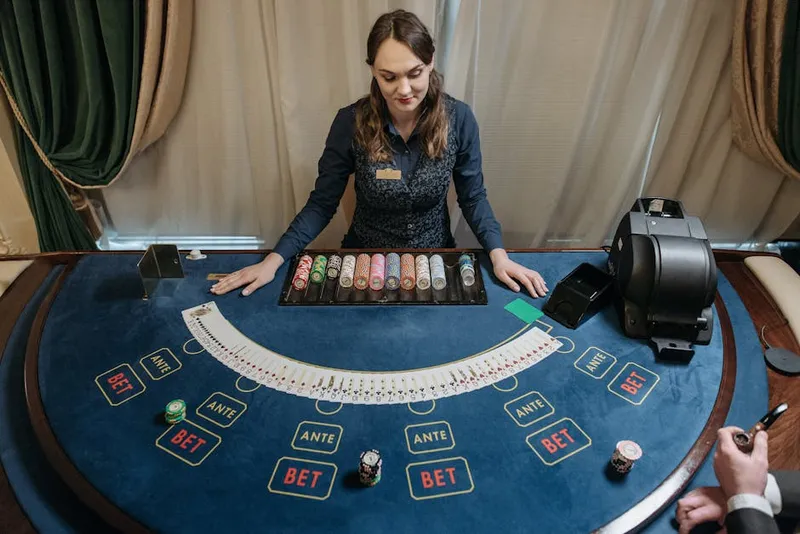
The blackjack true count is the running count divided by the number of decks remaining. Always floor the result. Never round. Running count of +6 with 2 decks left is TC+3. Running count of +5 with 3 decks left is TC+1. Floor.
This is where most counters have their biggest leak. They run the running count clean, then guess at the deck count, miss the true count by a level, and either bet the wrong amount or play the wrong index. A counter who is half a deck off on penetration estimates is paying for the count without using it accurately.
Three card counting practice drills that fix the leak:
- Deal a 6-deck shoe at home. Stop at random points. Call the running count, decks remaining, and true count out loud. Verify against the discard rack. Repeat until you can do it without thinking.
- Drill discard-rack estimation cold. Most counters can call a 1-deck stack within a quarter-deck. Get to within a half-deck on a stack of any size. The CountEdge trainer runs full 6-deck shoes at casino pace and tests the conversion at random points.
- Practice with distractions. Run the count while a podcast plays. Counting cards in a loud casino while a drunk guy next to you keeps asking if you should split 10s is the real skill test. The trainer is just warmup.

Index plays and deviations earn the count its money
The Illustrious 18 plus Fab 4 is the most valuable 22-play set in the game. Don Schlesinger published the standard set in Blackjack Attack. Every advanced blackjack strategy worth the name uses it. See the Blackjack Apprenticeship deviation reference for the full chart background.
The plays that swing the most EV at a positive count:
- Insurance at TC+3 or higher. Take it. The math is settled. Insurance is the highest-EV index play in the I18 at any deck count.
- 16 vs 10 stand at TC 0. Already a stand at neutral count. Drill it.
- 15 vs 10 stand at TC+4. Hit at low counts, stand at +4 and above.
- 12 vs 3 stand at TC+2. Switches from hit to stand at +2.
- 10,10 vs 5 split at TC+5. Almost never the right play. When it is, the bet is already big.
- Late surrender 15 vs 10 at TC 0. Take it from neutral count up if the table offers LS.
There is a faction of new counters who refuse to deviate from basic strategy because "it feels wrong." They will hit 16 vs 10 at TC+0 (correct) and also hit 16 vs 10 at TC+5 (wrong by a meaningful margin). The deviations are where the count earns most of its money in shoe games. Skipping them means you are paying for the count without using it.
At TC+4 and above the index plays start to dominate the EV calculation. The I18 plus Fab 4 captures roughly 80% of the available index EV with 22 plays. The CountEdge app covers the I18 and Fab 4 plus an expanded deviation library. Its Deviation Drill shoe mode runs the count under you and surfaces an index play at the count where it applies. Drill the play. Drill the count it triggers at. Drill the situation around it.

Bet ramp shape is the engine of advanced play
The entire edge in card counting comes from betting more when the count is positive. A 1-1 spread at any count gives you a flat house edge regardless of how accurately you are counting. Flat-betting through a positive count is worse than not counting at all. The count is the trigger. The spread is the engine.
Hi-Lo edge per true count is +0.5%. A 6D H17 DAS LS game runs at -0.47% off the top. You need to consistently get your bets out at TC+2 or higher just to overcome the house edge. A 1-8 spread at that game pulls you to roughly +1.0 to +1.5% edge depending on penetration and ramp shape.
A working ramp at a $10 minimum 6-deck shoe:
- TC 0: $10 on one hand
- TC+1: $30 on one hand
- TC+2: $30 per hand on two hands
- TC+3: $50 per hand on two hands
- TC+4: $100 per hand on two hands
- TC+5: $150 per hand on two hands
- TC+6 and above: $300 per hand on two hands
The transition from one hand to two at TC+2 is doing two things at once. It raises the action, and it diversifies variance. Multi-hand variance at 2H runs at 72.7% of single-hand Kelly per Griffin's covariance math (variance per hand 1.33, covariance 0.50). The 2H structure smooths the swings and lets you keep the spread in front of the floor without making the unit-jumps look like a chart.
If you are scared to spread, do not count. Train, build a bankroll, and come back when you can.

The blackjack strategy book canon you should actually read
A blackjack strategy book is not the same as a strategy chart printed on the back of a casino card. The canon for advanced play is small and the same names show up in every serious bibliography.
The four that earn the shelf space:
- Theory of Blackjack by Peter Griffin. The math source for edge per true count, Hi-Lo standard deviation, and multi-hand covariance. Dense. Worth it.
- Blackjack Attack by Don Schlesinger. The standard reference for Risk of Ruin, N0, the Illustrious 18, and the Fab 4. The most cited source in working AP circles.
- Professional Blackjack by Stanford Wong. The original spread and Wonging treatment. Older but still load-bearing.
- Beat the Dealer by Ed Thorp. The book that started it. More historical than tactical now, but the proof that the count works lives here.
The internet is full of advanced blackjack strategy posts that paraphrase those four books without naming them. The original math is sharper than any blog summary. For deeper math on variance and standard deviation in blackjack, the Wizard of Odds variance reference is the cleanest free source online.
The honest version of card counting education is a trainer that lets you grind shoes until you can count one in your sleep. A working AP making $50 to $100 per hour on a moderate spread does not have time to film a 12-week curriculum. The economics do not work. Anything more expensive than a book, a trainer, and a coach who reads your actual hand data is selling something other than an edge.

Cover separates the professional blackjack player from the target
A professional blackjack player at a real table does not look like the chart. The chart says spread 1-8 at TC+2 and the math is right. The pit boss's job is to spot exactly that pattern. The gap between what the table thinks is happening and what is actually happening is the whole game.
Most card counting apps will get you backed off in a month because they teach the chart and stop there. A counter who consistently jumps from $10 to $300 the moment the count goes positive is more visible than a $300 flat-bettor. Pit bosses watch bet patterns first, count second. CountEdge built the Cover Coach because the training apps that ignore cover get their users caught and tag the games as burned. Backoff is the cost of bad cover, not the cost of counting itself.
Cover that works:
- A bet ramp shape that matches a recreational hot-streak player, not a math chart. Move the unit up gradually, not in one jump from minimum to max.
- Eye discipline. Do not stare at the discard tray. Glance and move on.
- Conversation that does not require the count. Be the player who shrugs and orders another soda water with lime.
- Rounded bet sizes. Push out $50, not $52. The chips should look casual.
- Walk away when the shoe goes cold. Sitting through three flat shoes burns clock and the floor notices stillness as much as it notices spread.
Cover that does not work: making a deliberately wrong play to look bad. Hitting when you should stand, flat-betting through a hot count, splitting wrong. Those are the moments the count is making you money. Giving that up to look less suspicious is a bad trade. Never sacrifice EV for cover.
Real counters have a certain swagger at the table. The people cosplaying as counters try to represent that same energy. As someone skilled you can clock it immediately. The casino usually cannot. That is half the gap closed before you sit down.

Where advanced blackjack strategy breaks down
Some things do not save an advanced game. Knowing the limits is part of the strategy.
The honest warnings:
- Bankroll under 250 average bet units. At a $25 average bet that is $6,250. Below that, the math says your Risk of Ruin is too high to play any real spread. The Schlesinger formula does not care what you wish your bankroll were: RoR = e^((-2 × evHourly × bankroll) / varHourly).
- Pen below 60%. A shoe cut at half is a worse game than a shoe cut at three quarters. Watch the cut card before you sit down.
- 6:5 blackjack payout, ever. Adds about 1.39% to the house edge and erases the entire deck advantage in one rule change. Walk past every 6:5 table.
- Side bets without the count. Lucky Ladies, 21+3, Perfect Pairs, Kings Bounty without the count. House edges run between -3% and -7%. A counter who throws $5 on every side bet adds the cost of the entire base game to their hourly loss.
- Tilt-driven bet sizing. Variance does not care that you did everything right. A losing session is the default for any short stretch. A skilled counter loses about four sessions out of ten. If you cannot tolerate that, you cannot count cards. The math will not save you from bad bankroll discipline.
You will not feel the edge session to session. You will see it in your graph. It dips and turns like the stock market but it goes in one direction. Up. That is when you know it works. Most people who try and quit lost to variance, not to the casino. Three losing sessions and they decide the system does not work. The system works. The graph proves it. But if your bankroll cannot survive the downswings, you will quit before the edge has time to show up.
The CountEdge app covers the full advanced blackjack strategy stack: running count, true count, I18, Fab 4, Deviation Drill, Cover Coach, Kings Bounty, multi-hand, AP Analyzer with real Risk of Ruin. The app is members only. It comes with the coaching program, where a coach reads your weekly numbers and tells you which deviations you keep missing under heat. Guarantee attached. Jacob's story is how the program started, and the support and FAQ covers how coaching works. The next shoe is at the casino tonight.