Blackjack Trainer App: What Actually Works in 2026
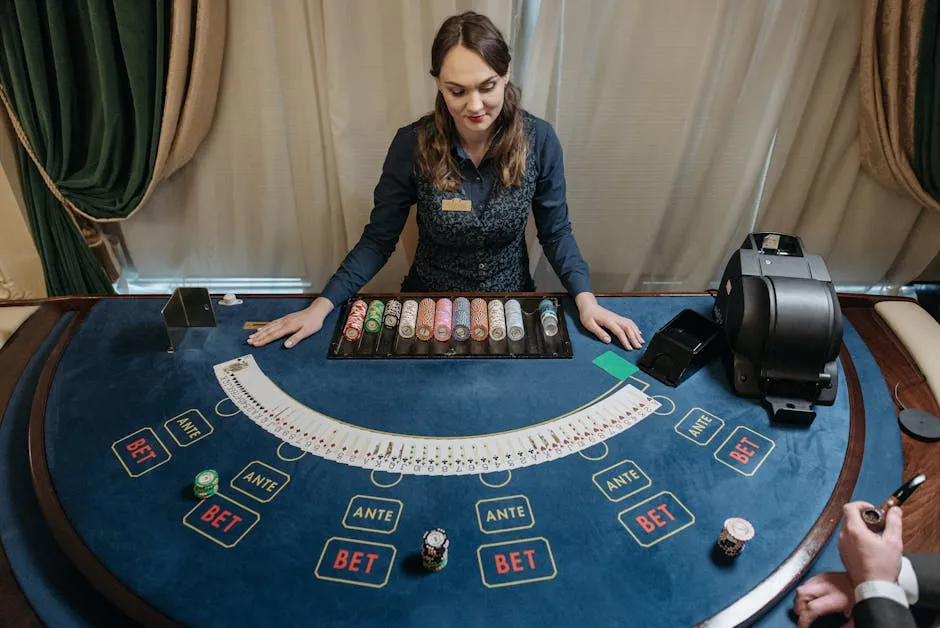
A blackjack trainer app should do three things: drill basic strategy until it is automatic, drill the running count and true count under shoe conditions, and surface the I18 and Fab 4 deviations at the count where they apply. That is the working list. Most blackjack trainer apps stop at the first item, charge for the second, and never get to the third. The result is an app store full of tools that teach you to play perfect basic strategy and then leave you flat-betting through hot shoes because nothing in the app ever taught you to spread or deviate. This post is a working counter's read on what to look for in a blackjack trainer app, what to skip, and which features pay back the price you pay for them.
What a blackjack trainer app should actually do
The job of a blackjack trainer app is narrow. Drill the math you will use at a real table until the play arrives in your hands before your brain catches up.
That is it. Everything else in a trainer app is decoration.
The math splits into four buckets. Basic strategy by ruleset, because a perfect basic strategy player at a 6-deck H17 DAS LS game is already only 0.47% behind the house. The Hi-Lo running count, because the entire edge in card counting starts with adding plus-ones and minus-ones at casino pace. True count conversion, because bets and deviations are made on true count, not running count. And the I18 plus Fab 4 deviation set, the core of any advanced blackjack strategy, because index plays carry most of the EV at high counts.
A trainer that drills all four is a trainer worth using. A trainer that drills only the first one is fine for the first month and useless after that.
The good ones add three more things. A bet ramp drill, so the spread becomes muscle memory. A weakness report, so you know which 16 vs 10 you keep getting wrong. And an EV analyzer for Risk of Ruin and N0 modeling, so you have a real number for how big your bankroll needs to be at your spread.
That is the full list of functions a real trainer app needs. Slot animations and chip-throwing sound effects are not on it.
Basic strategy trainers vs the full counting build
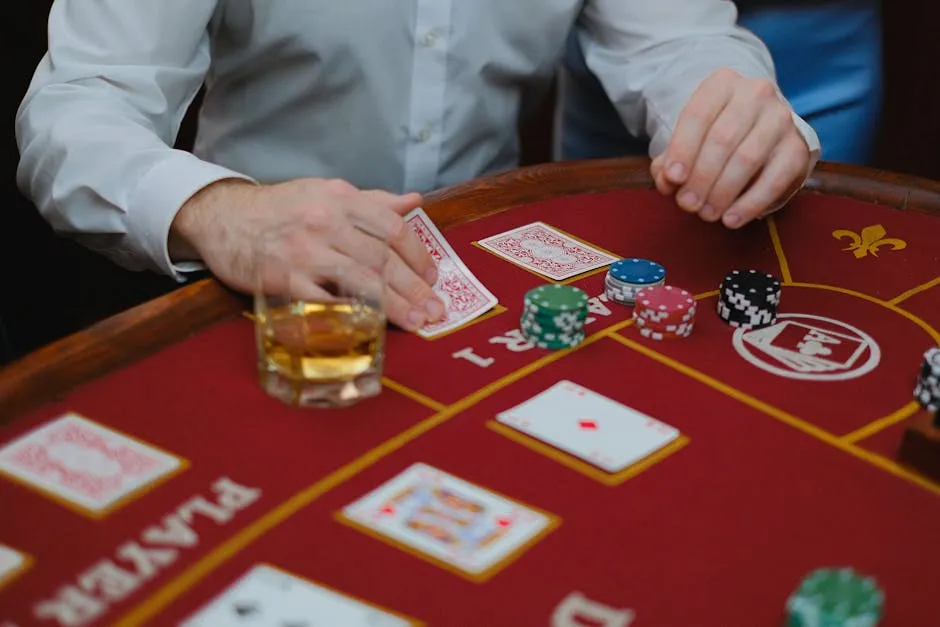
Most apps in the App Store labelled "blackjack basic strategy trainer" do exactly one thing: flashcard mode against a strategy chart. You see a hand, you pick a play, the app tells you if you matched the chart.
That is fine. It is also where most of these apps end.
A perfect basic strategy player at 6D H17 DAS LS sits at -0.47%. At 6D S17 DAS LS the house edge drops to -0.26%. The flashcard trainer gets you to that floor. Past that, you are not gaining edge. You are just paying house edge faster because you play more hands per hour.
A blackjack strategy trainer that stops there is sold to recreational players who want to lose less, not to counters who want to win. There is nothing wrong with that audience. It is just a different audience.
The full counting build adds three layers a flashcard trainer cannot reach. Running count under live dealing pace, where cards come fast enough that you cannot pause to translate. True count conversion under deck-estimation pressure, where you have to eyeball the discard rack and floor the division to the half-deck. And deviation surfacing tied to the count, so the app puts a 16 vs 10 in front of you at TC+0 and at TC+5 and tests whether you stand or hit at each.
The gap between a basic strategy trainer and a counting trainer is the gap between losing 0.47% on a perfect chart and earning roughly +0.5% per true count above the house edge. The math sources are Griffin and Schlesinger. The numbers do not change. What changes is whether the app trains you to use them.
Where most card counting apps quietly fall apart
Here is the unflattering truth about the card counting app market: most of these apps will get you backed off in a month.
The training apps that teach you to "watch every card and bet the count" are teaching you exactly what a pit boss has been trained to spot since 1963. A counter who consistently jumps from $10 to $300 the moment the count goes positive is more visible than a $300 flat-bettor. Pit bosses watch bet patterns first, count second.
Real counting at a real table involves bet ramps that look natural, eye discipline that does not telegraph what you are tracking, and play decisions that match the cover story you are telling. None of that is in the basic count-and-spread apps.
The standard blackjack card counting trainer assumes the table is a vacuum. It drills the count, surfaces a play, marks you right or wrong, and resets. It never tests whether you can hold the count while a cocktail waitress wants to know what you are drinking, or whether you can push $200 onto two hands at TC+4 without your hands shaking, or whether your bet ramp at this game would set off a CRA alert in a small casino's monthly review.
A blackjack card counting app that wins money trains the play, the spread, and the cover. The ones that train only the play sell well because the math feels closer than it is. They get downloaded, the user drills for two weeks, the user goes to a real table, the user gets capped or backed off inside a month, and the app gets a five-star review anyway because it taught the count technically correctly. Backoff is the cost of bad cover, not the cost of counting itself.
The features that make a blackjack trainer app worth paying for
A free flashcard trainer gets you the basic strategy chart. A paid trainer earns its price on six features. Look for these specifically.
Real shoe simulation, not flashcard mode. The app deals a 6-deck shoe at dealing pace, the same conditions any 6 deck blackjack strategy game runs at, the count moves with the cards, and you have to call the running count and true count at random checkpoints. Static flashcards do not test the skill that matters.
True count conversion under deck-estimation pressure. The app surfaces the discard rack, you estimate decks remaining to the half-deck, the app floors the running count divided by your estimate, and you are scored on accuracy. Half-deck error in the denominator can swing your true count a full unit. That matters.
Deviation drilling tied to the count, not flashcards. A trainer that asks "16 vs 10 at TC+5: hit or stand?" in flashcard mode is teaching the answer without the trigger. A trainer that runs a shoe under you and surfaces the same hand at the moment the count crosses TC+5 teaches the trigger and the play together.
Bet ramp drilling. The app holds your bet ramp for your spread and game, walks the count up and down, and forces you to push the right number of chips at each TC. This is the muscle memory that fails first at a real table when nothing else has practiced it.
Weakness tracking. The app remembers which 16 vs 10 you keep missing, which insurance call you keep flubbing at TC+3, which 12 vs 3 stand you keep hitting at TC+2. Then it feeds those plays back at you more often. Without this, you drill what you already know and skip what you do not.
A real EV analyzer. Not a guess. Edge per true count, hourly EV, hourly variance, Risk of Ruin against your bankroll, N0, and Kelly bet sizing. The math is not new. Griffin published most of it in The Theory of Blackjack. Any trainer that calls itself serious should expose it.

Free online blackjack trainer tools and where they stop being enough
Free options exist and they are useful. An online blackjack trainer in your browser costs nothing and can drill basic strategy fluently. The Wizard of Odds free trainer lets you select Hi-Lo and tells you when you misplay a deviation. Deck-of-cards drills cost less than the gas to drive to a casino.
For the first 50 hours of card counting practice, free is fine. Use it.
The gap shows up at the next stage. Free blackjack trainer tools rarely simulate true count conversion under deck-estimation pressure. They surface deviations as flashcards, not as live shoe events. Almost none track which plays you keep failing and feed them back to you in the next session. None of them model your hourly variance or your Risk of Ruin at your specific bankroll and spread.
That is where paid trainers earn their money. The skill ladder past flashcards is the part where you stop guessing how good you are and start measuring it. A trainer that gives you a real EV number, a real RoR number, and a real weakness report is the trainer that tells you whether you are ready for a $200 average bet at a $25-minimum table.
The honest version: a free online blackjack trainer is a great place to start. It is a bad place to finish. Once you can run a 6-deck shoe in your head at casino pace and call the true count cold at any point, you have outgrown the free tools. The paid tier is not a status purchase. It is the next part of the curriculum.

What CountEdge does that other blackjack trainer apps do not
Free tier gets you basic strategy. Pro gets you the count. Elite gets you the Kings Bounty optimizer, the Cover Coach, and the quiet confidence of someone who has done the math.
The free CountEdge app is the full counting trainer with running count and true count display, the Illustrious 18 deviation set, the Fab 4 surrender set, all drill modes, the AP Analyzer with full EV and Risk of Ruin and N0 and Kelly Criterion, the session tracker with cumulative earnings chart, two saved game profiles, and a weakness report. Web access, no credit card. That is the working counter build.
Elite is $97/mo or $970/yr. It adds the expanded deviation library with individual toggles, a dedicated Deviation Drill screen with both flashcard mode and shoe mode, the Kings Bounty side bet optimizer (breakeven at TC+6.618, play at TC+7), the Cover Coach with backoff risk scoring, multi-hand drilling at the 72.7% Kelly fraction Griffin's covariance math gives you, double deck blackjack strategy support, unlimited saved profiles, and CSV data export.
Counting cards in a loud casino while a drunk guy next to you keeps asking if you want to split tens is the real skill test. The trainer is the warmup. CountEdge is built by a counter who plays at BC casinos most weekends, which is why the Cover Coach exists in the first place. Most trainer apps do not have one because most trainer apps are not built by working counters.
The pricing reflects what the math costs to model and train, not what a personality brand can charge for a video library. The honest version of card counting education is a trainer that lets you grind shoes until you can count one in your sleep. CountEdge is that trainer.

When a blackjack trainer app is the wrong tool
A trainer app is a small purchase relative to the bankroll it is trying to grow. It is also not always the right purchase.
Do not pay for a blackjack trainer app if you are losing money recreationally and looking for a way to break even. The base house edge on a 6D H17 DAS LS game is -0.47%, which costs a $25-bet recreational player about $9.40 an hour. Variance, tilt, and side bets push that loss to ten times the math. A trainer app teaches you to play the base game perfectly. It cannot teach you to walk away after three drinks. If your loss is not a basic strategy problem, fixing your basic strategy will not fix your loss.
Do not buy a counting trainer if your bankroll is below 250 average bet units. At a $25 average bet, that is $6,250. Below that, the Risk of Ruin formula (RoR = e raised to the power of (-2 times evHourly times bankroll) divided by varHourly) tells you the math eats you before the edge plays out. The trainer is not the limiter. Your bankroll is. Build the bankroll first, drill basic strategy on the free app in the meantime, and come back to the paid build when the bankroll math works.
Do not buy a counting trainer if you do not intend to spread. A counter who flat-bets a positive count has the exact same expected loss as a non-counter, plus a tax on attention. The count is the trigger. The spread is the engine. If you are scared to spread, the trainer cannot help you. Train, build a bankroll, and come back when you can.
The trainer is for the counter who will use it. For everyone else, the App Store is full of apps that will charge you a subscription to feel productive while you do not improve.

What to ignore when picking a blackjack trainer app
A few signals reliably mark a trainer app as one to skip. None of these are deal-breakers individually. Stack two or three and the app is not built for serious work.
A trainer that pitches level-2 or level-3 systems before it has a clean Hi-Lo build. Hi-Lo is still the right system for 95% of counters. A clean Hi-Lo player captures roughly 97% of the theoretical edge a perfect Wong Halves player gets, and the remaining 3% gets eaten three times over by the higher error rate at the table. An app that markets Wong Halves first is selling complexity for its own sake.
A trainer that does not say where its math comes from. Edge per true count, variance, Risk of Ruin: these are not opinions. They are Griffin, Schlesinger, and Jacobson. A trainer that cannot cite its sources is making the numbers up or copying them from a forum thread.
A trainer that is 80% slot-style game and 20% strategy. The chip-throwing animations and the lobby music are designed to keep you tapping. A real trainer should feel a little dry. Drilling a 6-deck shoe at casino pace is not entertainment. The point is repetition, not engagement.
A trainer marketed with phrases like "level up your game" or "master the casino" or "elevate your blackjack." Marketing copy that reads like every other gambling app's marketing copy is usually attached to an app that plays like every other gambling app. Working counters do not write that copy. Salespeople do.
Reviews that all read the same. A 5,000-five-star app where every review says "great app, easy to use, would recommend" is an app with a five-figure review-buying budget, not a serious training tool.
The right blackjack trainer app does not need any of that. It does the math. It surfaces the play. It tracks your weak spots. It tells you when you are ready. The rest is overhead.
A blackjack trainer app is small money compared to the bankroll it is trying to grow. The right one saves you a year of bad practice. The wrong one teaches you to play fast and lose faster.
Pick the one that drills the math you will use at a real table. Drill it. Twenty focused minutes a day for ninety days, and the next time the count climbs to TC+5 with $300 on the felt, the play will be in your hands before your brain catches up. That is the entire point of practice.
The best blackjack trainer app is free. Download CountEdge — running count, true count, I18, Fab 4, AP Analyzer, weakness reports. No credit card, no paywall. When you want more than software, the CountEdge coaching program puts a real coach on your weekly numbers with a money-back guarantee. The About page has the rest.