Learn to Count Cards: An Honest Plan from a Real Counter

To learn to count cards, you start with five rules. Cards 2 through 6 are +1. Cards 7, 8, and 9 are zero. Tens, face cards, and aces are -1. Add them as they come out. Raise your bet when the number goes up.
That is the entire system. The casino has known it since Harvey Dubner published the math in 1963. They are still in business. Which tells you everything about the gap between knowing the rules and using them at a real $10 minimum table at 2am with a chatty dealer and a drink you are not actually drinking.
The math is easy. The hours are hard.
This post walks the beginner path: the values, the running count, the true count, when to raise the bet, what the law says, how to practice, and the realistic timeline nobody puts in the YouTube video. Five rules is the 90-second read. The 140-hour build is what makes it work.

How to count cards in blackjack, in plain English
Card counting is tracking the ratio of high cards to low cards left in the shoe. That is the entire concept. When the remaining deck is rich in tens and aces, the player has the edge. When it is rich in 2s through 6s, the dealer has the edge. The count is a number that tells you which one is true at any given moment.
Why this works at all: blackjack is the only major casino game where the next hand depends on what was dealt before. The shoe has memory. A 6-deck shoe with most of the small cards already out is a different game than a fresh one. The dealer's bust rate goes up. Natural blackjacks pay 3:2 more often. Both effects move in the player's favor at once.
The base house edge on a 6D H17 DAS LS table is -0.47%. That is the number a perfect basic strategy player pays. Every true count point above zero gives the counter roughly +0.5% over base. At TC+2, the player is near breakeven against the house. At TC+4, the player has roughly a +1.5% edge. The whole game is collecting that edge by raising the bet at the right moment and surviving the cold shoes between.
Card counting does not win every hand. It is a system that lets you bet more when the math says you have an edge and less when you do not. The edge per hour is small in dollar terms. The skill is in not flinching when the count tells you to push the money out. The deeper walk-through of the mechanics is on the how to count cards method page.
Yes, the casino knows what card counting is. They have known since 1963. They are still in business.

The card counting values you need to memorize
The card counting high low system, often written Hi-Lo, is what almost every working counter uses. Three buckets.
- Cards 2, 3, 4, 5, 6 count as +1
- Cards 7, 8, 9 count as 0 (neutral)
- Cards 10, J, Q, K, A count as -1
Every card the dealer turns contributes to the running count. You add for low cards, subtract for high cards, and the number floats up and down as the shoe progresses. Across a full 6-deck shoe, the running count returns to zero. That is the built-in error check. If you finish a shoe at +4, you missed cards.
The reason these specific buckets work: 2 through 6 are the cards the dealer needs to make 17 out of stiff hands. 10 through A are the cards that bust the dealer and give the player blackjacks. When the small cards have left the shoe, the dealer busts more often and the player gets paid 3:2 more often. Both effects favor the player at once. The fuller breakdown of every position is on the card counting values table. The Wizard of Odds card counting primer covers the same idea from a math-textbook angle.
There are richer systems. Hi-Opt I, Zen, Halves, Wong Halves. They assign fractional values to more cards and capture a few percentage points more theoretical edge. They also generate three to six times the error rate at the table under casino conditions. Until you can run a 6-deck Hi-Lo shoe at casino pace in a loud room with a chatty dealer and call the count cold at any point, do not switch systems. The fancy ones are a hobby for people who already mastered Hi-Lo and got bored.
Do not start with KO, Red 7, or any other unbalanced system to skip the conversion step. The conversion step is where the count earns most of its money in shoe games. Skipping it is leaving the engine off.
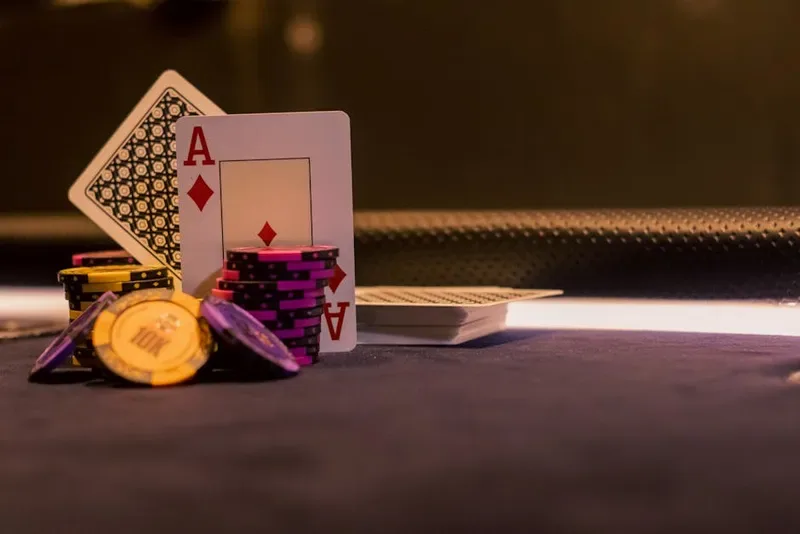
Running count and true count: the two numbers that matter
The running count tells you what has happened. The true count tells you what is left.
The formula is short:
True Count = floor(Running Count / Decks Remaining)
If the running count is +6 and there are two decks left in the shoe, the true count is +3. If the running count is +6 with four decks left, the true count is +1. Same running count, very different bet.
The reason the conversion matters: a +6 running count with one deck left is enormous. A +6 running count with five decks left is barely positive. Without the true count, the bet ramp is guessing. The true count is what tells you the actual concentration of high cards in the remaining shoe.
Always floor the division. Never round. A running count of +5 with two decks left is TC+2 (5 divided by 2 is 2.5, floor is 2). Rounding to TC+3 will have you pushing the money out one count earlier than the math supports. Over a thousand hours, that mistake costs real money. The full math is on the blackjack true count page. Drill that one second, after the running count is automatic.
Estimating decks remaining is the part that takes practice. Look at the discard rack. Most counters can call a six-deck discard stack within a half-deck just by eyeballing it. Drill that separately from the running count. The two skills together are the bottleneck for almost every new counter.
A quick test for fluency: at a +6 shoe in the second deal, are you foaming at the mouth waiting for the bus? That is the right reaction. When the bus does not come, you get to play the upset degenerate. Best cover there is, because you genuinely are upset.
Card counting strategy: when to raise the bet
The entire edge in card counting comes from betting more when the count is positive. A perfect counter who flat-bets every hand has the same expected loss as a non-counter, plus a tax on attention. The count is the trigger. The spread is the engine.
A working 1-8 spread at a 6D H17 DAS LS game with decent penetration pulls the player to roughly +1.0 to +1.5% edge depending on penetration and ramp shape. A realistic bet ramp at a $10 minimum table looks like this:
- TC 0: $10
- TC+1: $30
- TC+2: $60 (or $30 across two hands)
- TC+3: $100
- TC+4: $200
- TC+5: $300
- TC+6 and above: $600
That is roughly the ramp that pulls the game positive. The shape matters as much as the spread. Linear ramps draw heat. Stepped ramps with an occasional flat round at TC+1 read more like a recreational player getting lucky than a player tracking the shoe.
Basic strategy mastery has to come before the count. A perfect basic strategy player at a 6D H17 DAS LS game is only 0.47% behind the house. Most casino players give back another 1 to 2% by misplaying soft hands, mishandling pairs, and deviating from basic strategy by feel. A new counter who is sloppy on basic strategy is donating a bigger edge than they will ever recover from the count. Drill the chart until it is automatic before you add a single Hi-Lo value. The order matters.
The deviations come next. The Illustrious 18 plus Fab 4 capture roughly 80% of the available index EV across 22 plays. Insurance at TC+3 is the highest-value one in shoe games. Skipping deviations means paying for the count without using it. Don Schlesinger's Blackjack Attack is where the I18 numbers come from.
If you are scared to spread, do not count. Train, build a bankroll, and come back when you can.

Is card counting legal?
Yes. Card counting is legal in the United States and Canada. It happens in your head. There is no statute against using your brain at a casino. The case law has been settled for decades. Uston v. Resorts International (New Jersey, 1982) is the high-water mark on the player's side, and no court since has criminalized counting in any jurisdiction.
What the casinos can do: refuse service, shuffle on you, flat-bet you, or trespass you. They are private businesses and they choose who plays. Atlantic City casinos cannot back you off by state law, but they can short the shoe and call a shuffle whenever they want. Everywhere else, the pit can tap your shoulder and walk you to the cage at any time. Walk when asked. Trespassing in Nevada is a misdemeanor and not worth the chips on the table.
What is illegal: using a phone, a smartwatch, a hidden calculator, or any electronic device to do the counting for you. Nevada Revised Statute 465.075 calls that a Class B felony. The line is the device, not the math. A count in your head is fine. A count on a phone is a felony.
Card counting is just math. The casino just really, really does not want you to do it. The fuller breakdown of the law, the case, and the trespass rules is on the is card counting legal explainer.
Card counting practice: the drill that sticks
The drill that builds a real counter is short and ugly. Twenty focused minutes a day beats two hours once a week. Distracted practice is worse than no practice. Practice is not the same as playing.
Three drills compound. Run them in this order.
Single-deck count. Shuffle a deck. Flip cards one at a time. Run the Hi-Lo count. End at zero. Sub-30 seconds is the working target. Some players push to 20. Do this until it is boring.
Six-deck shoe count. A 6-deck shoe at casino pace deals roughly 80 hands per hour. The trainer should match that. Stop at random points and call the running count. Stop at random points and call the decks remaining. Together, that is the true count. The bottleneck for almost every new counter is true count fluency, not the running count.
Bet ramp drills. Sit at a desk with imaginary chips. Run a 6-deck shoe in your head. Push out the right bet at the right count. Practice the action, not the math. Most new counters know the right bet and still freeze when the count says push $300 across two hands.
The free CountEdge trainer runs all three drills with full running count, true count, I18, and Fab 4. No credit card. The deeper drill breakdown is on the card counting practice page. Drill in a noisy room. Drill with the TV on. Drill the way the table will feel. Counting cards in a loud casino while a drunk player next to you keeps asking if you want to split 10s is the real skill test. The trainer is the warmup.
For a wider library of working counter content, the Arnold Snyder archive at the Blackjack Forum is the long-form authority that most modern AP writers cite.
Learn to count cards: the realistic timeline
Most aspiring counters quit at hour 20. A serious learner needs around 140 hours of practice across the full stack to get to a working table game. The estimate has been around for years and matches what most working counters report in retrospect.
A realistic schedule for someone with 20 minutes a day, every day:
- Weeks 1-2: basic strategy until automatic
- Weeks 3-4: running count on a single deck, ending at zero, sub-30 seconds
- Weeks 5-7: running count on a 6-deck shoe at casino pace
- Weeks 8-10: true count conversion at random shoe points
- Weeks 11-14: I18 and Fab 4 deviation drills tied to shoe events
- Weeks 15-18: bet ramp drills with imaginary chips
That is roughly four months from zero to a first live session. Some players push harder and land at two months. Most stretch it to six because life is in the way. The hours are what matter, not the calendar. Twenty focused minutes a day for 90 days beats two-hour sessions on the weekend.
Variance is what breaks most beginners, not the casino. A skilled counter loses about four sessions out of ten. Three losing sessions in a row is the default, not an anomaly. Most aspiring counters quit after the first cold streak because they decided the math does not work. The math works. They walked away from a sample size too small to mean anything.
There is no moment at the table when it clicks. The clicking happens later, looking at the records. The graph dips and turns like the stock market and goes in one direction over time. That is when a counter knows it works. Not session to session. In the graph. Most beginners never see the graph because they walked before it was long enough to read.
A second trap waits four months past the first hundred hours: a self-taught counter at 200 hours with results that do not match theory, who cannot see the mistakes from inside the session. The full read on what outside eyes do for that plateaued counter lives on the CountEdge coaching page. Worry about that one later. The first 140 hours are about the count.
The math is easy. The hours are hard. Card counting is the only mathematically proven civilian edge in a casino, and the reason it still works is that almost everyone who starts quits before the edge has time to show up. The full origin story behind why CountEdge exists is on the About page. The realistic next steps for a beginner are the card counting basics walkthrough and then the how to count cards method. Drill the values first. Drill the running count second. Drill the true count third. The graph will tell the truth in six months.