How to Count Cards: A Working Counter's Real Method

Card counting is just math. The casino just really, really does not want you to do it. To count cards in blackjack, you use the Hi-Lo system: assign +1 to cards 2 through 6, 0 to cards 7 through 9, and -1 to cards 10 through ace. Add the value of every card the dealer turns to build a running count. Divide that running count by the decks remaining in the shoe to get the true count. Bet more when the true count is positive and bet the minimum when it is not. That is the entire job. The hard part is doing it 80 times an hour in a noisy room with real money on the felt.
This post is the working version. The math, the bet ramp, the drills, the legal read, and the mistakes that take new counters out of the game in the first six months.
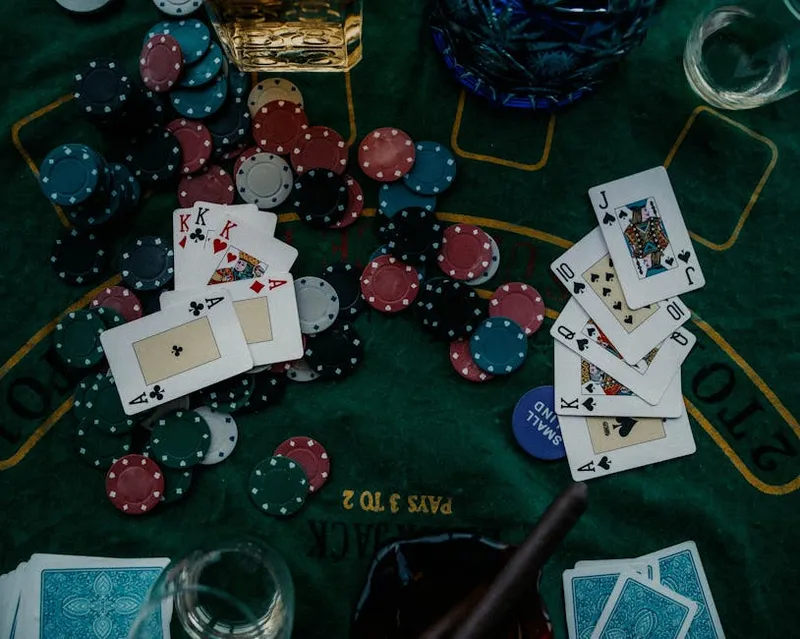
How to count cards: the seven-step method
The whole system, in order:
- Lock in basic strategy for the game you actually play (6D H17 DAS LS is standard). A perfect basic strategy player is already only -0.47% behind the house. A sloppy one is -1.5% or worse. Fix this first or nothing else matters.
- Memorize the Hi-Lo values. Three numbers across thirteen card ranks.
- Drill a single deck down to zero in under 30 seconds. Five times in a row.
- Move to a full 6-deck shoe at casino pace. About 80 hands per hour. End each shoe at zero.
- Add true count conversion. Stop the shoe at random points. Floor the running count divided by decks remaining.
- Add the Illustrious 18 and Fab 4 deviations. 22 specific plays that change at specific counts.
- Build a bet ramp tied to true count, drill it with chips at home, then sit down with a real bankroll.
That is the ladder every working counter climbs. Skip a rung and the whole thing falls down.
Card counting basics: what you actually do
The point of card counting is to know when the remaining shoe favors the player. A fresh shoe is balanced. Twenty hands in, it is not. Some cards are gone, some are coming. The count is a running estimate of which way the deck composition has tipped.
High cards favor the player for three concrete reasons. A natural 3:2 blackjack pays you 1.5 to 1 instead of even money, and you make more of them when the shoe is rich in tens. The dealer is forced to hit on 16 and stand on 17 or higher, which means a tens-rich shoe busts the dealer more often. Doubles on hard 10 and 11 win bigger when the next card is more likely to be a face.
Low cards favor the dealer for the mirror reason. The dealer cannot bust a 12 against a low draw the way they can against a high one. The 5 in particular is the single most house-friendly card in the deck. Pull every 5 out of the shoe and the player edge climbs by close to a full percentage point.
Hi-Lo groups those effects into three buckets. The values are not a guess. They are weighted by how strongly each rank shifts the player edge in or out of the shoe.
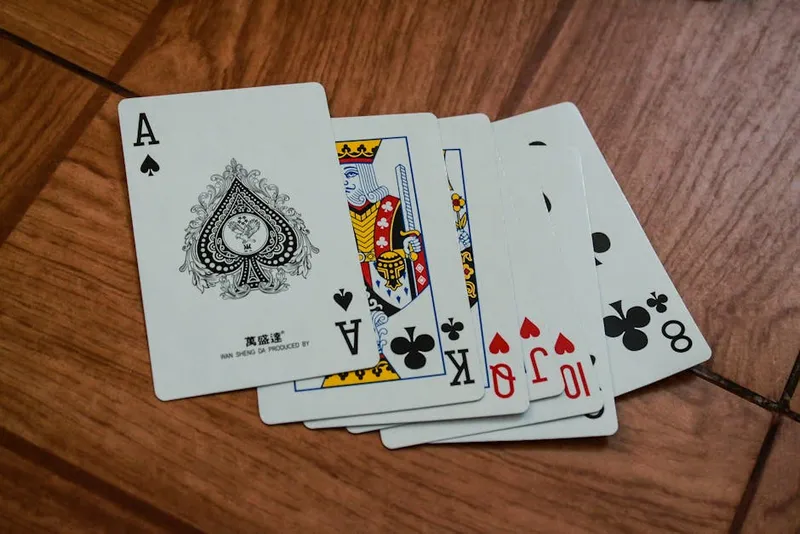
Card counting high low system: the values you memorize
The card counting high low system is the most-used balanced count in modern advantage play. The full table:
| Card | Hi-Lo value |
|---|---|
| 2, 3, 4, 5, 6 | +1 |
| 7, 8, 9 | 0 |
| 10, Jack, Queen, King, Ace | -1 |
A clean 52-card deck always sums to zero. That is how you check yourself. Shuffle a deck, flip every card, run the count, end at zero. If you land on +1 or -2, you missed a card somewhere.
Hi-Lo is the system 95% of working counters use because the error math is brutal at the table. A clean Hi-Lo player captures roughly 97% of the theoretical edge available to a perfect Wong Halves player, and the remaining 3% gets eaten three times over by the higher error rate at the table when you are tracking fractional values like +0.5 and -1.5 under casino conditions. Hi-Lo wins money. The fancy systems are a hobby for people who already mastered Hi-Lo and got bored. The full breakdown of why these specific numbers (and what every card rank is worth) lives in the card counting values post.
Running count to blackjack true count
The running count alone tells you almost nothing in a multi-deck shoe. A running count of +6 with one deck left is a strong bet signal. The same +6 with six decks left is barely above neutral. The blackjack true count fixes that.
The formula:
TC = floor(running count / decks remaining)
Always floor. Never round. A running count of +9 with three decks left is a true count of +3. A running count of +9 with 4.5 decks left is still a true count of +2.
Each true count point is worth about +0.5% to the player edge over the base house edge. That number comes from Peter Griffin's Theory of Blackjack and has held up across decades of simulation. At a 6D H17 DAS LS table with a -0.47% base edge, you cross into positive expectation around true count +1, and the edge grows linearly from there.
Estimating decks remaining is the half of true count work nobody emphasizes enough. The discard tray sits across the table. You eyeball the stack, estimate to the half-deck, and subtract from the total. A half-deck error in the denominator can swing your true count by a full unit. A full unit on the bet ramp is the difference between $30 and $100 on the felt at TC+1 versus TC+2. Drill the estimation as hard as you drill the running count.
Card counting strategy: the bet ramp
This is where most beginners leak the entire edge. Card counting strategy is what you do with the signal once you have it.
The signal is true count, not running count. The trigger is TC+2 on a typical 1-8 spread at a $10 minimum 6D H17 DAS LS game. Below TC+2, you are flat-betting the minimum. At TC+2 and above, the bet ramps up. Here is a working ramp:
| True count | 1H bet | 2H bet per hand |
|---|---|---|
| 0 or below | $10 | n/a |
| +1 | $30 | n/a |
| +2 | n/a | $30 |
| +3 | n/a | $50 |
| +4 | n/a | $100 |
| +5 and above | n/a | $150 to $300 |
Flat-betting through a positive count is worse than not counting at all. A counter who tracks every card perfectly but flat-bets every hand has the exact same expected loss as a non-counter, plus a tax on attention. The entire edge in card counting comes from betting more when the count is positive. A 1-8 spread at a 6D H17 DAS LS game pulls you to roughly +1.0 to +1.5% edge depending on penetration and ramp shape. The count is the trigger. The spread is the engine. If you are scared to spread, do not count.
The second half of the strategy is deviations. The Illustrious 18 and Fab 4 are 22 specific plays that change at specific true counts. Insurance becomes correct at TC+3. 16 vs 10 becomes a stand at TC zero. 12 vs 3 becomes a stand at TC+2. 10,10 vs 5 becomes a split at TC+5. At TC+4 and above the index plays start to dominate the EV calculation. Skipping deviations means you are paying for the count without using it.

Is card counting legal
Yes. Card counting is legal in the US and Canada. It happens in your head and no jurisdiction has a law against thinking. The Massachusetts ruling in Uston v. Resorts International confirmed counters cannot be charged for using their brains. Atlantic City casinos cannot bar you for counting. Nevada casinos can, because Nevada is a private property state, but they still cannot have you arrested for it.
What is illegal is using any electronic device at the table to help you count. Phones, smartwatches, hidden earpieces, anything. That moves the game into device-assisted advantage play, which gets you trespassed at minimum and charged at worst. The split is clean: drill on a trainer at home, count in your head at the casino.
What the casinos can do is refuse service. They will watch your bet pattern, watch your eyes, and back you off when the math gets uncomfortable. Backoff is the worst thing that happens to a counter who plays clean. It costs you that casino, not your liberty. The way to delay a backoff is cover, which is a different skill from the count itself.
The most absurd part of all of it: the casino will let a gambling addict sit for 72 hours draining their life savings without a word. Beat them at math and you are walked to the door. The math is fair. The reception you get for using it is not. That gap is the entire reason CountEdge exists.

Learn to count cards: drill these before you sit down
The trainer is the warmup. The casino is the test. Here is the practice order that actually builds a counter.
First, drill basic strategy on a free trainer until every play is automatic at 6D H17 DAS LS or whatever ruleset you sit at. A new counter who is sloppy on basic strategy is donating a bigger edge than they will ever recover by counting.
Second, drill a single deck down to zero in under 30 seconds. Shuffle, flip cards one at a time, run the count, end at zero. Five clean reps in a row before moving on.
Third, drill a full 6-deck shoe at casino pace. End at zero every time. If you bust the count once at minute 12, you bust the count for the rest of the shoe.
Fourth, add true count conversion. Deal a shoe. Stop at random points. Call the running count, eyeball decks remaining, floor the division. Drill until the conversion is automatic with no mental pause.
Fifth, add deviations. The I18 and Fab 4 first. Drill them in shoe mode, where the deviation surfaces at the count where it applies, not as a flashcard.
Sixth, drill with distractions. Drill with a podcast at full volume. Drill with someone trying to talk to you. The translation has to survive noise or it will not survive a Saturday night in a real room. Twenty focused minutes a day in card counting practice beats two hours of distracted clicking on the weekend.
Anyone can memorize three numbers. Running the math 80 times an hour while a chatty dealer keeps asking about your night is a different skill entirely. Most people think card counting is hard. It is actually easy as long as you put the time in. The time is the hard part.

What card counters never do
This is the part nobody puts on a slick training page.
Card counters never switch counting systems before Hi-Lo is automatic. The marginal edge from a level-2 or level-3 system is small. The error rate at the table is huge if you are tracking fractional values before you can run a clean Hi-Lo shoe in a noisy room.
Card counters never pull the bet back at the moment it matters most. You see TC+4 and the math says push $200 on two hands. The chair-internal monologue starts. The pit boss is watching. Maybe the guy two seats over knows what you are doing. So you push $100 instead. Next shoe, you tell yourself. The reality is 90% of the time the pit is watching the dealer, not you. Their job is making sure the house does not make a payout error. You are not the priority you think you are. The count does not care about your ego. Put the money out.
Card counters never sit at a 6:5 table. The headline payout adds about 1.39% to the house edge. It erases the deck advantage on every variant. Walk past them.
Card counters never make a deliberately wrong play for cover. Hitting when you should stand, splitting wrong, flat-betting through a hot count. Those are the moments the count is making you money. Giving that up to look less suspicious is a bad trade.
Card counters never chase a count into the night. When the count drops, the bet drops with it. Some sessions go cold for an hour. Variance does not care that you did everything right. A skilled counter loses about four sessions out of ten and the graph still goes up over time. Looking back at the graph is the part that actually convinces you the system works. It dips and turns like the stock market but it goes in one direction. Up. Most aspiring counters quit before they ever see that, panic after a six-session losing stretch, and decide the math does not work. The math works. They walked.
The full canon (Thorp, Griffin, Schlesinger, Wong, Snyder) is laid out in the blackjack strategy book post if you want the reading order. The free CountEdge tier covers basic strategy. The 14-day Pro trial opens running count, true count, the I18, the Fab 4, deviation drills in shoe mode, and the EV analyzer that models Risk of Ruin and N0 for your bankroll. The Trainer is built around full 6-deck shoes at casino pace, which is the only practice that survives the trip to a real room. Put the time in. The casino has been running the same game since 1963. The math has not moved. Take a small piece of theirs back.