Is Card Counting Legal? Yes. Here's What That Means.

Is card counting legal? Yes. In the United States, Canada, the United Kingdom, and most of Europe, counting cards in your own head at a blackjack table is not against any law. It is not cheating. It is not theft. It is math.
That is the answer Google wants, and it is the right answer. But the actual experience of being a working counter has little to do with whether the activity is legal. The casino does not need it to be illegal. They just need you to leave.
This post covers what the law says, where the law is different (Atlantic City, mainly), what happens at a real casino when a counter gets caught, and the gap between "card counting is legal" and "the casino has to let you play." That gap is the whole story.

Is card counting legal?
Card counting is legal in every major jurisdiction where casinos operate. There is no federal statute against it in the United States. No state law against it in Nevada. No criminal exposure in any province in Canada. The United Kingdom Gambling Commission has no rule against it. The same goes for Australia, most of continental Europe, and Macau (with one caveat about devices, covered below).
The reason is straightforward: card counting is information you carry in your head. The cards are dealt face up. Everyone at the table can see them. The counter is paying attention and doing some arithmetic. A blackjack player who notices that the dealer keeps busting on small cards is doing the first crude version of card counting. The act of paying attention to the game is not a crime.
What is illegal is using a phone, a hidden device, or an accomplice signalling counts. Nevada Revised Statute 465.075 makes it a Class B felony to use any device "for the purpose of projecting the outcome of the game." That language covers electronic counting aids. A counter who runs Hi-Lo in their head is not using a device. A counter who taps the table to signal their friend on a phone is. The line is the device, not the math.
If you are a beginner working through card counting basics, the legal status is the boring part of the answer. The interesting part is everything that comes after the casino notices.

Is card counting illegal anywhere?
No, not in the way most people mean it. The handful of edge cases:
Macau. Card counting in your head is not technically prohibited. Electronic counting devices are. Penalties include arrest. Counters who play in Macau use the same head game they would use in Las Vegas. The countermeasure there is heat and shoe selection, not law enforcement.
Pennsylvania. A long-running argument has circulated on the Wizard of Vegas forum about Pennsylvania Gaming Control Board language that arguably criminalizes counting through "advantage play." In practice, working counters have not been criminally charged for counting in PA. The state still allows casinos to back off players, which is what they do.
Tribal casinos in the United States. Each tribe writes its own rules. A few tribal casinos have policies more aggressive than the surrounding state. Most do not. The legal exposure is generally the same as the state law of the surrounding jurisdiction, which is to say, none.
The pattern across every jurisdiction: counting in your head is fine. Devices are not. The casino can still ask you to leave for any reason, and in most places, if you do not leave, you can be trespassed. That is the trapdoor under "legal."
What happens if you get caught counting cards
You will not be arrested for counting. You may be detained by casino security for refusing to leave after they ask. That is a separate offense, and it is the one with teeth.
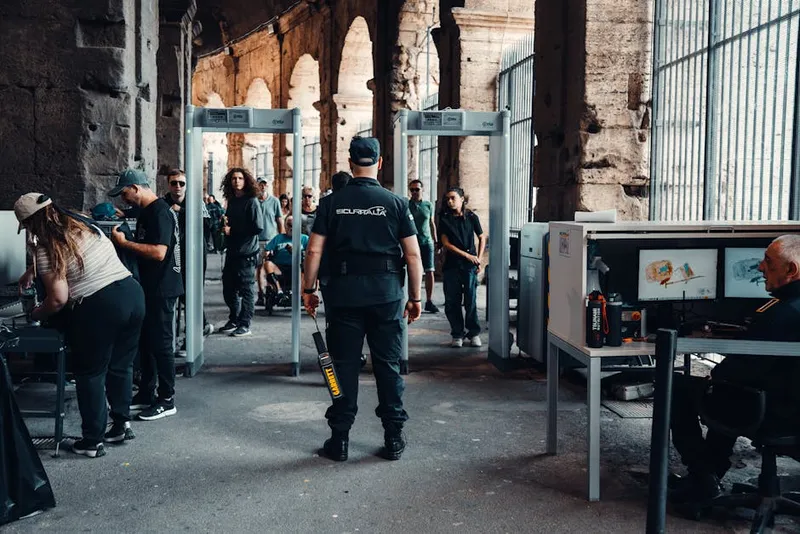
The standard sequence: a pit boss notices a bet ramp that does not match recreational play. They watch for fifteen to thirty minutes. They make a phone call. Two security staff arrive at the table at the same time another two stand near the cashier. The pit boss approaches and says some version of "We are no longer going to deal you blackjack." You are paid out in full. You are walked to the cashier. You are escorted to the door. You are told not to return.
If you refuse to leave, the next step is trespass. Nevada misdemeanor trespass carries up to six months in jail and a fine of up to $1,000. New Jersey treats it as a similar misdemeanor. Other states are roughly comparable. The criminal exposure is for refusing to leave, not for counting.
The right move is to leave when they ask. There is no upside to arguing. The pit boss is not law enforcement. He is sales protection. Pick up your chips and walk out. That casino is now burned for you. There are others.
What a working professional blackjack player does after a backoff is rotate. The shoe is still legal at the next casino. The skill is finding the next table fast and not letting the backoff turn into a story you tell yourself about whether the math works.

Is card counting legal in Las Vegas?
Yes. It is legal in every casino in Nevada. The Nevada Gaming Control Board does not regulate it. The Nevada Supreme Court has consistently sided with casinos on the right-to-refuse-service question, which means a casino can ask a counter to leave at any time for any reason.
In practice, Las Vegas casinos run aggressive countermeasures. Shoe penetration on most strip games is below 50%, which kills most counting EV before it can play out. CSMs (continuous shuffle machines) on lower-minimum tables shuffle every hand and remove the count entirely. Bet ramps that obviously track the count get a pit boss at the table inside two shoes.
The Las Vegas casinos that still spread playable games are off-strip, locals-oriented, and use shoe games with 75% penetration or better. The legality question is settled in the counter's favor. The economic question is whether the available games are good enough to count at all. Most are not.
When they back you off in Vegas, the procedure matches the standard sequence above. You leave. You drive to the next casino. You start over. The state's complete tolerance of the activity does not extend to any single casino's tolerance of you specifically.

Atlantic City is the exception: Uston v. Resorts International
Atlantic City is the one jurisdiction in the United States where a casino cannot legally ban a card counter. The reason is a 1982 New Jersey Supreme Court ruling, Uston v. Resorts International Hotel, Inc., which held that "the state's control of Atlantic City's casinos is so complete that only the New Jersey Casino Control Commission has the power to make rules to exclude skillful players." The Commission has never exercised that power. Counters in Atlantic City have legal protection against eviction that exists nowhere else in the country.
The case is named after Ken Uston, a card counter who sued Resorts International after being barred. He won. The ruling stands. The full legality summary on the Wikipedia card counting page covers the case history. Eliot Jacobson's APheat archive covers what Atlantic City casinos do instead.
What Atlantic City casinos do is countermeasure. They flat-bet players they suspect of counting (the dealer is instructed to refuse increased bets). They shorten shoe penetration. They shuffle on a pit boss signal. They use multiple decks with worse-than-usual rules to compress the available edge. None of those are bans. All of them work.
The practical takeaway: Atlantic City is the legal capital of card counting in the United States, and it is also where the games are worst. The casinos cannot kick you out so they have to make sure there is no money to be made at the table. They succeed.

Is card counting cheating?
No. The cards are dealt face up. Memory is not a device. Math is not fraud. The game of blackjack has rules. Counting cards does not break any of them.
The reason casinos hate it is not because it is unfair to them. It is because the rules of blackjack already give the player slightly worse than even odds against the house, and a player who counts cleanly and spreads correctly tilts the math into a positive expectation. The casino's business model assumes that all players play at the house edge. A counter pays a different price for the same product. That is the entire grievance.
The casinos have known this since 1963, when Edward Thorp published Beat the Dealer and Harvey Dubner formalized the Hi-Lo count. They have updated rules, shortened shoes, deployed CSMs, hired analytics firms, and trained pit bosses for sixty years. They are still in business. Card counting is still legal. Both things can be true.
Do not bring a phone to the table to help you count. Do not signal a partner. Do not use any electronic device. Those cross the line from playing well to cheating, and they carry real criminal exposure. Run the count in your head. That is the line the law draws and the line the math respects.
When you started learning to count you probably thought casinos were relatively friendly. Dealers, pit bosses, security, all mostly fine. Then you become a winning player. When they back you off, trespass you, or try to cheat you, you realize how corrupt the system is. The casino will let someone sit for 72 hours draining their savings without a word. Beat them fair and square using their own math and you are treated like the worst person who ever walked in.
The CountEdge trainer covers the Hi-Lo system, the I18 deviations, and the bet ramp math that makes counting work. It is members only now, through the coaching program. The whole reason CountEdge exists at all is on the About page. Card counting is legal. It is also work. The math has not moved since 1963.