Professional Blackjack Player: A Counter's Honest Read
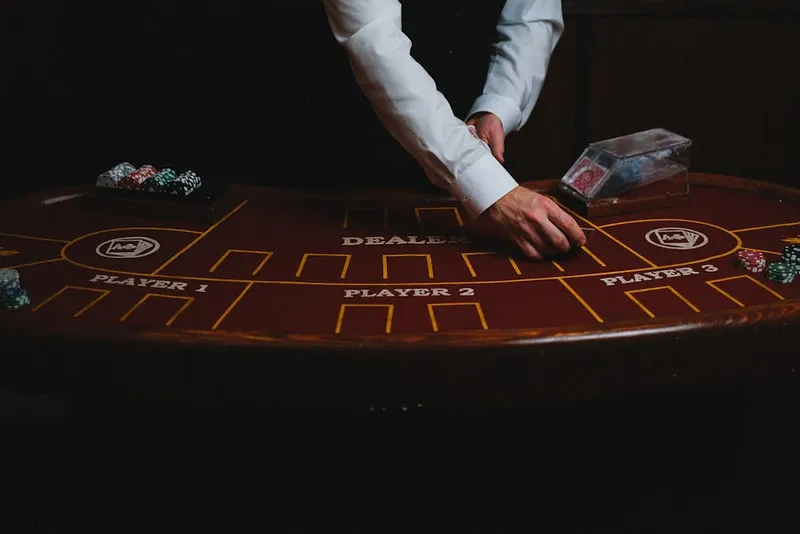
A professional blackjack player is someone who beats the house edge consistently enough that blackjack pays the bills. Almost all of them do it the same way: Hi-Lo card counting, a real bet ramp at TC+2 and above, the I18 and Fab 4 deviations drilled cold, a bankroll that survives the variance, and the cover that keeps them sitting at the table long enough to collect the math. The Hollywood version is teams in matching outfits and seven-figure scores. The grinder version is one player at a $10 minimum table making $50 to $120 an hour over hundreds of sessions while pit bosses watch their bet ramp and try to figure out if they belong. This post is the honest read on what a working pro looks like, what the job pays, and where most aspiring pros quit before the edge has time to show up.
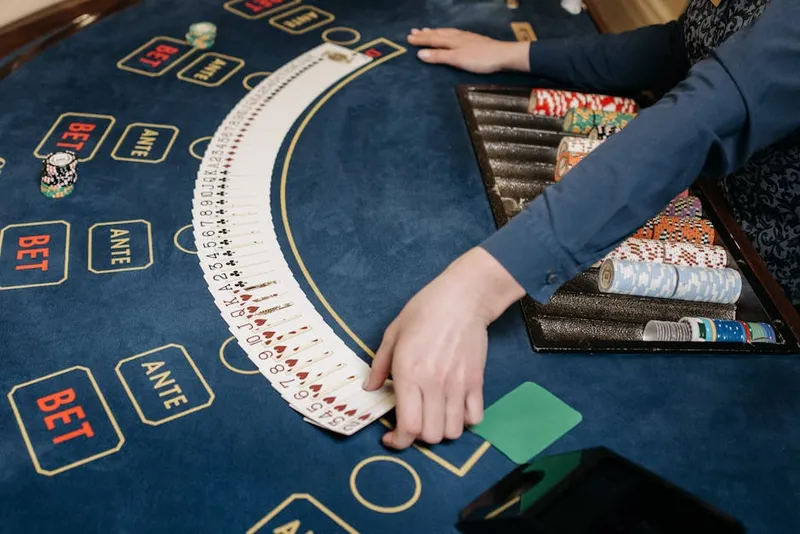
What a professional blackjack player does on a working night
A professional blackjack player is not picking lucky days or reading the dealer's tells. They are running Hi-Lo on a 6-deck shoe at casino pace, converting the running count to a true count by flooring the deck-remaining division, sizing the bet ramp to the count, and playing the I18 and Fab 4 deviations when the count crosses each index. None of that is mysterious. The math has been settled since Peter Griffin published Theory of Blackjack in 1979. The skill is doing all of it cold for two hours under fluorescent lights while a chatty dealer hits soft 17 and the player to your right keeps asking if she should split tens.
Hi-Lo is still the right starting system for 95% of new counters and the system every working pro I know uses. A clean Hi-Lo player at a 6D H17 DAS LS table running a 1-8 spread typically pulls to roughly +1.0 to +1.5% edge over the -0.47% base house edge, depending on penetration and ramp shape. The fancy systems like Zen, Halves, and Wong Halves capture maybe 3% more theoretical edge and lose six times that at the table from increased error rates. Until you can run a Hi-Lo shoe cold with a drink in your hand and a chatty dealer, switching systems is procrastination, not progress.
Card counting basics live in three buckets. Cards 2 through 6 count as +1. Cards 7, 8, and 9 are zero. Tens, faces, and aces are -1. Over a full shoe the running count returns to zero. Everything a working pro does sits on top of that.

How much does a blackjack pro make in a year
The number that gets thrown around online is $20,000 a month. The number a working blackjack pro at a moderate bankroll clears is closer to $50 to $120 an hour, which over 800 working hours a year is $40,000 to $96,000. That is the honest version of the job. It is real income and it is not retirement-fund money.
The math: at a 6D H17 DAS LS table with a 1-8 spread, average bet around $50, and 80 hands per hour at typical pace, modeled hourly EV runs $50 to $120. Standard deviation per hour at that game is roughly $400. That second number is the part nobody puts in the YouTube clip. Hourly variance is many times the hourly EV, which means short stretches of losing sessions are not anomalies. They are the default for any short stretch.
Pros who clear six figures are doing one or more of three things: running larger bankrolls than the typical solo grinder, playing tighter cover so they keep access to better games, or pairing the count with comp and promotion arbitrage. Don Johnson did not card-count his $15M run at the Tropicana in 2011. He negotiated a 20% loss rebate at a high-roller table and played correct basic strategy until the math went his way. That is a different game than the one most aspiring pros are training for. The card-counting pro version is the $50 to $120 an hour grinder. The negotiated-edge version is rare and depends on a casino willing to deal a game most casinos no longer offer.
Making a living playing blackjack is not a path to retirement. It is a path to a real hourly rate at a job most people would find stressful and most pros find quietly hilarious.
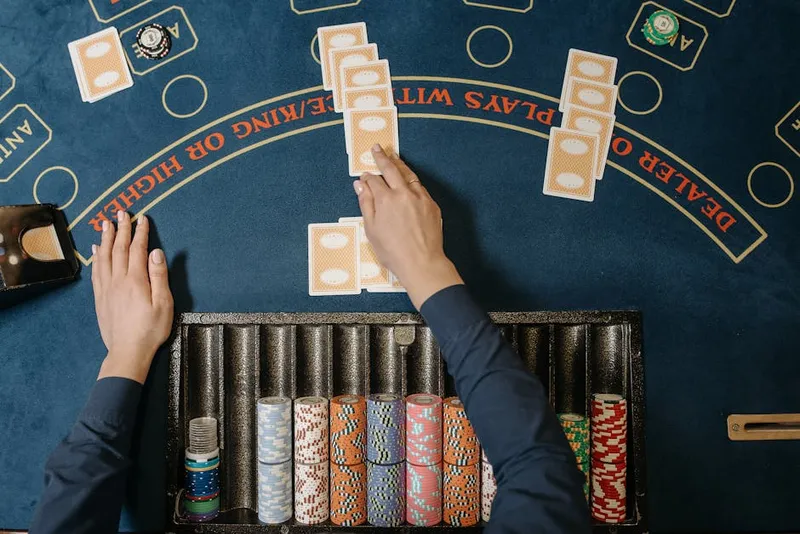
The skills that turn a card counter into a pro
A card counter who can call the running count cold on a single deck is not a pro yet. The gap between trainer-clean Hi-Lo and a working pro game is wider than the gap between not knowing the count and knowing it.
The skills that close the gap:
- True count conversion at random points in a 6-deck shoe, including with half-deck estimates of the discard rack. Most counters have their biggest leak here. Floor the running count divided by decks remaining. Always floor, never round.
- The Illustrious 18 plus Fab 4 deviations, surfaced at the count where they apply. These 22 plays capture roughly 80% of the available index EV. Skipping them means you are paying for the count without using it.
- A bet ramp that produces edge without producing pattern. Spreading $10 to $300 the moment the count goes positive draws heat faster than counting cards does.
- Bankroll math. Schlesinger's Risk of Ruin formula tells you exactly how big your bankroll needs to be to survive variance. RoR = e^((-2 × evHourly × bankroll) / varHourly). At a $10,000 bankroll on the standard grinder game, RoR runs roughly 45%.
- Cover behavior. Eye discipline, conversation that does not require the count, walking away from cold shoes, rounded bet sizes that look casual.
Most of advanced blackjack strategy is on that list. None of it is on a free YouTube tutorial. The card counting strategy that matters is not the one that gets the most views. It is the one that survives 200 hours at a real table without getting backed off.

How to play blackjack for a living without going broke
Playing blackjack for a living without going broke is mostly a bankroll-discipline problem. The math is settled. The variance is the killer.
Variance kills more aspiring counters than pit bosses do. The myth is that the casino catches you and shuts you down. The reality is most counters quit because they lost ten sessions in a row, panicked, and decided the math does not work. The math does work. They walked away from a sample size too small to mean anything.
A skilled counter loses about four sessions out of ten. At $50 average bet and 80 hands per hour, hourly EV runs roughly $20 to $30 with a standard deviation per hour of about $400. That second number means a session can run a thousand dollars red and still be inside the expected distribution. Most beginners run a bankroll a tenth of what the math says they need, then blame the system when they bust.
The honest answer to bankroll size: 250 to 400 average bet units in a dedicated, sealed-off bankroll. At $25 average bet, that is $6,250 to $10,000 minimum. At $50 average bet, $12,500 to $20,000. Anything smaller than that runs Risk of Ruin north of 30%. A one-in-three chance of busting before the edge plays out, no matter how clean your count is. Wizard of Odds publishes a variance reference for blackjack that confirms the same math from a different angle.
There was no single moment in the casino where it clicked for me. Sometimes after a big loss I would think: am I stupid, is this worth it. The moment it clicked was looking back at my records. Seeing the graph. It dips and turns like the stock market but it goes in one direction. Up. That is when I realized the math works. Not session to session. In the graph.
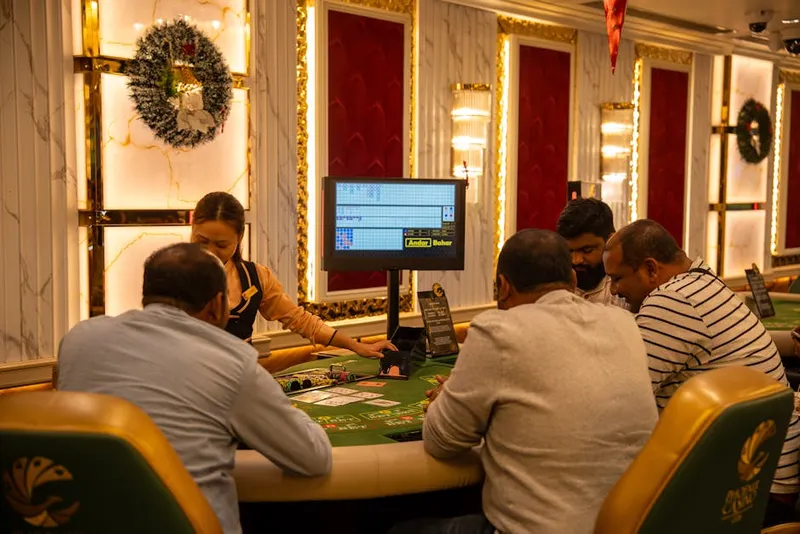
What separates the professional card counter from the cosplayer
A real professional card counter and the guy at the table who watched a casino movie last weekend often look identical to a non-counter. To a working pro and to the floor at the right casino, they look completely different.
Real counters have a certain swagger at the table. The people cosplaying as counters try to represent that same energy. As someone skilled you can clock it immediately. The casino sometimes can. That is half the gap closed before anyone makes a bet.
The other half is what does not show. The cosplayer is keeping a running count and bouncing his bet around hoping it works. The pro is running the count, converting to true count, holding the deviation set in working memory, sizing the bet to the count, watching the cut card, and feeding the dealer a low-effort character that does not require the count to maintain.
The cosplayer's tells, in no particular order:
- The bet jumps from minimum to large in one move the second the count goes positive.
- The eyes are stuck on the discard tray.
- The conversation goes silent at high counts.
- Plays are hesitated on. A clean stand at 16 vs 10 should look identical to a clean stand on 19.
- Side bets get played cold without the count.
The casino does not always know the difference between someone skilled and someone who just thinks they are. Sometimes the pro and the cosplayer get the same backoff. More often, the cosplayer loses enough money that the floor leaves them alone and the pro never gets caught at all.
The discipline that keeps an advantage player at the table
Discipline is the only edge that matters once you know the system. Everyone wants to talk about the math. The math is settled. Griffin proved it. Schlesinger proved it. The people losing money at the table are not losing because of bad math. They are losing because they went before they were ready, cannot sit through a cold shoe, and tip away their edge hand by hand.
The advantage player who stays employed at this game does five things every session:
- Walks past 6:5 tables. The 6:5 payout adds about 1.39% to the house edge and erases the entire deck advantage in one rule change. The "only two decks" headline sells. The math is worse than almost any 6-deck 3:2 game on the floor.
- Skips side bets without the count. Lucky Ladies, 21+3, Perfect Pairs, and Kings Bounty without the count run between -3% and -7%. A counter who throws $5 on every side bet adds the cost of the entire base game to their hourly loss. CountEdge models the Kings Bounty side bet on the Elite tier at TC+7 and above because that is the only count where the math turns positive.
- Walks away when a shoe goes cold. Sitting through three flat shoes burns clock and the floor notices stillness as much as it notices spread.
- Holds the bet ramp shape. No big jumps from minimum to max in one move. Tilt-driven bet sizing after a downswing is the fastest way to bust a bankroll.
- Treats cover as part of the system. Most card counting apps will get you backed off in a month because they teach the chart and stop there. Real cover is a cumulative effect of bet shape, eye discipline, conversation, and walk-away rules.
What does not work: making a deliberately wrong play to look bad. Hitting when you should stand, flat-betting through a hot count, splitting wrong. Those are the moments the count is making you money. Giving that up to look less suspicious is a bad trade. Never sacrifice EV for cover.
What also does not work: funding the bankroll on credit. The math does not save you from interest payments. If a graph says you are up 1% an hour and the credit card is charging 22% a year on the float, you are net negative on the bankroll regardless of what the table is doing.

How to learn to count cards before quitting your day job
The smart aspiring pro does not quit their job on day one. They learn to count cards on the side, build a bankroll out of the day job, and only walk away from the W-2 income once a graph of their real results, not their hopes, shows the edge is real.
The path that works:
- Drill basic strategy on a free trainer until the entire chart is automatic at the ruleset you plan to play. A new counter who is sloppy on basic strategy is donating a bigger edge than they will ever recover by counting.
- Add Hi-Lo running count. A deck of cards is free. Shuffle, flip cards one at a time, end at zero. Sub-30 seconds is the working target.
- Add true count conversion at random shoe points. This is where most counters leak. The right card counting practice drills test conversion at random stops, not in clean intervals.
- Add the I18 and Fab 4 deviations. Drill the play at the count where it triggers, not as flashcards in isolation.
- Build the bankroll on the day job. Do not fund a card-counting bankroll on credit.
- Test live at a $10 to $25 minimum table for 50 hours before scaling. Track every session. Build the graph.
- Read the canon. The blackjack strategy book shelf is small and the same names show up on every working pro's bookshelf: Griffin, Schlesinger, Wong, Thorp, Snyder. Eliot Jacobson's blog covers the advanced AP topics most blogs skip.
Twenty focused minutes a day in a trainer beats two hours once a week. The free CountEdge tier covers basic strategy training. The Pro 14-day free trial opens the running count, true count, I18, and Fab 4 drills. The Elite tier adds the Deviation Drill screen, the Cover Coach, and multi-hand play. That stack is what a working pro game looks like.
A professional blackjack player is not a Hollywood character. They are a counter who drilled the math until it was automatic, built a bankroll that could survive variance, and learned cover well enough to keep playing the same casinos. The job pays $50 to $120 an hour to a solo grinder at a moderate bankroll, more to operators who pair the count with comp and promotion arbitrage, and zero to anyone who has not put in the discipline to do all of it cold. The math has not changed since 1979. The reason most aspiring pros quit is not the casinos. It is variance plus tilt plus impatience. The trainer that lets you drill the full stack at the price of a working game is the part that did not exist until now.