Easy Ways to Make Money as a College Student in 2026

The easy ways to make money as a college student split into three buckets. Fast cash that pays $12 to $18 an hour and tops out there. Skill work that pays $25 to $60 an hour once you have the skill. And one civilian side hustle with no ceiling that takes about 140 hours of practice before the first dollar comes back.
The first bucket is food delivery, marketplace tutoring, and reselling textbooks. The second is freelancing in writing, design, or code. The third is card counting, and most roundup posts will not mention it because the writer has never done it.
This post ranks side hustles for college students by realistic hourly pay, the ceiling you hit, and how much of your week they take. The numbers are honest. Some of them are uncomfortable. The list nobody else writes is at the bottom.

Easy ways to make money as a college student that clear $20 an hour
Most lists pad the count with options that pay $5 an hour after expenses. Cut the pad. The threshold a college student should care about is $20 an hour. Below that, your time is paying for someone else's business model. Above it, the hour buys back into a future skill or savings.
What clears $20 an hour for a student with no professional skill yet:
- Tutoring in math, chemistry, physics, or first-year programming if you are good at it
- Bartending or serving in a tipped room on a weekend night
- Babysitting for the right family in a college town
- Niche freelance work (web copy, basic Figma, simple HTML) once one or two clients are in
What does not clear $20 an hour, despite the marketing copy:
- Survey apps. The honest hourly after disqualifications is $3 to $6.
- Most food delivery pickups on weekday afternoons
- Print-on-demand and dropshipping courses sold to first-time founders
- Sports betting "systems" sold on Telegram
The cleanest filter is hourly times ceiling. Babysitting clears $20 an hour and tops out at the family's budget. Bartending clears $20 an hour and tops out at the shift count. Tutoring clears $40 an hour and scales with reputation. Freelance code clears $60 an hour and scales as far as you take it.
The number that matters is the one you keep after taxes, gas, gear, and the time the marketing copy did not count.

How to make money in college without burning out on a 4.0
The math of a college side hustle is not the hourly. It is the hours multiplied against the trade-off you make on your degree.
A 0.3 GPA drop at a Top 100 school costs more than a full year of side hustle income. The schools and employers that watch GPA price the credential at $50,000 to $100,000 of starting-salary delta over a career. Burning that to clear $300 a week as a junior is the worst hourly conversion on the list.
The cleaner framing: stack side hustle hours that fit a low-energy floor.
- Late-night delivery on a Friday after the study day is done
- Weekend tutoring blocks set on Saturday morning
- Reselling that runs in 90-minute bursts when you would have been on TikTok anyway
- Asynchronous freelance work due Tuesday, written Sunday afternoon
The trap is the side hustle that runs in your study window. A 4-hour shift on a Wednesday night kills three different things. The hourly looks fine on paper. The cost is the homework you bailed on, the lecture you skipped, and the sleep you cut.
Pick the side hustle whose hours fit the day you would have wasted anyway. Friday nights. Saturday mornings. Bus commutes. Lunch breaks. Those are the cheapest hours to sell. The expensive hours are the ones your future self needs back.
A side hustle is a multiplier on slack hours, not a replacement for study time. Most college students get this exactly backwards.

Side hustles to make extra cash from your phone (and why they pay so little)
Survey apps, microtask sites, cash-back apps, and "watch a video, earn $0.30" pitches all live in the same category. The realistic hourly across the whole category is $3 to $6.
The math is brutal once you do it once. A 10-minute survey paying $1.20 works out to $7.20 an hour if every survey takes 10 minutes. They do not. Most surveys disqualify you after 90 seconds of pre-screen, and disqualifications still cost time. The honest hourly after disqualifications runs $3 to $5 for most users.
What it buys: pizza money on a bus ride. Not rent.
The same logic applies to:
- Cash-back apps (effective return: 1 to 4% of spending you would have done anyway)
- Get-paid-to-watch-video sites (effective hourly: under $2)
- Microtask labeling for AI training (effective hourly: $4 to $9 in the US)
- "Earn crypto for completing offers" platforms (effective hourly: under $3, plus tax complications you do not want)
The pitch on these apps is always the same. Earn in your spare time. The unstated part is that the platform makes its margin on your time being worth less than minimum wage.
There is one use case where these apps make sense. You are killing time anyway, the alternative is doomscrolling, and you want $20 over the semester to feel less guilty about it. Past that, the math does not work. Spend the hour studying or sleeping. The return is higher.
Food delivery: the fastest cash with a low ceiling
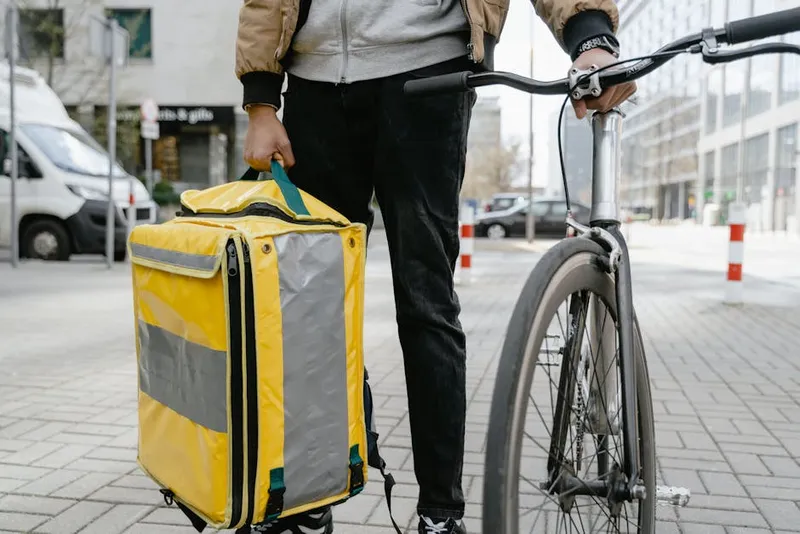
DoorDash, Uber Eats, Grubhub, and the regional clones are the fastest way to start. Sign up Monday, get paid Friday. Net hourly after gas and wear on the car is realistically $11 to $16 in most US college towns, $14 to $20 in dense walkable cities. Tips raise the high end on Friday and Saturday nights.
What the marketing buries:
- Gas, oil, tires, and depreciation eat 30 to 40 cents per mile
- You pay self-employment tax on the gross, not the net
- Phone data and battery cost real money once you run the app 20 hours a week
- The lowest-paying orders are the ones the platform most readily assigns you
The honest framing: food delivery is a cash machine with a hard ceiling. It will not get better the longer you do it. The hourly does not scale with experience. The marketplace is permanently saturated.
The right window for a college student is Friday and Saturday nights. Restaurants are slammed. Tips run double. Orders cluster in walkable downtowns. Three weekend nights a month clears $400 to $600 in many markets, with no skill required and almost no calendar impact.
What kills the math is treating delivery as a weekday floor. Tuesday afternoon DoorDash pays under $10 an hour in most markets after expenses. Saturday at 9pm in a dense college town pays $25 an hour with the right tips. Same app, different hourly entirely.
If you start one side hustle this weekend, food delivery is the right one. Do not stretch it past that.

Tutoring: the best hourly most students never push
Tutoring has the cleanest hourly-to-effort ratio in the easy bucket. A second-year STEM student with a 3.7 in calculus can charge $30 to $60 per hour for first-year tutoring. A computer science major can charge $50 to $100 per hour for intro-language help. A pre-med who scored 520+ on the MCAT can charge $80 to $200 per hour for prep work.
The platforms (Wyzant, Varsity Tutors, Preply, TutorMe) take a cut and slow the hourly. The faster lane is the campus bulletin board, a flyer on your dorm floor, and word-of-mouth from one professor or one freshman cohort.
The catch nobody mentions: tutoring scales sub-linearly with reputation and caps at the local market. A second-year tutor at a 30,000-student state school has more demand than they can fill. A second-year tutor at a 1,500-student liberal arts college runs out of customers by November.
The other catch: tutoring works only in subjects you are genuinely good at. Tutoring a class you got a B in is a recipe for one bad review that ends your reputation. Stick to subjects you owned. If a class made you nervous, do not sell that class as expertise.
Three or four hours a week of high-margin tutoring clears more than 15 hours of food delivery in most college towns. It is the cleanest hours-to-dollars side hustle in the easy bucket. The reason it is not more popular is that it requires you to be good at something first.

Reselling textbooks, used clothes, and dorm flips
Reselling is the closest thing to a free-money loop on this list, with a real ceiling and a real learning curve.
Textbooks are the easiest play. Buy them used at the end of a semester from students who just finished the class. Sell them at the start of the next semester to students who just got the syllabus. The arbitrage is roughly 20 to 40 percent on used STEM textbooks, less on humanities. BookScouter, Amazon, eBay, and the campus Facebook groups are the markets.
Used clothes flips: thrift stores and estate sales for sourcing, Depop and Poshmark for selling. The hourly varies wildly. A student who knows brands and sizes can clear $25 to $40 an hour on a Sunday with a few hours of listing on Monday night. A student who buys without knowing the market eats inventory.
Dorm flips: end-of-semester move-out days are a goldmine in any college town. Students throw out mini-fridges, microwaves, lamps, monitors, and chairs for parking-permit reasons. Pick up what you can carry, list it in August when freshmen are buying, double or triple your money. A few hours twice a year clears a few hundred bucks. The work is mostly hauling.
The ceiling on reselling is your inventory and your storage. A college student living in a dorm cannot stockpile a hundred items. The ceiling is real and arrives quickly. The hourly is good for the first 100 hours. Past that, the time is better spent on a side hustle with no inventory.

Freelance writing, design, and code on the side
Freelancing pays the highest hourly of the easy bucket once you have one or two clients. The hard part is getting those clients.
The realistic hourly ladder, based on what college freelancers clear in practice:
- Generic freelance writing: $15 to $30 per hour, slow to scale
- SEO content writing in a niche you know: $35 to $80 per hour with one or two repeat clients
- Logo design or social media graphics: $25 to $50 per hour, ceiling at agency rates
- Front-end code (HTML, CSS, basic React): $40 to $90 per hour with one repeat client
- Back-end code or API integration: $60 to $150 per hour, hardest to land first job
The bottleneck is the first three clients. Cold pitching, Upwork, Fiverr, and the alumni network are the standard entry points. Most freelancers eat a month or two of $5 jobs to get the first 5-star review. The marginal value of the next client after the first three is enormous. The first three are the tax.
The trade-off freelancers do not advertise: scope creep. A $200 logo job that the client revises 14 times is a $200 job, not a $200-an-hour job. Lock the scope in writing. Cap revisions at two. Use a contract template from one of the freelance subreddits. Without that, the honest hourly drops to single digits.
For a college student in CS, design, or English, freelancing scales further than any other side hustle on this list short of the one in the next section. The ceiling is your portfolio and your hours, not the marketplace.

How to make extra money on the side without quitting school
The clean way to make extra money on the side without quitting school is to pick one side hustle and run it for one full semester. Not three. Not five.
The trap is the spread. A student who runs DoorDash on weekends, tutors on Tuesdays, freelances on Thursdays, and dabbles in resale on Sundays clears less than a student who picked tutoring and put 15 quality hours into it across a semester. Compounding only works inside one lane. Side hustles do not stack the way the marketing copy suggests they do.
The selection rule: pick the highest-hourly side hustle you can start this week.
- 3.7 in a STEM subject → tutoring
- Working portfolio in design or code → freelance
- Reliable car, no skill yet → delivery for the semester, tutoring next year once you have a subject you own
Run one for a semester. Track real hours and real dollars in a spreadsheet. At the end of the semester, calculate the after-expenses hourly. If it cleared $25 an hour, keep going. If it cleared $12 an hour, switch lanes. Do not add lanes until one lane is working at the hourly you want.
The student who clears $1,000 a month in their junior year is rarely the one with five side hustles. It is the one who ran tutoring for two semesters at a $40 hourly with steady demand.

The side hustle nobody tells college students about
The card counting side hustle is the only civilian casino edge that scales. Most lists will not mention it because the writer has never done it.
The math is settled. The Hi-Lo system, published by Harvey Dubner in 1963 and refined by Peter Griffin in The Theory of Blackjack, gives a trained player roughly a 0.5 to 1.5 percent edge over the house on a standard 6-deck shoe. A working counter at a $10 minimum table clears roughly $50 to $120 per hour in expected value at $50 average bet sizes and 80 hands per hour. That number beats tutoring, freelance code, or any other civilian side hustle on this list. The deeper math is on the Wizard of Odds card counting primer.
Card counting is just math. The casino just really, really does not want you to do it.
Here is the part nobody puts in the YouTube videos. The $50 to $120 per hour is expected value, not the result of every session. A skilled counter loses about four sessions out of ten. Variance can put a beginner $1,000 down in a week even when the math is right. The bankroll requirement is real. A $10,000 bankroll at a Risk of Ruin around 45% is the entry point for serious play. Below that, the math works and the variance still breaks you.
There is also a 140-hour learning curve before the first dollar. Twenty focused minutes a day for four months gets a beginner from zero to a first live session. Most people who try quit at hour 20 because the drills are boring and the math feels slow. The hours are the moat. That is exactly why it pays.
What card counting buys you that no other side hustle does: a scalable edge the casino cannot price away, no boss, no schedule, no platform taking a cut. The path is well-documented. The card counting basics walkthrough covers the values and the running count. The full beginner timeline walks the 140 hours. The law is settled and counting is legal across the US and Canada. The mistakes you cannot catch on yourself are always the expensive ones, which is the gap outside eyes on your hands closes faster than another 200 hours of solo drilling. The free CountEdge trainer runs the drills with no credit card.
If you have two hours a day and four months to invest, this is the side hustle that pays.

What not to do: casual gambling, MLM, and crypto pitches
Three categories of college side hustle pitch eat money instead of making it.
Casual gambling without an edge. Roulette, sports betting on parlays, slots, and "system" blackjack played without the count are all negative expected value. The house edge on retail sports betting parlays runs 20 to 40 percent. The house edge on slots runs 5 to 15 percent. A student who tries to make money this way is paying the casino or the sportsbook for the privilege of playing. Card counting is the only mathematically proven civilian edge in a casino. Anything else dressed up as a "system" is the same game with a story attached.
MLMs. Amway, Beachbody, Younique, Herbalife, and the variants. The income disclosure statements that MLM companies publish under FTC business-guidance rules show that roughly 99 percent of "distributors" make under $1,000 a year before product purchases. The structure is built so everyone but the top of the pyramid loses money. If a side hustle requires you to recruit your friends, it is not a side hustle. It is a tax on your social network.
Crypto trading on margin. The disclosures from every major exchange show 70 to 90 percent of retail traders lose money within a year. The 10 to 30 percent who win in a given quarter are not the same 10 to 30 percent the next quarter. Variance is doing the work, and variance does not care that you did everything right.
Have fun losing your money on any of the three. Variance might save you once. Then you tell your friends. Then you invest more. Then it gets expensive. The casino, the sportsbook, the MLM, and the exchange have all been waiting for exactly that person. Pick a side hustle that pays whether or not the roll goes your way. The CountEdge story starts with one player who decided to stop being that person.