Blackjack Trainer Game: What Actually Trains a Counter

A blackjack trainer game is software that simulates blackjack play and grades your decisions against the correct chart. The good ones run a full 6-deck shoe at casino pace and surface deviations at the count where they fire. The bad ones deal you a hand, take your fake bet, and never get past basic strategy flashcards. Card counting is just math. The casino just really, really does not want you to do it. The point of a blackjack trainer game is to make the math automatic in your hands before you ever sit down at a real table for money. This post is a working Hi-Lo counter's read on what a real trainer game does, where the free ones stop being enough, and which features actually pay back.
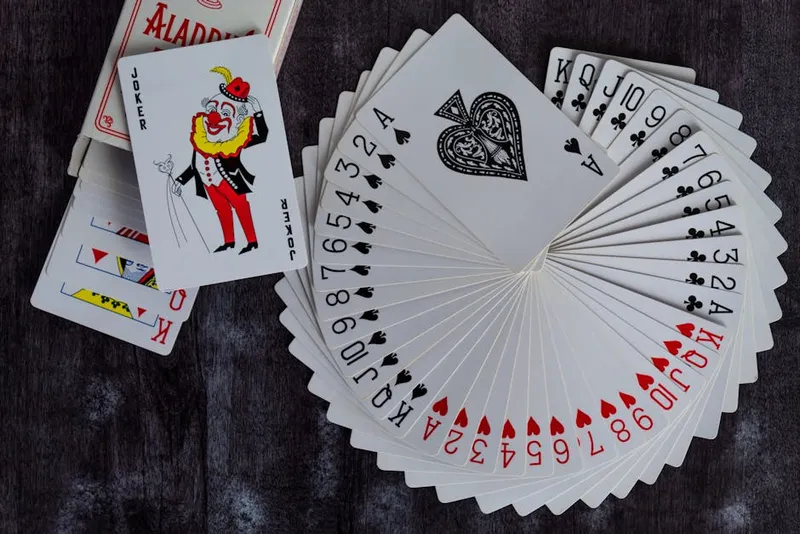
What a blackjack trainer game actually is
A blackjack trainer game is a practice tool dressed as a game. You see a hand, you pick a play, the trainer grades you against the correct chart and the count. Some run in a browser. Some run as a phone app. A handful run on Steam. The format does not matter as much as what the game drills.
The job of a blackjack trainer game is narrow. Drill the math you will use at a real table until the answers arrive in your hands before your brain catches up. Basic strategy by ruleset first, because a perfect chart player at a 6D H17 DAS LS table sits at -0.47% house edge and a feel player gives up another 1 to 2% on top of that. Hi-Lo running count second, because the entire edge in card counting starts with adding plus-ones and minus-ones at casino pace. True count conversion third, because bets and deviations live on true count, not running count. The I18 and Fab 4 deviation set fourth, because index plays carry most of the EV at high counts.
A trainer game that drills all four is doing its job. A trainer game that stops at the first one is a basic strategy flashcard with a deal button.
Blackjack trainer game vs the real money app problem
Most people who search for a blackjack trainer game end up on a real money gambling app first. The two are not the same product, and the difference matters.
A real money blackjack app deals you a hand, takes your bet, pays you or keeps your money. DraftKings, BetMGM, FanDuel. The game is real. The math is the same as the casino floor. The app has no incentive to teach you to win and most do not. A blackjack trainer game is a practice tool. It deals you a hand, takes a fake bet, and grades you against the correct chart and count. The trainer game has one job, which is to train.
Do not confuse the two. A real money blackjack app that you play to "practice" is a casino that you pay to lose at. A trainer game is the opposite product. Same cards, different incentive.

Free blackjack practice and where the no-cost tools stop
Free blackjack practice is everywhere. The Wizard of Odds free trainer runs in any browser and drills basic strategy with a Hi-Lo count overlay you can toggle. Blackjack-trainer.net deals a chart-faithful game with rule customization. BlackjackInfo runs a free online blackjack trainer with the same idea. A deck of cards at home costs nothing and drills the foundation count better than most apps.
For the first 50 hours of card counting practice, free is fine. Use it.
The gap shows up at the next stage. Free blackjack practice tools rarely simulate true count conversion under deck-estimation pressure, where you have to eyeball the discard rack and floor the running count divided by your estimate to the half-deck. They surface deviations as flashcards, not as live shoe events that fire when the count crosses TC+3 or TC+5. Almost none track which plays you keep failing and feed them back to you in the next session. None of them model your hourly variance or your Risk of Ruin at your specific bankroll and spread.
The honest version: a free online blackjack trainer is a great place to start. It is a bad place to finish. Once you can run a 6-deck shoe in your head at casino pace and call the true count cold at any point, you have outgrown the free tools. The paid tier is not a status upgrade. It is the next part of the curriculum.

The counting cards blackjack practice game most apps do not ship
Here is the unflattering version of the trainer market: most card counting apps will get you backed off in a month.
The training apps that teach you to "watch every card and bet the count" are teaching you exactly what a pit boss has been trained to spot since 1963. A counter who consistently jumps from $10 to $300 the moment the count goes positive is more visible than a $300 flat-bettor. Pit bosses watch bet patterns first, count second.
A real counting cards blackjack practice game has to drill more than the count. It has to drill the spread under shoe conditions, the deviation triggers at the count where they fire, and the bet ramp that does not telegraph what you are tracking. Most do not.
The standard blackjack card counting game in the App Store assumes the table is a vacuum. It deals the count, surfaces a play, marks you right or wrong, resets. It never tests whether you can hold the count while a chatty dealer hits soft 17, push $200 onto two hands at TC+4 without your hands shaking, or keep a bet ramp that would pass a small casino's monthly review. None of those skills come from flashcards.

From blackjack basic strategy trainer to the count
A blackjack basic strategy trainer that ends at basic strategy is finished training a player who pays -0.47% house edge. That is the floor. The trainer's job is not to stop there.
Most apps labeled "blackjack basic strategy trainer" or "blackjack strategy trainer" do exactly one thing: flashcard mode against a chart. You see a hand, pick a play, get scored. That works for the first month. At 6D S17 DAS LS, a perfect chart player sits at -0.26%. At 6D H17 DAS LS, -0.47%. You will not get below those numbers by getting better at the chart. You will only get below them by adding the count.
The full counting build adds three layers a flashcard trainer cannot reach. Running count at live dealing pace, where cards come fast enough that you cannot pause to translate. True count conversion under deck-estimation pressure, where the discard rack and the floor division happen in real time. And deviation surfacing tied to the count, so the trainer puts a 16 versus 10 in front of you at TC+0 and at TC+5 and tests whether you stand or hit at each.
Skip the level-2 and level-3 systems on the first pass. Hi-Lo is still the right system for 95% of counters. A clean Hi-Lo player captures roughly 97% of the theoretical edge a perfect Wong Halves player gets, and the remaining 3% gets eaten three times over by the higher error rate at the table. Drill Hi-Lo until it is automatic. Add complexity later if you want to. Most working counters never bother.

The blackjack card counting simulator that drills under casino conditions
A blackjack card counting simulator that earns its place runs a 6-deck shoe at roughly 80 hands per hour, the same pace as a real dealer. The count moves with the cards. You call running count and true count at random checkpoints. The deviation triggers fire when the count actually crosses the index.
That is the gap between a simulator and a flashcard quiz with a different skin.
The features that matter, specifically. Real shoe simulation, not flashcard mode. True count conversion under deck-estimation pressure, scored to the half-deck. Deviation drilling tied to the count, not as a separate quiz. Bet ramp drilling, where the trainer holds your spread and forces you to push the right number of chips at each TC. Weakness tracking, where the trainer remembers which 16 versus 10 you keep missing and feeds it back. A real EV analyzer with edge per true count, hourly variance, Risk of Ruin, and N0, sourced from Griffin, Schlesinger, and Jacobson. The math is not new. Any trainer that calls itself serious should expose it.
You cannot tell if someone is a real counter by watching them play through a flat count. Anyone can look like a counter in a neutral shoe. The tell shows up at the high count. Do they actually push the money out when the count screams for it, or do they shade the bet, hesitate, protect the bankroll they are supposed to be risking? Most counters who fail at the table fail at the bet ramp. A simulator that does not drill the ramp under shoe conditions is teaching half the skill.
Also drill in noise. Put a podcast on. Run the simulator with the TV on. Counting cards in a loud casino while a drunk guy next to you keeps asking if you want to split tens is the real skill test. The simulator is the warmup.

When a blackjack trainer game is the wrong tool
A blackjack trainer game is a small purchase relative to the bankroll it is trying to grow. It is also not always the right purchase.
Do not pay for a counting trainer if your bankroll is below 250 average bet units. At a $25 average bet, that is $6,250. Below that, the Risk of Ruin formula tells you the math eats you before the edge plays out. The trainer is not the limiter. Your bankroll is. Drill basic strategy on the free tools and come back when the bankroll math works.
Do not pay for a counting build if you do not intend to spread. A counter who flat-bets a positive count has the exact same expected loss as a non-counter, plus a tax on attention. The count is the trigger. The spread is the engine. If you are scared to spread, the trainer cannot help you yet.
Do not think a few hundred hands on a trainer game makes you ready for the felt. Variance might save you the first session. You will tell all your friends. You will invest more time and money. You will get hurt worse. The casino has been waiting for exactly that person. Have fun losing your money is what most of that journey actually pays for.
There is a quieter version of the wrong tool problem. A counter 200 to 800 hours in, trainer scores look fine, live results do not. The mistakes you cannot catch on yourself are always the expensive ones. A trainer logs every decision. The CountEdge coaching program puts a coach on those decisions weekly, before the call, so the gap between knowing the play and making it under pressure stops being invisible.
For everyone else, the trainer is the cheapest hour you will ever buy as a card counter. Twenty focused minutes a day for ninety days, and the next time the count climbs to TC+5 with $300 on the felt, the play will be in your hands before your brain catches up. That is the entire point of practice.
A blackjack trainer game is the cheapest curriculum in card counting. The right one drills the math you will actually use at a real table. The wrong one teaches you to play fast and lose faster.
Free is fine for the first 50 hours of blackjack training. The free CountEdge trainer covers the full Hi-Lo build with running count, true count, the Illustrious 18, the Fab 4, the AP Analyzer with Risk of Ruin and N0, and a weakness report. No credit card. Elite at $97 a month or $970 a year with a 14-day trial adds the expanded deviation library, the Cover Coach, the Kings Bounty side bet optimizer, and 2-hand drilling. The best blackjack app comparison and the blackjack trainer app deep dive cover where CountEdge sits against the rest of the market. The About page covers why the trainer exists at all.