Blackjack Odds With Perfect Strategy: The Honest Math
Blackjack odds with perfect strategy come down to one number. At a 6-deck H17 DAS LS table, flawless basic strategy holds the house edge to 0.47%. That is the lowest the game goes before you start counting. It is also still a number with a minus sign in front of it.
Perfect strategy does not win. It loses slower than every other way to play. That distinction is the whole post, and it is the part the casino's own odds page will never put in bold.
Here is the honest version. Basic strategy is the mathematically optimal play for every hand against every dealer up card. Run it perfectly and you cut the casino's edge to its floor. The floor at the most common live game is 0.47%. You still hand them roughly nine dollars an hour at a $25 average bet. The math that flips that number positive is not on the strategy chart. It is the count.
Blackjack odds with perfect strategy: the honest number
At 6D H17 DAS LS, the most common live game in North America, perfect basic strategy runs the player at 0.47%. That is the entire headline. Know that number and you already understand more than most players at the table.
What 0.47% means in dollars: at a $25 average bet and 80 hands an hour, you lose 0.0047 times 25 times 80, which is about $9.40 an hour. Play four hours and the math expects you down roughly $38. Most recreational players lose far more than that, and not because the house edge is bigger. They lose more because they are not playing perfect strategy and they are throwing money at side bets. More on that below.
Perfect strategy is the casino telling you exactly how to lose as slowly as possible. They are not hiding it. The dealer will correct your play if you ask. A slow loss is still their margin, and they would rather you sit four hours losing a little than bust out in twenty minutes and leave.
What perfect blackjack strategy actually is
Perfect blackjack strategy is one chart. It maps every player hand to every dealer up card and prints the single play with the highest expected value: hit, stand, double, split, or surrender. Edward Thorp published the first computer-derived version in 1962. The values have not moved since, because the math does not move.
The chart has three zones. Hard totals, soft totals (any hand with an Ace still flexible as 11), and pairs. A fourth grid covers surrender when the table offers it. There is exactly one correct chart per ruleset. Anyone selling a secret version is selling math that has been free since the 1990s.
The catch nobody mentions: perfect basic strategy is the floor of the player edge, not the ceiling. Play it flawlessly and you are still below zero. The 6-deck H17 basic strategy chart prints every play on one page, and the CountEdge trainer ships the same chart inside the count drills. Drilling it until every cell is automatic is the cheapest edge in the game. It is also the one most players skip.
This is the one thing worth stating plainly: basic strategy mastery matters more than counting in your first six months. A perfect basic strategy player at 6D H17 DAS LS is only 0.47% behind the house. Most casino players give up another 1 to 2% by misplaying soft hands, deviating by feel, and botching pairs. A new counter who is sloppy on basic strategy is donating a bigger edge than counting will ever recover. Drill the chart first. Add the count second. The order matters.
Blackjack house edge by ruleset
The 0.47% number is specific to one ruleset. Change the rules and the blackjack house edge changes with them. Every number below assumes perfect basic strategy and a 3:2 payout.
- 6D S17 DAS LS: 0.26%
- 6D H17 DAS LS: 0.47%
- 6D H17 DAS no-LS: 0.55%
- 6D H17 no-DAS: 0.69%
- 8D S17 DAS LS: 0.28%
- 2D S17 DAS LS: 0.12%
The pattern is readable. S17, where the dealer stands on soft 17, is better for you than H17 by roughly two tenths of a percent. Double after split and late surrender each shave a little more off. Fewer decks help. The lowest house edge in a standard public game is a 2-deck S17 DAS LS table at 0.12%, close enough to a coin flip that a single cold streak feels personal.
Then there is the payout. A 6:5 blackjack instead of 3:2 is the single biggest swing on the floor, and it always runs against you. It erases the entire deck advantage and then some. The "only two decks" sign on a 6:5 table is bait. Walk past it. The full 6-deck house edge breakdown covers why the payout decides the math more than the deck count does.
If you prefer the number stated as return to player, flip it. A 0.47% house edge is a 99.53% RTP, meaning the game returns just under 99.53 cents on every dollar wagered over a long run of perfect play. That sounds generous until you remember it is an average across millions of hands, not a promise for your afternoon. The casino is happy to quote the RTP because the half-percent it keeps, multiplied by every dollar that crosses every felt in the building, is the whole business.
For an independent cross-check on any ruleset, the Wizard of Odds house-edge appendix computes the same numbers from the same simulations.
Why the odds of winning blackjack still favor the house
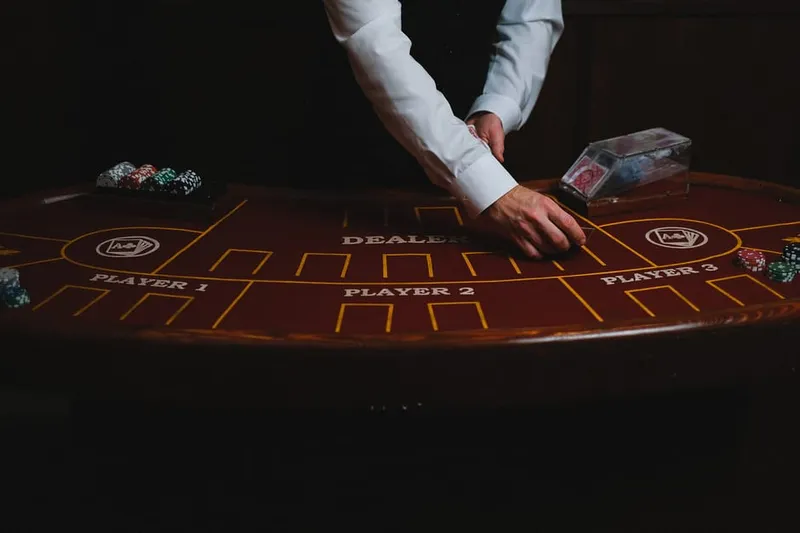
The odds of winning blackjack favor the house for one structural reason, and it has nothing to do with the cards. You act first. If you bust, you lose before the dealer turns the hole card. When you both bust, the dealer keeps your bet anyway. That order of operations is the entire house edge in one sentence.
Basic strategy cannot fix that. It can only make sure you lose the smallest possible amount to it. Standing on a stiff hand against a weak dealer up card, hitting a soft 18 against a 9, splitting 8s against a 10: every one of those plays exists to shave a fraction off a disadvantage you cannot remove by playing well.
The 3:2 payout on a natural is the casino's idea of a thank-you note. It hands a little expected value back to keep the game attractive, which is exactly why a 6:5 table that quietly takes most of it back is such a clean robbery.
So when a casino's own blog calls blackjack "the best odds on the floor," it is technically right and quietly misleading. Best odds among casino games still means the house wins over time. The only seat in the building where the player holds a real edge is the one the casino does not want you in: a counted shoe.

The blackjack odds the casino blogs love to quote
Search this topic and every casino-owned page leads with the same comforting statistics. Those pages exist to make the game feel close to fair while keeping you seated. The numbers are real. The framing is the trick.
Here is what to do with them. Do not fixate on how often you win a single hand. A high single-hand win rate sounds like a near coin flip, but it ignores pushes, ignores the 3:2 hands that pay extra, and ignores that the house edge is a long-run average, not a per-hand promise. The only number that matters is the edge over time, and at perfect strategy that edge is still negative.
A short list of what NOT to do, which protects more money than any chart:
- Do not take insurance or even money as a non-counter. It is a side bet on the dealer's hole card and it loses over time. Skip it unless the true count is +3 or higher.
- Do not play the side bets. Lucky Ladies, 21+3, Perfect Pairs and the rest carry a much higher house edge than the base game. Throw five dollars on every one and you can pay more to the side bets than to the game you came to play.
- Do not chase a loss by sizing up on tilt. Variance does not owe you a comeback.
- Do not confuse basic strategy with a winning strategy. It is the floor. It keeps you in the game long enough to learn the part that actually wins.
That last one is the whole point. Recreational players lose hundreds at a game with a sub-1% house edge because of side bets and tilt, not because of the base math. Counters do not play side bets cold and they do not tilt. The discipline matters more than the count.
What flips the odds: the count
Nothing on the strategy chart turns 0.47% into a positive number. The count does. In the Hi-Lo system, every card is worth +1, 0, or -1, and the player edge swings by roughly +0.5% for every true count. Get the true count to +1 and the house edge is gone. Get it to +2 or higher and the odds are yours.
True count is the running count divided by the decks remaining, always floored, never rounded. That conversion is the piece most beginners skip, and it is the piece that makes the bet sizing work. A running count of +6 means something completely different with one deck left than with five. How the Hi-Lo system converts to a true count is the mechanic that turns a card-tracking habit into an actual edge.
The edge does not come from the count alone. It comes from betting more when the count is high and playing the deviations when the chart and the count disagree. The Illustrious 18 plus the Fab 4 capture roughly 80% of the available index expected value with 22 plays. Stand on hard 16 versus 10 once the shoe is rich. Take insurance at +3. The chart says one thing and the count overrides it.
The betting is the engine. A clean Hi-Lo player at 6D H17 DAS LS running a 1-8 spread with the I18 and Fab 4 typically pulls to roughly +1.0 to +1.5% over the base 0.47% house edge, depending on penetration and ramp shape. That is the swing: a guaranteed slow loss at flat bets becomes a real edge once the money goes out at the right counts and stays small at the wrong ones. Flat-betting a positive count is worse than not counting at all, because you pay full house edge and burn the attention for nothing. The count is the trigger. The spread is what collects.
This is also where most self-taught counters quietly stall. They learn the values, they spread the bets, then they keep undersizing at high counts or skipping deviations they cannot catch themselves skipping. The mistakes you cannot see in yourself are always the expensive ones, which is why an outside set of eyes on your actual hand decisions cuts months off the curve. The session data shows the leak. Self-grading does not know to look for it.

Variance: why perfect odds still feel like a loss
Here is the part the odds tables never show. Even with the count working and the odds genuinely in your favor, you will lose. Often. The standard deviation on a single Hi-Lo hand is 1.14, with a variance of 1.33. That swing dwarfs the edge on any one hand, which means short stretches tell you nothing.
A skilled counter loses around four sessions out of ten. That is not a sign the math is broken. It is the default. The edge only shows up across a large sample, the same way an index fund only shows up across years and not afternoons.
This is why bankroll is not a side detail. It is the thing that decides whether you survive long enough to collect the edge at all. Schlesinger's Risk of Ruin formula sets the floor: it ties your odds of busting before the edge shows up to the size of your bankroll relative to your bet. Undersize the bankroll and a normal losing stretch wipes you out before the math gets a chance. Most beginners run a bankroll a fraction of what the formula calls for, lose to ordinary variance, and conclude that counting does not work. The variance was ordinary. The bankroll was the mistake.
The clearest way I have heard it put came from looking back at my own records, not from any single night at the table. Two years of play across 106 logged sessions drew a graph that dips and turns like the stock market but, over a long enough sample, goes in one direction: up. That is the moment counting clicks. Not session to session. In the graph.
Variance does not care that you played perfectly. This is the part nobody puts in the YouTube video. Most people who quit card counting did not get caught and did not run bad math. They lost a handful of sessions, decided the system was broken, and walked away from a sample too small to mean anything. The math is settled and public: Arnold Snyder's Blackjack Forum archive lays out the same variance reality in detail. The math was never the problem. The bankroll discipline was.