Card Counting High Low: The Hi-Lo System Explained

Card counting high low is the most widely used blackjack card counting system in the world. It works because the player has a mathematical edge when the remaining shoe is rich in tens and aces, and a mathematical disadvantage when the shoe is rich in low cards. The Hi-Lo system tracks that ratio with three simple values: +1 for low cards, 0 for middle cards, and -1 for high cards.
Harvey Dubner published the original version in 1963. Edward Thorp's Beat the Dealer the year before had used a more complicated 10-count system. Dubner simplified it. Sixty years later Hi-Lo is still the system that wins money. The fancy multi-level systems on YouTube exist for people who already mastered Hi-Lo and got bored.
This post covers exactly how card counting high low works: the values, the running count, the true count conversion, the bet ramp that turns the count into money, the I18 deviations that earn most of the EV at high counts, and the common mistakes that cost new counters their bankroll before the math has time to show up.
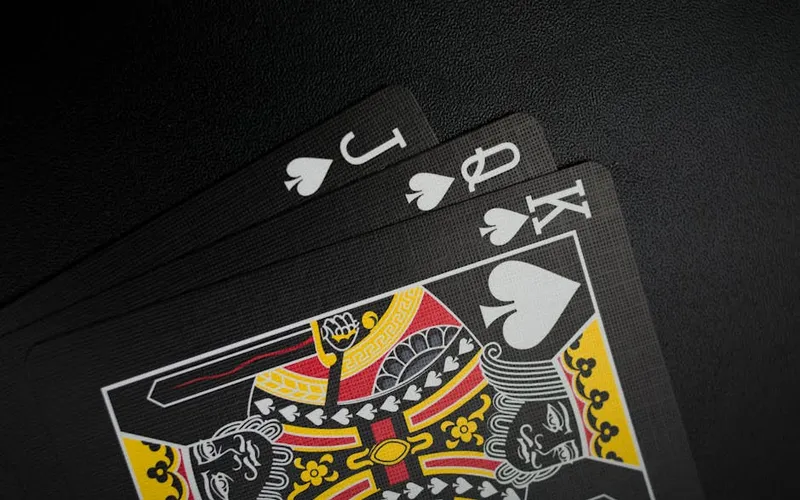
What is card counting high low?
Card counting high low is a balanced, level-1 card counting system for blackjack. The player tracks each card dealt at the table, adding or subtracting from a running total, and uses that total to decide how much to bet on the next hand.
"Balanced" means the sum of every card in a fresh shoe is zero. Six decks of 52 cards is 312 cards total. Twenty cards (2 through 6 of each suit, four times) count as +1 each. Twenty cards (10, J, Q, K, A of each suit, four times) count as -1 each. The other 12 cards (7, 8, 9) are zero. Over a full shoe the running count starts at zero and returns to zero. That symmetry is the error check.
"Level-1" means the values are -1, 0, and +1. No fractional values, no level-2 weighting. The mental math is addition and subtraction of single digits. A child can run the count. The challenge is doing it cold at casino pace for two hours with a chatty dealer and a drink in your hand.
The base house edge against perfect basic strategy at a 6D H17 DAS LS table is -0.47%. A clean Hi-Lo player running a 1-8 spread at decent penetration pulls to roughly +1.0 to +1.5% edge depending on ramp shape. That swing from -0.47% to +1.0% is the entire game. The deeper read on the underlying card counting basics covers the foundation before the system.
Card counting is just math. The casino has known about it since 1963. They are still in business.

The Hi-Lo card counting system: card values and running count
The Hi-Lo card values fit on three lines:
- Cards 2, 3, 4, 5, 6: +1
- Cards 7, 8, 9: 0
- Cards 10, J, Q, K, A: -1
That is the whole table. Every card dealt at the table contributes one of those three values to the running count. Adds and subtracts cancel as the shoe progresses. At end of shoe the count returns to zero.
The reason these specific buckets work is the way blackjack rules favor each side. Low cards (2-6) help the dealer make 17 out of stiff hands like 12, 13, 14, 15, and 16. When those cards leave the shoe the dealer busts more often. High cards (10-A) give the player blackjacks and the player blackjack pays 3:2. When those cards remain in the shoe the player wins bigger. The +1/-1 weighting captures both effects in one number. The neutral 7, 8, 9 buckets are roughly neutral by the math because they help both sides about equally.
Practice the running count by drilling a single deck. Shuffle, flip cards one at a time face-up, run the count, end at zero. Sub-30 seconds is the working target. The deeper math on each card value position is in the card counting values reference. The Wizard of Odds Hi-Lo explainer covers the same system with a different worked example.
Drill the deck count until it is automatic before you start drilling shoes. A counter who has not nailed the single-deck count is going to leak running count errors at the table.
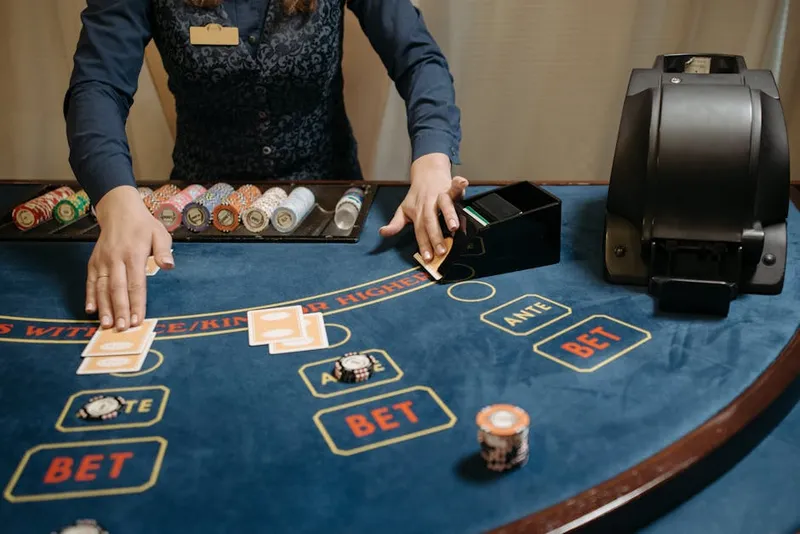
How to convert running count to a true count
The running count tells you what cards have already been dealt. The true count tells you what is left in the remaining shoe. They are different numbers and you need the second one to size the bet correctly.
The formula:
True Count = floor(Running Count / Decks Remaining)
A running count of +6 with two decks left in the shoe is a true count of +3. A running count of +6 with four decks left is a true count of +1. Same running count, different bet entirely. Without the true count conversion you are essentially flat-betting through favorable shoes and donating EV on every push you do not make.
Always floor the division. Never round. A running count of +5 with two decks left is TC+2, not TC+3. The 0.5 rounding error compounds over a thousand hours and costs real money.
Estimating decks remaining is the second half of the conversion. Look at the discard rack. With practice you can call a 6-deck discard stack within a half-deck just by eyeballing it. Casino-level discard racks have markings on the side that help. Drill discard-rack estimation separately from the running count. They are two skills, not one.
The true count is the trigger for both the bet ramp and the deviation plays. Everything keys off the true count, not the running count. Getting the conversion wrong is the most costly error in the system.

The card counting high low system bet ramp
The bet ramp is what turns the count into money. A counter who runs a perfect Hi-Lo count and flat-bets every hand has the exact same expected loss as a non-counter, plus a tax on attention. The count is the trigger. The spread is the engine.
A realistic 1-8 spread at a 6D H17 DAS LS game with $10 minimum looks like this:
- TC 0: $10
- TC+1: $30
- TC+2: $60 (or $30 across two hands)
- TC+3: $100
- TC+4: $200
- TC+5: $300
- TC+6 and above: $600
The ramp shape matters as much as the spread. Linear ramps draw heat. Stepped ramps with an occasional flat round at TC+1 read more like a recreational player who got lucky than a player who is counting. Real cover means a ramp that looks like a winning gambler, not a working AP.
The hardest part of the bet ramp is not the math. The math is learnable. The hard part is putting the big bet out when the count calls for it. Most new counters convince themselves the entire casino is watching the moment they push $300 across two hands. So they shade the bet down. Put out $100 instead. Tell themselves they will spread harder next shoe. The reality is the pit is watching the dealer 90% of the time, not the players. The cost of the fear is the entire reason you sat down. If you are scared to spread, do not count. Train, build a bankroll, and come back when you can.
The early-counter version of this mistake is well documented and avoidable with reps. A trainer that drills the bet ramp under shoe conditions, with a real-time count display, compresses the timeline from "shadow the bet" to "push the chips out cold."

Hi-Lo deviations: the I18 and Fab 4
Deviations are basic strategy plays that change based on the count. A standard basic strategy player always hits 16 versus 10. A Hi-Lo counter stands on 16 versus 10 at TC+0 and above. The play changes because the deck composition changes the math.
The Illustrious 18 is Don Schlesinger's list of the 18 highest-EV index plays. The Fab 4 is his list of the four surrender index plays. Together they cover 22 indices. Schlesinger demonstrated that these 22 plays capture roughly 80% of the available index EV. Drilling beyond the I18 plus Fab 4 hits diminishing returns fast.
The most valuable single deviation is insurance at TC+3. The insurance bet is normally a -7% house edge sucker bet. At TC+3 and above the math flips and insurance becomes a positive EV side bet on every dealer ace. A Hi-Lo player who takes insurance at TC+3 and refuses it below picks up meaningful EV per hour at heavy spreads.
The other high-value I18 plays:
- 16 vs 10 at TC 0+: stand (basic strategy says hit)
- 15 vs 10 at TC+4: stand (or surrender at TC+0 on LS games)
- 12 vs 3 at TC+2: stand
- 12 vs 2 at TC+3: stand
- 10,10 vs 5 at TC+5: split (this one is rare and looks crazy to the table)
- 9 vs 2 at TC+1: double
- 11 vs A at TC+1: double
Drill the play at the count where it triggers, not as flashcards in isolation. The transition you want is from "what does the chart say" to "the count is +4, I have 15 versus 10, stand." That is what shoe-mode practice trains.
Eliot Jacobson's APheat archive covers the deeper math behind why each I18 play has the index it has, including the variance contribution of each.

Is the high low count still effective in 2026?
Yes. The math has not moved since 1963. The casino has updated rules, shortened shoe penetration, deployed CSMs (continuous shuffle machines), and trained pit bosses for sixty years. None of that breaks the math. It just narrows where the math applies.
Where Hi-Lo is still profitable:
- 6-deck H17 DAS LS shoe games with 75% penetration or better. Locals casinos in Las Vegas, most of Reno, BC and Alberta casinos, much of Atlantic City and Mississippi.
- 8-deck shoe games with 80% penetration. Stricter on penetration to overcome the deeper-deck variance.
- 2-deck pitch games with 65% penetration. Variance is higher but EV per hour is also higher.
Where Hi-Lo no longer works:
- Las Vegas Strip $5 to $25 tables with 6:5 blackjack payout. The 6:5 payout adds 1.39% to the house edge and erases any count edge a 1-12 spread could ever produce. Walk past 6:5 tables. There is no recoverable EV at any spread.
- Continuous shuffle machine tables. The CSM eliminates the count entirely. Counting at a CSM is paying attention for free.
- Heavy-cut shoes. Some casinos cut a 6-deck shoe at 50% penetration. The math runs out before the count can climb.
Variance does not care that you did everything right. A skilled Hi-Lo counter loses about four sessions out of ten. The graph dips and turns like the stock market and goes in one direction over time. The losing sessions are the default, not an anomaly. Most aspiring counters quit on session four, decide the system is broken, and walk. The system is not broken. Their bankroll was a tenth of what the math said they needed.

Common Hi-Lo mistakes to avoid
Most Hi-Lo counters lose money to the same handful of mistakes, in the same order, every cohort.
Counting at the wrong game. A counter at a 6:5 payout table is paying the casino to run the count. The mental work matters only if the underlying rules support a beatable game. Find the 3:2 game first. Then count.
Skipping basic strategy. A counter who is sloppy on basic strategy is donating a bigger edge than they will ever recover by counting. Drill basic strategy until automatic before adding the count. The order is not negotiable.
Spreading too small. A 1-4 spread at most 6D games does not pull you to a positive edge. The math needs a 1-8 spread or larger at decent penetration to flip the game. A counter who fears the heat and spreads 1-4 is paying mental tax for a flat-bet result.
Spreading too big at the wrong count. Jumping from $10 to $300 the second the shoe goes positive is the most visible move a counter can make. The pit boss reads it inside two shoes. Stepped ramps with cover bets at TC+1 read more naturally.
Skipping deviations. Hitting 16 versus 10 at TC+4 is paying for the count without using it. The I18 plus Fab 4 is where the count earns most of its money in shoe games.
Tipping the dealer at high counts. A $10 tip at TC+4 in a six-deck shoe is real EV walking off the table. Tip at low counts if at all. Some working counters do not tip period and skip the few rooms where the dealer is hostile because of it. The math does not care about the social contract.
Counting cards in a loud casino while a drunk guy next to you keeps asking if you want to split 10s is the real skill test. The trainer is just the warmup. The free CountEdge trainer drills the Hi-Lo running count, true count, I18, and Fab 4 with no credit card. Twenty focused minutes a day for 90 days is what most counters need to get to a working table game. The full origin story behind the trainer is on the About page. The system has been settled since 1963. The work has not.