What Is Insurance in Blackjack? A Counter's Real Take

Insurance in blackjack is a side bet the dealer offers when their upcard is an ace. You wager up to half your original bet that the dealer's hole card is a ten. If it is, insurance pays 2:1. If it is not, you lose the side bet and play out the main hand. Basic strategy says never take it. The count says different. This post lays out both answers, the math behind each one, and the rare moment insurance becomes the highest-EV play on the felt.
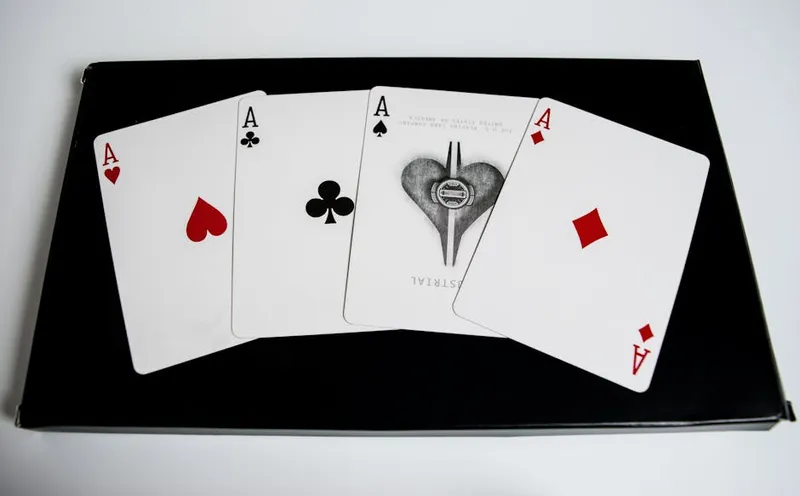
What is insurance in blackjack?
Insurance in blackjack is a 2:1 side bet on whether the dealer has a natural blackjack. The casino offers it the moment a dealer shows an ace, before any other hand decisions happen at the table. The maximum wager is half your original bet. The dealer asks once, gives the table a few seconds to decide, and moves on.
The framing is the trick. The casino calls it "insurance" to make it sound like a hedge that protects your main stake. It is not a hedge. It is an independent bet on the dealer's hole card. Whether you win or lose insurance has nothing to do with whether you win or lose the main hand. The two settle separately.
Card counting is just math. The casino calling its worst side bet "insurance" is also just math. They priced it to lose, named it to win, and put it on every blackjack table on the floor.

How blackjack insurance works at the table
The blackjack insurance bet has four moving parts: the trigger, the cost, the payout, and the timing.
- Trigger. Dealer upcard is an ace. No other card opens an insurance prompt.
- Cost. Up to half your original bet. On a $100 hand, the insurance wager caps at $50.
- Payout. 2:1. A $50 insurance bet returns $150 if the dealer turns a ten-value card.
- Timing. The decision happens before the hole card is revealed and before any player acts on the main hand.
If the dealer turns a ten (10, J, Q, or K) they have a natural blackjack. Insurance pays 2:1, and the main hand loses unless you also have a natural (in which case the main hand pushes and you keep the insurance winnings on top). If the dealer turns anything else, you lose the insurance stake immediately and play the main hand out at 3:2, 1:1, or 0:1 depending on how it resolves.
The two bets settle independently. The main hand pays on its own merits. Insurance pays on the hole card alone.

Blackjack insurance odds and the house edge math
Blackjack insurance odds are set by how many tens are left in the shoe. There are 16 ten-value cards per 52-card deck: four tens, four jacks, four queens, four kings. In a fresh 6-deck shoe of 312 cards, 96 of those are tens. The remaining 216 cards are non-tens.
Off the top of a fresh shoe, the chance the dealer's hole card is a ten is about 30.8%. The chance it is anything else is about 69.2%. The 2:1 payout would only be a fair bet if exactly one in three cards was a ten. It is not. The bet is short by about 2.5 cards per deck, which is exactly where the house edge lives.
The blackjack insurance house edge runs roughly 5.9% in a single-deck game and climbs to about 7.5% in an 8-deck shoe. That is more than ten times the 0.47% base house edge at a 6D H17 DAS LS table. A $50 insurance bet thrown every time the dealer shows an ace adds something like $3.50 in expected loss on every prompt. Across a session, the side bet alone can cost more than the entire base game.
The math is the math. The casino offers insurance every shoe for a reason.
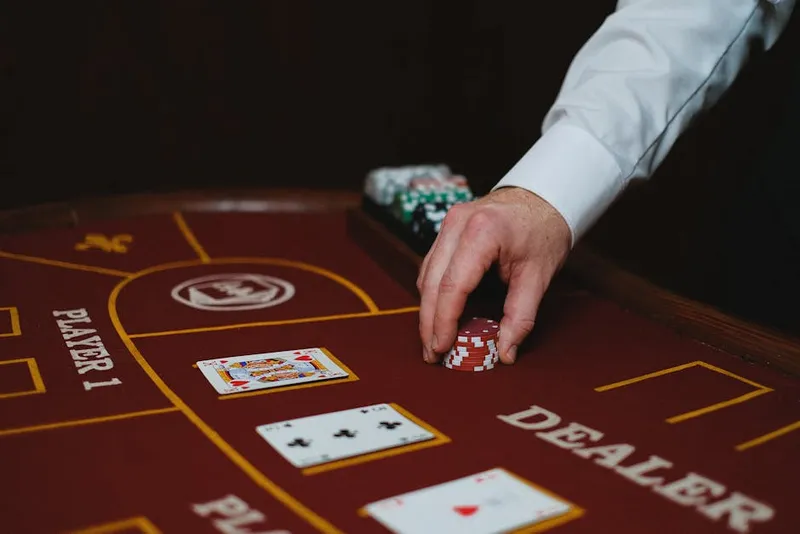
When to take insurance in blackjack: the TC+3 deviation
When to take insurance in blackjack depends on whether you are running a count. For a non-counter, the answer is never. For a Hi-Lo counter, the answer is exactly when the true count hits +3 or higher.
The reasoning is mechanical. In the Hi-Lo system, tens count as -1. A positive count means more tens have been played than the average shoe distribution would predict, which means the remaining shoe is richer in tens than 30.8%. At true count +3, the proportion of tens left in the shoe crosses the 33.3% break-even line where the 2:1 payout becomes a fair bet. Above +3, insurance turns positive EV.
Insurance is the most famous index play in the Illustrious 18 for a reason. At TC+4 and above the index plays start to dominate the EV calculation, and insurance at TC+3 alone is worth meaningful EV per hour at a heavy spread. Skipping the deviation means you are paying for the count without using it. The I18 plus Fab 4 captures roughly 80% of the available index EV with 22 plays, and insurance is the easiest one to drill because the trigger condition (dealer ace) is unmistakable.
At a 2-deck game the trigger shifts slightly to TC+2.5 because the deck composition skews. The principle is identical. The trainer surfaces both thresholds when you set the rule profile.

Is blackjack insurance worth it for the recreational player?
Should you take insurance in blackjack if you are not running the count? No. It is the worst standard option offered at a blackjack table.
Without a count, the proportion of tens left in the shoe averages 30.8%, the payout is 2:1, and the house edge sits at roughly 7.5% on the side bet. Taking insurance because the dealer prompts it is the same as taking one of the worst single bets on the floor every time it gets offered.
The side bet portfolio at most casinos (Lucky Ladies, 21+3, Perfect Pairs, insurance off the count) carries house edges between -3% and -7%. A player who throws $5 on every side bet doubles or triples their effective hourly loss. CountEdge treats the insurance prompt as a graded decision in the trainer, including for non-counters drilling the discipline of declining it.
A "feeling" that the dealer has a ten is not information. A dealer who flips an ace has the same 30.8% chance of a ten every time, until the count says otherwise.
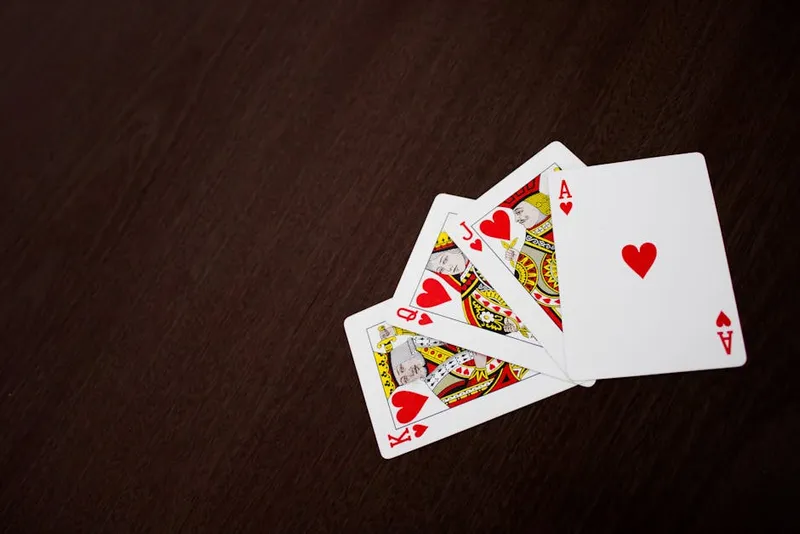
Even money and what not to do when the dealer flips an ace
Even money is insurance with a costume. When the player has a natural blackjack and the dealer shows an ace, the dealer offers to pay 1:1 immediately instead of waiting to see if the hole card is a ten. The math is identical to insurance. Even money is +EV only at TC+3 or higher. Below +3, it trades the expected return of a 3:2 natural for a flat 1:1 and loses value every time you accept the prompt.
A few specific things not to do when the dealer flips an ace:
- Do not take insurance because the dealer asked. The prompt is not advice. It is product placement.
- Do not take even money on a natural without doing the count math. The 3:2 payoff is worth more than 1:1 unless the count says otherwise.
- Do not take insurance "just on this one" because you have a 20 against the ace. The hole card has no idea what your hand is.
- Do not skip the prompt if you are running a count. The TC+3 deviation is one of the most profitable plays in the Illustrious 18.
The casino knows what insurance is worth and offers it anyway. Treat the prompt as a tax on inattention for non-counters and as the highest-EV deviation in the I18 for everyone else.
What is insurance in blackjack? A 2:1 side bet on a dealer ace turning a ten, priced at a 7% house edge for everyone who is not counting and a quietly profitable deviation for everyone who is. Drill the trigger. Drill the count. Make the call cold every time it comes up at the table. The free CountEdge tier covers basic strategy with no credit card. The 14-day Pro trial opens the running count, true count, I18, and Fab 4 drills, including insurance at TC+3 for 6D and the TC+2.5 override for 2D. The whole story is on the About page. The next ace is at the casino tonight. Do the work first.