Card Counting App: What Actually Trains You for Real Tables
A card counting app should make the Hi-Lo system automatic before you ever sit at a $10 table. That is the whole point. Running count, true count, the Illustrious 18 deviations at the count where they fire, a bet ramp that does not scream at the pit. If an app stops at flashcard basic strategy and calls itself a card counting app, it is doing one job badly and calling it two.
Most apps in the store stop right there. The ones that do not are the ones worth your time.
I have counted Hi-Lo at BC casinos for 2 years. 106 sessions logged. The app I use during a session is the one I built, CountEdge, because nothing else covered everything a working counter actually needs. The math is settled. Card counting is just math. The casino just really, really does not want you to do it.
If you searched "card counting app" you are at one of two stages. You heard counting is real and you want to see if you can do it. Or you have been drilling for a few months and the gains are not showing. Both reasons are good. The wrong app wastes either of them.
This is what to look for. And what to skip.
What a card counting app should actually train you to do
A real card counting app drills four things, in this order:
- Basic strategy until the chart is automatic. A perfect basic strategy player at a 6D H17 DAS LS game sits at -0.47% house edge. A feel-player at the same game donates another 1 to 2%. Fix that first.
- The Hi-Lo running count. Cards 2 through 6 are +1. 7 through 9 are 0. 10 through Ace are -1. Drill until you can run a full 6-deck shoe at casino pace and the count returns cleanly to zero.
- True count conversion. Running count divided by decks remaining. Always floor it, never round. This is where most apps quit.
- The Illustrious 18 and Fab 4. Twenty-two deviations that capture roughly 80% of the index EV in shoe games. Insurance at TC+3. 12 vs 3 stands at TC+2. 10,10 vs 5 splits at TC+5. These are where the count earns most of its money.
A card counting app that hits all four is doing the job. Anything that stops at step one is a basic strategy trainer with a misleading name.
Card counting is easy as long as you put the time in. The time is the hard part. An app that does not drill the full stack just makes the time longer. The Hi-Lo card values explainer covers the foundation count in more depth.

Why most blackjack card counting app downloads end in month two
The pattern is the same every time. Someone downloads a blackjack card counting app, drills basic strategy for a week, runs a few count drills, plays one live session, loses $400 to variance, and decides the system does not work.
The system works. They quit on a sample size that means nothing.
At a +0.5% edge per true count, average bet around $50, and 80 hands per hour, hourly EV runs roughly $20 to $30 with a standard deviation per hour of about $400. Losing sessions are not an anomaly. They are the default for any short stretch. A skilled counter loses about four sessions out of ten.
Variance does not care that you did everything right. This is the part nobody puts in the YouTube video.
The other failure mode is more expensive. Apps that teach you to watch every card and bet the count are teaching you exactly what a pit boss has been trained to spot since 1963. A counter who jumps from $10 to $300 the moment the shoe gets hot is not a counter. They are a target. Pit bosses watch bet patterns first, count second. Backoff is the cost of bad cover, not the cost of counting.
That is the take. Most card counting apps will get you backed off in a month because they teach the math and skip the cover. Card counting practice has to mirror casino conditions or it teaches the wrong habits.

The features that make a real blackjack card counting trainer
Strip the marketing and a real blackjack card counting trainer ships these features:
- Shoe mode at casino pace. Cards dealt at the speed a real dealer deals, not flashcards. 100 hands per hour is the floor.
- Live running count and true count surfacing. Toggleable so you can drill blind or check yourself.
- Deviation prompts tied to the count where they fire. A trainer that surfaces "16 vs 10, hit" at TC+0 and "16 vs 10, stand" at TC+1 is teaching the I18. A trainer that ignores the count when grading deviations is grading basic strategy.
- An advantage play analyzer. Expected value per hour, hourly variance, Risk of Ruin, N0, Kelly Criterion. If the app cannot show the math, it is not teaching the math.
- A session tracker. Real hand logging, not self-reported summaries. Self-grading is not grading.
The CountEdge app covers all of this. It is members only now: you get it through the coaching program, and the app's silent hand logging is what the weekly report cards are built from. True count conversion gets its own deep dive for the readers who need the formula broken down before they trust the trainer.

Free card counting apps vs the paid ones
Free is fine for the first 50 hours of practice.
The Wizard of Odds runs a Hi-Lo trainer in any browser. A physical deck of cards costs nothing and drills the foundation count better than most apps. Neither will cost you a dollar, and one of the best free blackjack app options is sitting in your kitchen drawer.
Paid only earns its price when the cheap tools fall short. Where they fall short:
- True count work under deck-estimation pressure.
- Deviation drills tied to live shoe events.
- Weakness tracking that flags the mistake category you cannot see on yourself.
- Cover play scoring against your bet pattern.
- Multi-hand math, 2-deck game support, side bet optimizers like Kings Bounty at TC+7.
The CountEdge app covers those, and it is members only now: it comes with the coaching program. If you are drilling basic strategy, coaching is overkill. If you are past 100 hours and the gains are not showing, that is where the data layer kicks in. The honest framing: the free tools are enough to make you a counter. Outside eyes on your hand data make you a counter who lasts.
What a card counter sees that the app never shows
A card counter at a real table is tracking five things at once. Most card counting apps train one.
The running count is the obvious one. Less obvious: the dealer's tells (does she announce the count out loud when the shoe goes hot?), the pit boss two tables over (is he watching the chip tray or the players?), the tablemate who flat-bets through a +6 shoe (is he a tourist or cover for a back-spotter?), and the player to your right who keeps asking about insurance every hand (a soft 17 question is coming and he is going to ask it slowly).
Counting cards in a loud casino while a drunk guy next to you keeps asking if you want to split 10s is the real skill test. The trainer is just warmup.
A card counting app can simulate the count and the math. It cannot simulate a chatty dealer, a noisy table, a drink in your hand, and a pit boss who started watching ten minutes ago. The cleanest app score in a silent bedroom is not the test. Skilled counters lose roughly 20% of their accuracy in the first ten live shoes. Drill with the TV on, music playing, conversation in the background. Add the friction the app cannot.
The mistakes you cannot catch on yourself are always the expensive ones. That is why hand logging matters more than drill scores after the first hundred hours. CountEdge coaching exists for the readers who hit that plateau and need outside eyes on the actual data.
How a blackjack card counting simulator differs from a casino
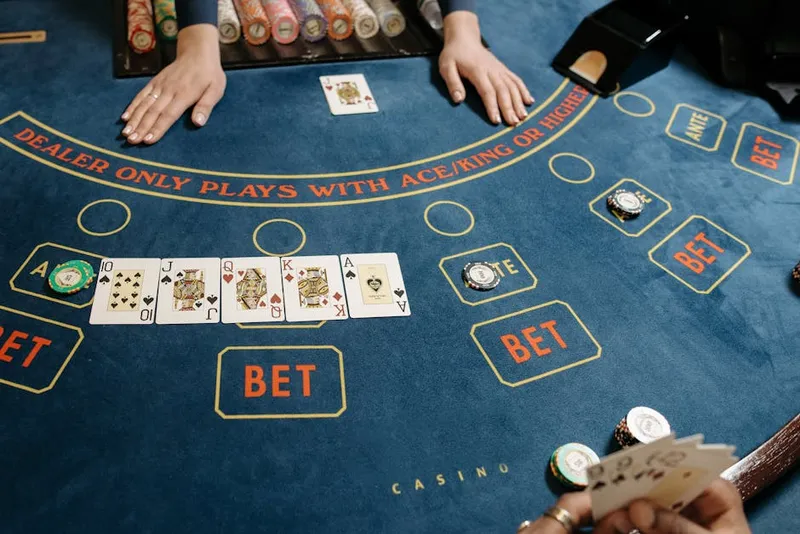
A blackjack card counting simulator is a math model. A casino is a physical environment that adds noise to the math.
The simulator gives you a clean running count, perfect deck estimation, instant deviation prompts, and grades you against a known answer. A casino gives you a dealer who shuffles at 75% penetration on some nights and 85% on others, a continuous shuffle machine on the table that nobody told you about, a side bet caller every five minutes, and a soda water the waitress keeps forgetting.
Both matter. Use them differently.
The simulator is for skill acquisition. Drill it cold until basic strategy, the running count, true count conversion, and the I18 are automatic.
The casino is for skill expression. The math is now muscle memory. Your job at the table is bet ramp discipline, cover, and not breaking the count when something unexpected happens.
The bridge between the two is a session tracker. The simulator tells you what the math should be. The session tracker tells you what your actual hands looked like under casino conditions. The gap between the two is where the EV leaks live.
It dips and turns like the stock market but it goes in one direction. Up. That is how you know it works. Not session to session. In the graph.

What to look for before you download anything
Before you tap install, check four things:
- Does it teach Hi-Lo, not Wong Halves or KO? Hi-Lo captures about 97% of the theoretical edge of any multi-level system and the remaining 3% gets eaten three times over by error rate at the table. Until you can run a Hi-Lo shoe at speed in noise, switching systems is a hobby.
- Does it support your game? 6D H17 DAS LS is the standard BC and Vegas downtown rule set. A trainer locked to 8D S17 no-DAS is the wrong tool for that game.
- Does it surface deviations at the count, not as standalone flashcards? A flashcard list of the I18 is a reference. A trainer that fires "16 vs 10, stand" the moment your true count hits +0 in shoe mode is teaching the play.
- Does it have a real session tracker? Hand logging is the data layer. Self-reported summaries are not coaching, they are chatting.
Drill the chart on a deck of cards in your kitchen first. Then download something that drills the count. If the app you pick can show you Risk of Ruin and N0 by Friday, you picked the right one. The archived Snyder essays at Blackjack Forum Online cover the math behind those numbers if you want to read why they matter.
What not to do: pay for a course before you have drilled fifty hours on the free tools. Most card counting strategy courses are content marketing. The video library is not the curriculum. The data layer is. A longer comparison of card counting software covers the feature breakdown across the field.